Short answer: Whether to use a loft bed in a tiny home or STR depends on your ceiling height, your target guest, and how the rest of your layout works. Loft beds maximize floor space and create a cozy sleeping nook that guests love — but they're not right for every property or every guest. Ceiling height under 8 feet, guests with mobility issues, or a target market of older adults are all strong reasons to skip it. A well-designed ground-level bedroom can be just as compelling and far more accessible. The decision matters more than most hosts realize — and getting it wrong shows up in your reviews.
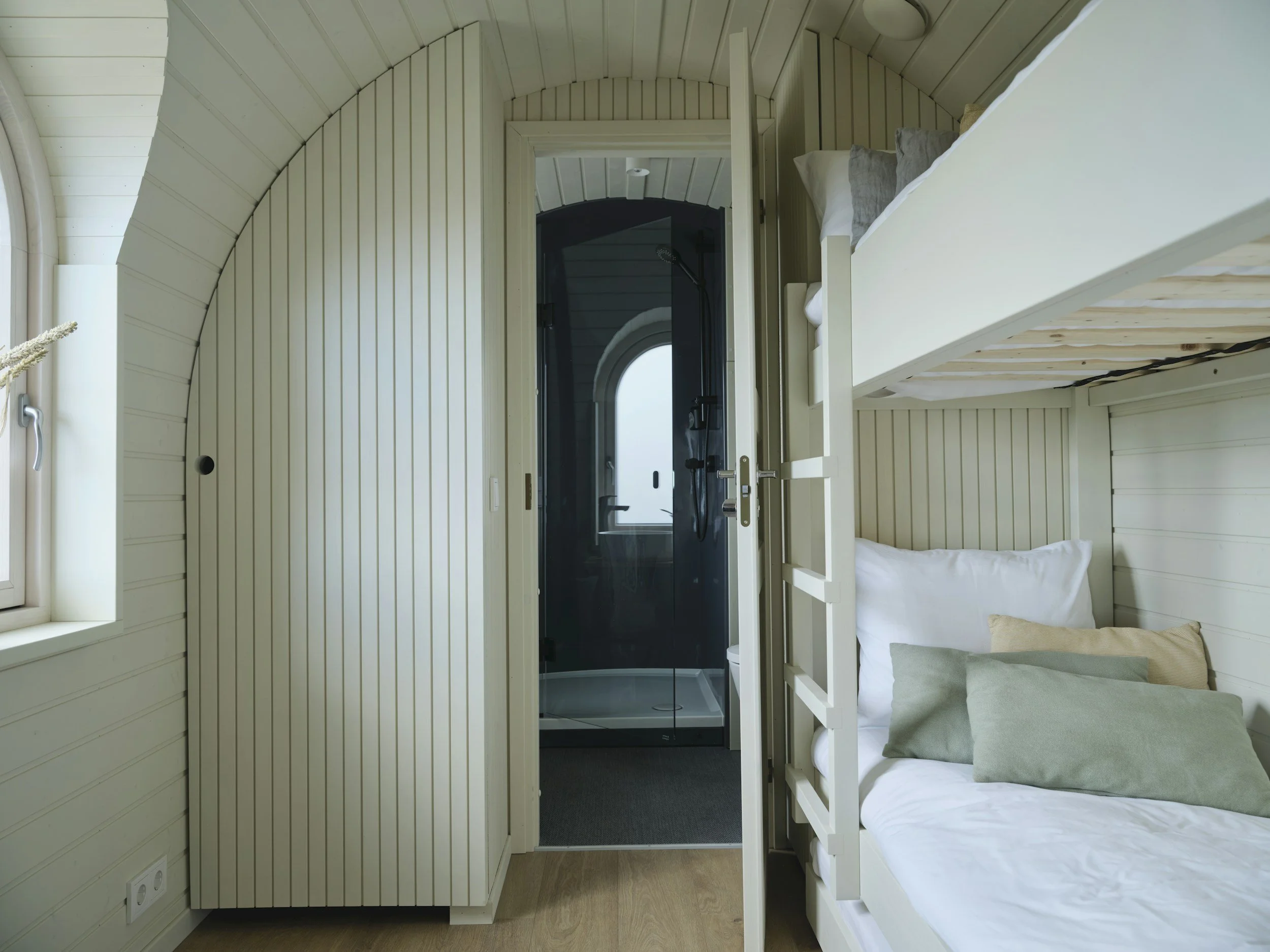
What are the pros and cons of a loft bed in a tiny home?
The loft bed is the tiny home design decision that sparks more debate than almost anything else — more than whether to do an open shower, more than whether to use a composting toilet, and roughly on par with whether shiplap has officially jumped the shark. (It hasn't. Stop listening to people.)
Here's the thing about loft beds: they're not inherently good or bad. They're a tool. And like any tool, they work brilliantly in the right situation and create real problems in the wrong one.
On the pro side, a loft bed is one of the most effective space-maximizing moves in a tiny home. By moving the sleeping area vertically, you free up the entire footprint underneath for living space — a sitting area, a desk, a reading nook, additional storage, or a full dining setup. In a 200 to 400 square foot space, that reclaimed square footage is genuinely transformative. It's the same principle behind every great tiny home design: use every dimension you have, including the vertical ones. For more on that philosophy, this breakdown of micro-living design principles is the best place to start.
Loft beds also create a sense of coziness and intimacy that guests tend to love. There's something inherently appealing about climbing up to a tucked-away sleeping nook — it feels intentional, a little adventurous, and nothing like sleeping in a hotel room. When designed well, a loft bedroom becomes one of the details guests mention in their reviews.
On the con side, loft beds have real limitations that can't be designed away no matter how skilled your designer is. They require adequate ceiling height, exclude certain guests entirely, and introduce safety considerations that a standard bedroom never has to think about. Miss any of these and you'll hear about it — loudly, in your reviews.
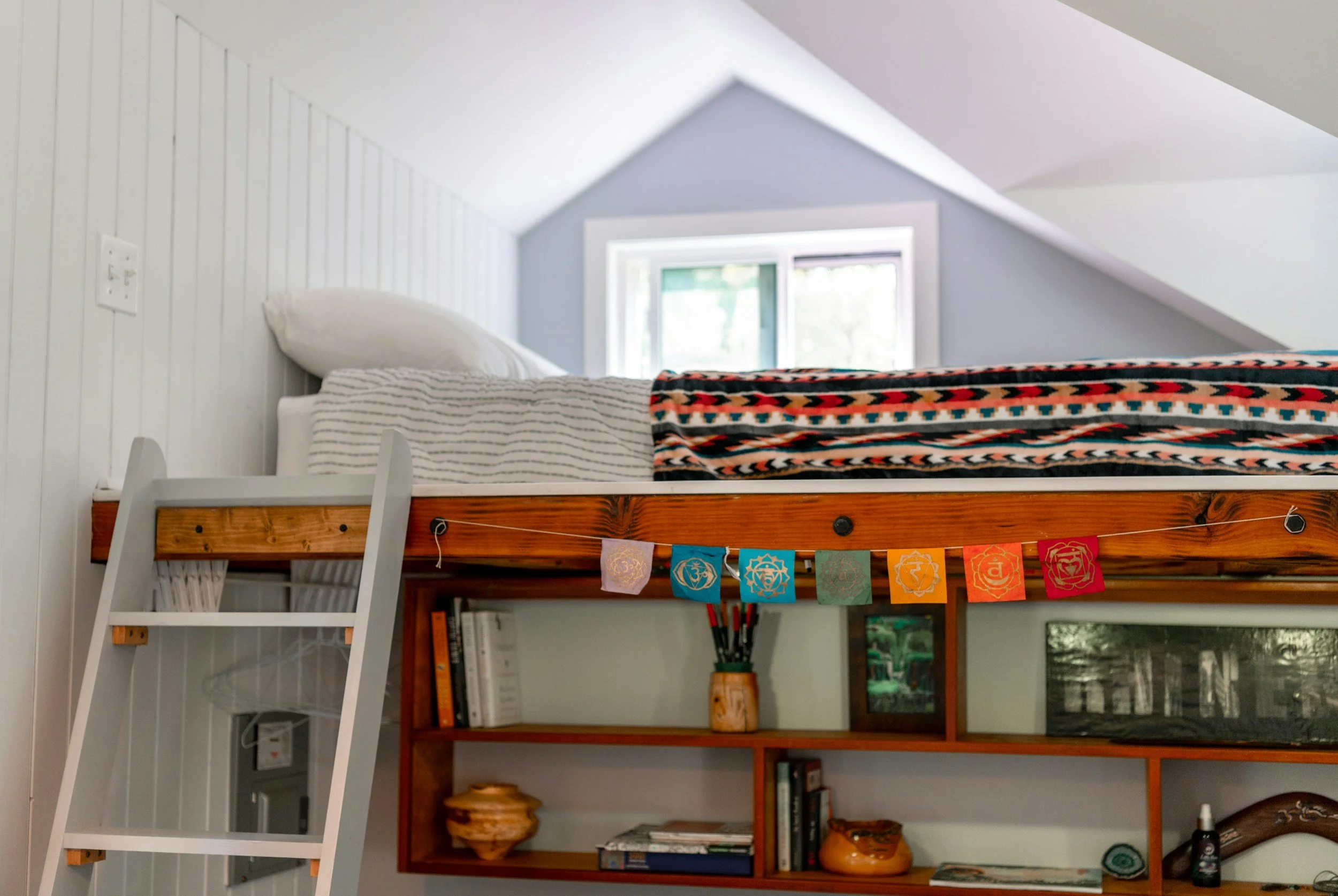
How much ceiling height do you need for a loft bed in a tiny home?
Ceiling height is the single most important factor in whether a loft bed works — and it's where most people make their biggest mistake.
The minimum ceiling height for a functional loft bed is around 7.5 to 8 feet total. Here's why: you need enough height for the mattress, enough clearance above the mattress to sit up comfortably, and enough space below the loft for the area underneath to actually be usable. If you're short on any of those three, the loft creates more problems than it solves.
The math looks something like this: a standard mattress is about 10 to 12 inches thick. Add 36 to 40 inches of sitting clearance above the mattress — the minimum for most adults to sit up in bed without hitting their head — and you're already at 4 feet of loft height before you account for the floor structure and any railing. Below the loft, you want at least 6.5 to 7 feet of clearance for the space to feel livable rather than like a crawl space.
Run those numbers and you'll see quickly: under 9 feet of total ceiling height, a loft bed starts to feel like a compromise. Under 8 feet, it's generally not worth doing. At 10 feet or above, it becomes a genuinely excellent option that doesn't ask guests to sacrifice comfort for square footage.
If your ceiling height is borderline, be honest with yourself. A loft that requires guests to scoot, hunch, or perform any kind of gymnastics to get into bed is going to generate negative reviews regardless of how charming it looks in photos.
Is a loft bed a good idea for an Airbnb or short-term rental?
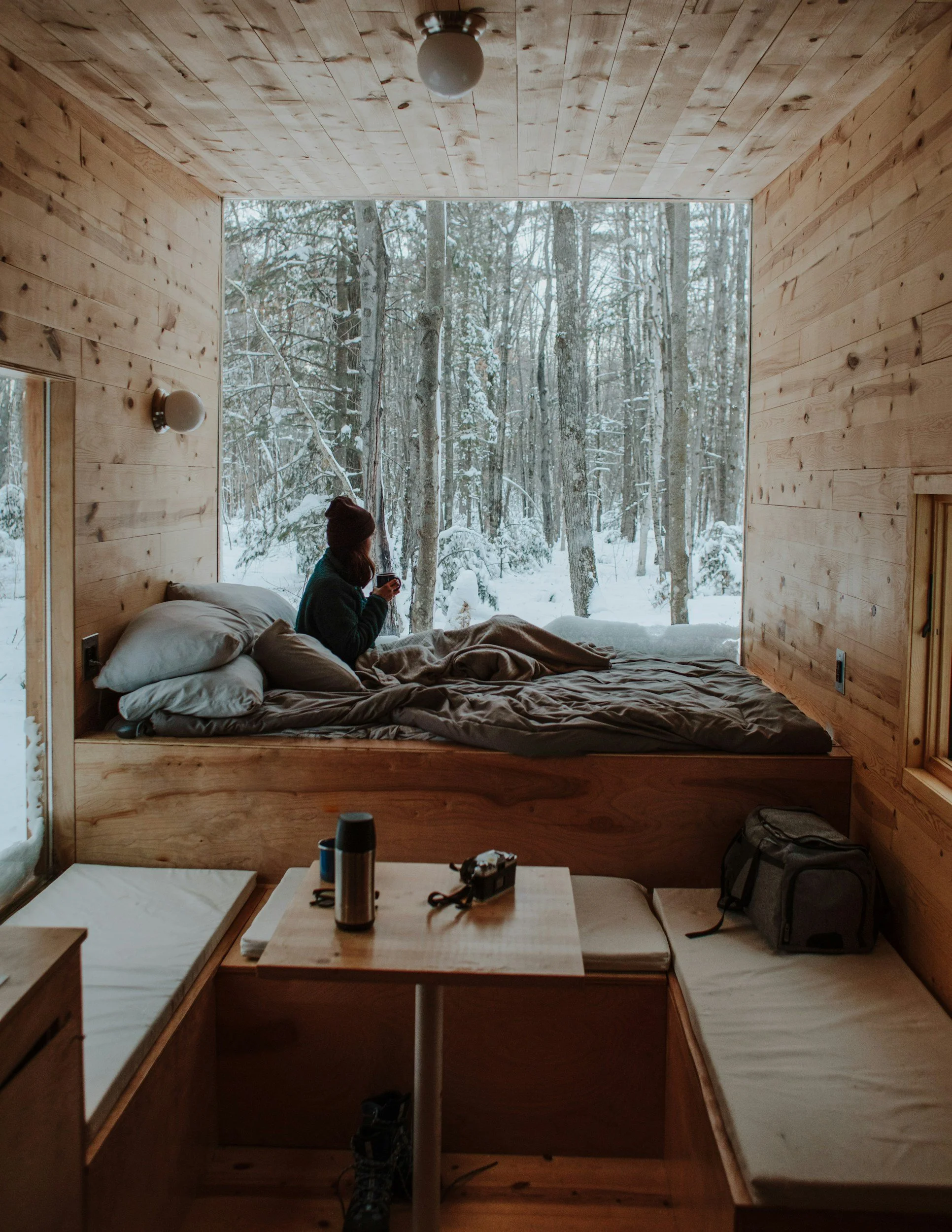
For the right property and the right guest, yes — a loft bed can be one of the most distinctive and beloved features of an STR. For the wrong property or the wrong guest, it's a one-star review waiting to happen.
The STR guest base is broader and more varied than you might assume. Your tiny home or cabin is going to be booked by couples in their 30s looking for an adventure, yes — but also by couples in their 60s looking for a cozy mountain getaway, parents traveling without kids who want something different, guests with mobility limitations who don't want to have to disclose anything to book, and remote workers who need to get a good night's sleep and get on a Zoom call at 8am.
A loft bed serves some of those guests beautifully. It does not serve all of them — and on Airbnb, guests who can't comfortably use a loft bed will often book a different property rather than reach out to ask questions. That means you're filtering your guest pool without necessarily knowing you're doing it.
The practical test: if your target guest is adventurous, physically active, under 60, and booking primarily for the experience of the stay, a loft bed is likely a great fit. If your property is positioned as a comfortable, accessible place to rest and recharge — or if you're in a market that draws a wide age range — a well-designed ground-level bedroom will serve you better. Designing for the guest experience rather than personal preference is one of the core principles that separates high-performing STRs from average ones.
What makes a loft bed in a tiny home feel luxurious instead of claustrophobic?
The difference between a loft bed that guests rave about and one they simply tolerate comes down almost entirely to design execution. Here's what separates the two.
Lighting is the first and most important detail. A loft with no dedicated lighting feels like sleeping in a closet. Small sconces or a strip of warm LED lighting mounted at the side of the loft structure — controlled by a switch accessible from the bed — immediately elevates the experience. Guests should be able to turn a light on and off without getting up, which means a bedside switch or a smart plug accessible from bed is non-negotiable. The same lighting principles that apply throughout the property apply here — this post on how to maximize guest flow in small STRs covers the role lighting plays in how guests experience the whole space.
Ventilation matters more up high than it does at ground level. Heat rises, and guests sleeping in a loft will be sleeping in the warmest part of the room. A ceiling fan positioned to create airflow at loft level, a small USB-powered fan tucked into the loft, or a well-positioned window nearby can make the difference between a comfortable night and a sweaty, restless one. This is one of the most common loft complaints in STR reviews and one of the easiest to prevent.
The loft railing is both a safety element and a design moment. A low-profile railing in warm wood or black steel reads as intentional and polished. A chunky builder-grade railing reads as an afterthought. Invest in getting this detail right — it's one of the first things a guest sees when they look up at the loft and one of the things that photographs best.
Finally, storage in and around the loft makes the experience feel considered. A small shelf at the head of the bed for a phone, a glass of water, and a book. A couple of hooks for charging cables. A small reading light that clips to the railing. These are the touches that turn a loft bed from a sleeping spot into an actual bedroom experience.
What is the best alternative to a loft bed in a tiny home or STR?
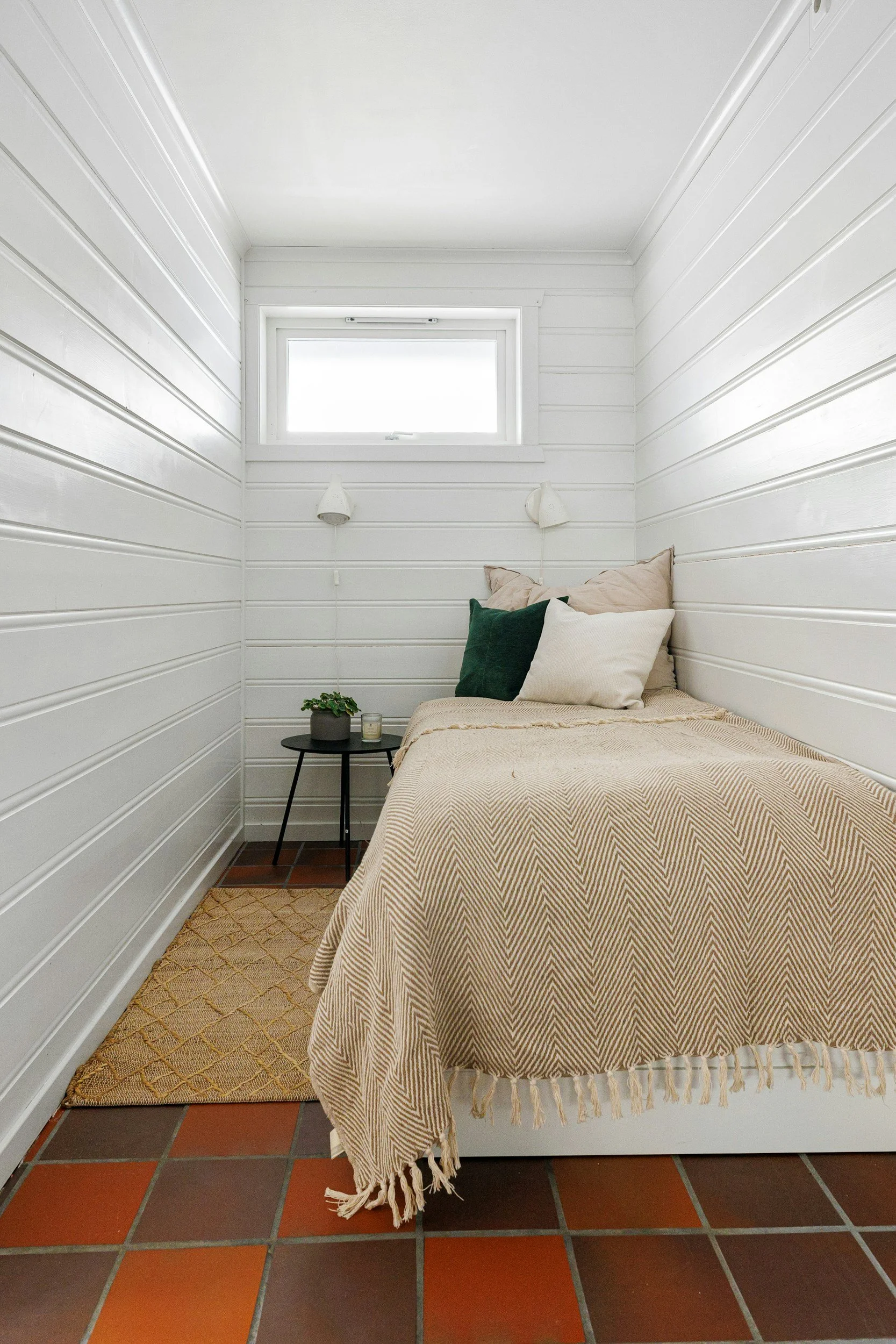
If a loft bed isn't right for your space, ceiling height, or target guest, the good news is that a well-executed ground-level bedroom in a tiny home can be just as compelling — and in many cases, more so.
The Murphy bed is the most functional alternative for tiny homes that need to convert living space into sleeping space. A well-designed Murphy bed — one that looks like built-in cabinetry when closed and deploys into a real, comfortable bed when open — eliminates the ceiling height problem entirely and allows the same square footage to serve double duty. The key is investing in a quality mechanism and surrounding the Murphy bed with built-ins that make the closed configuration look intentional rather than institutional.
A fixed platform bed with elevated storage underneath is another strong option. A bed frame built on a platform with drawer storage or open shelving underneath keeps the bedroom functional without requiring vertical climbing. Pair it with thoughtful lighting, quality bedding, and a headboard that anchors the space visually, and a ground-level bedroom in a tiny home can feel just as special as anything you'd find in a loft.
The honest answer is that neither option is universally better. Both can be executed beautifully. Both can be executed badly. The question is which one fits your specific space, your specific ceiling height, and the specific guests you're trying to attract.
Frequently Asked Questions
What is the minimum ceiling height for a loft bed in a tiny home?
The practical minimum is around 8 feet total ceiling height, though 9 to 10 feet is significantly more comfortable. At 8 feet, sitting up fully in the loft is possible but tight for taller guests. Below 8 feet, the loft experience becomes uncomfortable enough that most designers recommend a ground-level sleeping solution instead.
Are loft beds safe in short-term rentals?
Yes, when properly designed and built. Key safety requirements include a sturdy railing at least 36 inches high, a secure and comfortable ladder or stairs with adequate handholds, a weight-rated loft structure, and clear instructions for guests on safe use. Disclosure in your listing that the sleeping space is a loft is also important so guests self-select appropriately.
Do loft beds in Airbnbs get negative reviews?
They can — but negative reviews about loft beds are almost always about execution rather than the concept itself. Common complaints include insufficient headroom, inadequate lighting, poor ventilation, and unstable or uncomfortable ladders. A well-executed loft with proper ceiling height, good lighting, and a solid access point almost never generates complaints.
What type of ladder is best for a tiny home loft bed?
A ship's ladder — a steep, compact ladder with handrails on both sides — is the most practical option for tiny homes. It takes up less floor space than a conventional staircase, is easier to climb than a vertical rung ladder, and can be built to look genuinely beautiful in wood or metal. Full staircases with storage underneath are a premium option that completely solves the loft access problem but requires more floor space.
Can guests of all ages use a loft bed comfortably?
No — and this is important to disclose clearly in your listing. Loft beds require climbing and a degree of physical mobility that not all guests have. Older guests, guests with joint issues, guests with balance concerns, and guests who are very tall may all find a loft bed uncomfortable or inaccessible. Disclosing the loft in your listing description and photos allows guests to make an informed booking decision.
Should a tiny home STR have a loft bed or a Murphy bed?
It depends on your ceiling height and guest profile. A loft bed is the better choice when you have 9+ feet of ceiling height, a younger and more active guest base, and a layout where the space underneath the loft can serve a meaningful purpose. A Murphy bed is the better choice when ceiling height is limited, your guest base is broader or older, or you need the sleeping area to fully convert to living space during the day.
Designing a tiny home or short-term rental and not sure which sleeping solution is right for your space? At Sukkha Interior Design, we specialize in small spaces that work hard and look beautiful — from loft to layout to every detail in between. Book a consult and let's figure out what works best for your property.

If you are looking to transform your space, interested in Asheville real estate, or just want to say hi, I'd love to connect!
Not quite ready for a full on design project? Take a step towards transformation with the 30 Minute Home Refresh Guide.
READ MORE


Let’s Connect