Outside the Box: The Outdoor Upgrades That Make Tiny Home STR Guests Never Want to Leave
The short answer: The highest-ROI outdoor upgrades for tiny home STRs are a fire feature (fire pit or propane fire table), a covered seating area with comfortable furniture, string lighting, and at minimum one memorable element — a hammock, a hot tub, a swing, a view-facing chair setup — that gives guests a reason to be outside. Done well, outdoor spaces are the single most mentioned feature in five-star reviews for mountain and nature-adjacent properties.
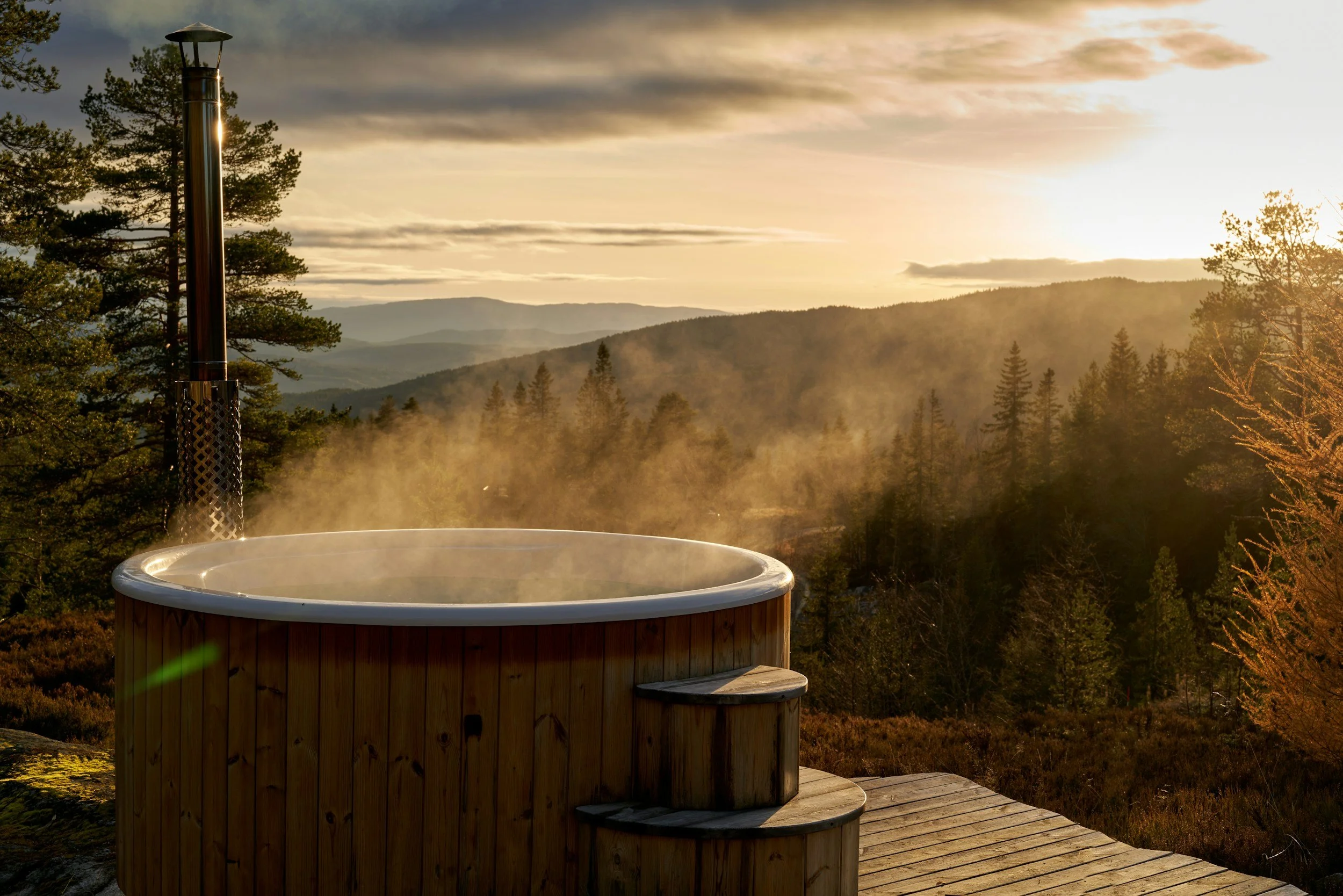
Why does outdoor space matter so much for tiny home STRs?
Here's something that doesn't get said enough in the STR world: guests who book tiny homes and small cabins are not primarily buying square footage. They're buying an experience. And in a mountain, forest, or nature-adjacent setting, that experience is fundamentally about being outside.
The indoor space matters — it needs to be comfortable, well-designed, and functional. But for most guests staying in a tiny home or cabin, the indoor space is where they sleep, eat, and occasionally get caught in the rain. The outdoor space is where they actually live during the trip. It's where they have their morning coffee, their sunset cocktails, their late-night conversations around the fire. It's where they take the photos that end up on Instagram. It's where they decide whether they're coming back.
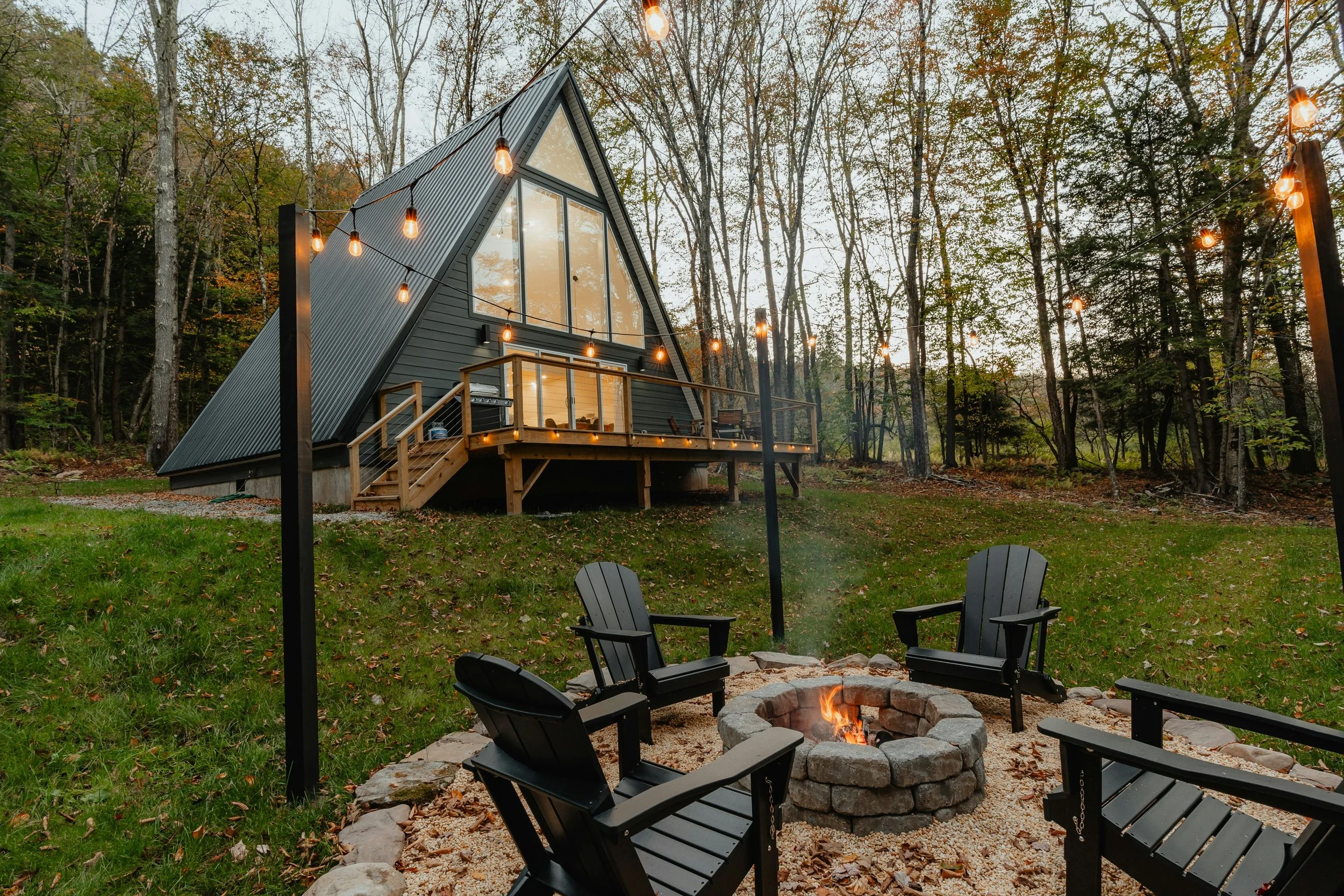
This is why outdoor space is one of the highest-ROI investment categories in tiny home STR design. A $2,000 outdoor upgrade — a fire pit, a string-lit seating area, a couple of Adirondack chairs positioned to capture the view — can add $30 to $50 to your nightly rate, generate reviews that mention it by name, and become the featured photo in your listing. The math on that investment is almost always favorable. AirDNA's market data consistently shows that outdoor amenities like fire features and hot tubs are among the top revenue drivers across nature-adjacent STR markets. And when the rest of your space is pulling its weight too, the effect compounds — which is why designing the full property as a cohesive guest experience matters as much as any single upgrade.
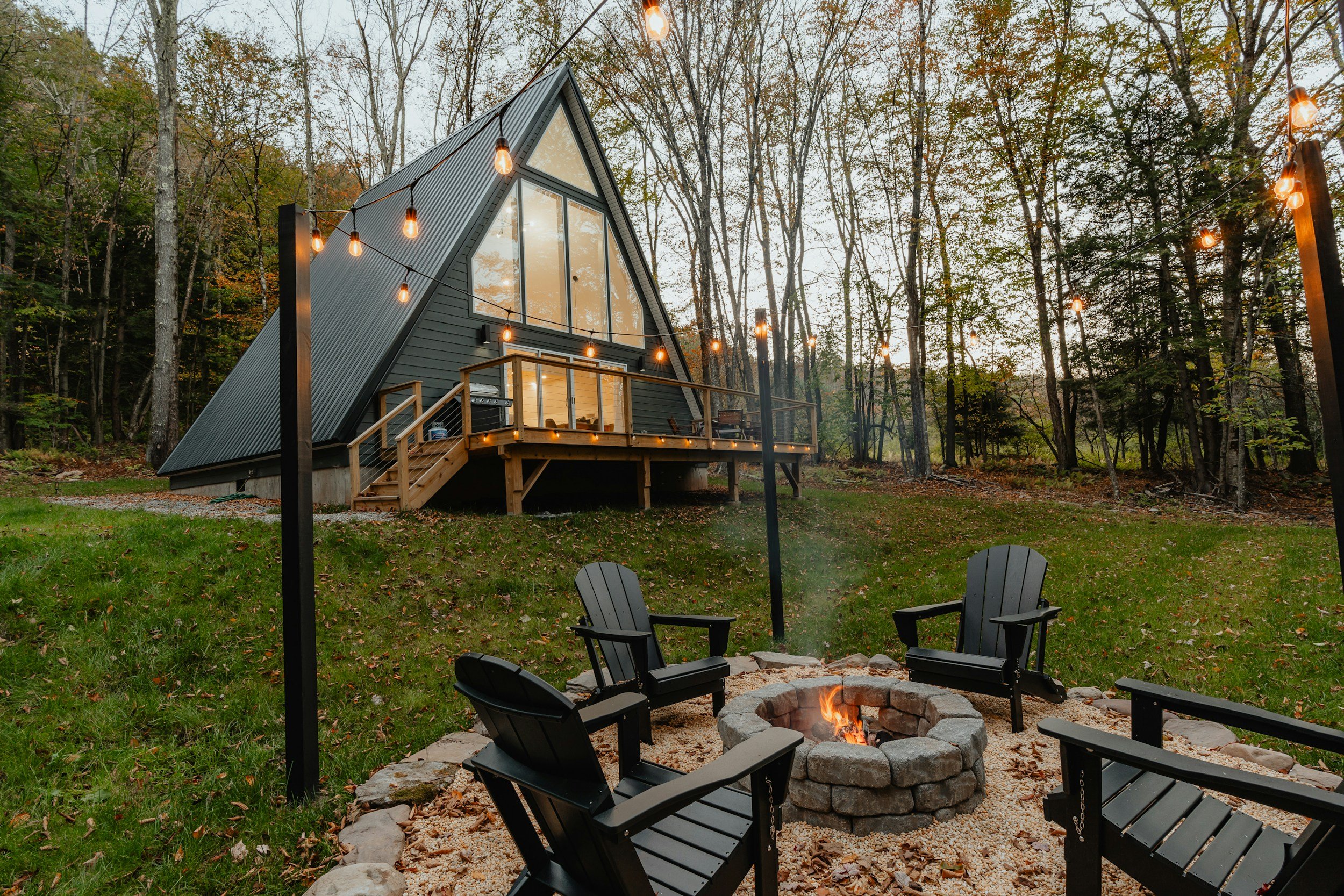
What is the most important outdoor upgrade for an Airbnb or STR?
A fire feature is consistently the single highest-impact outdoor upgrade for STRs in nature-adjacent markets. It doesn't matter whether it's a simple wood-burning fire pit, a gas fire table, or a propane insert in a stone surround — the effect is the same. Fire gives guests a reason to be outside after dark. It creates atmosphere. It becomes the gathering point for the evening. And it shows up in listing photos, in reviews, and in the filters guests use when searching.
The format that works best depends on your property and your market. A wood-burning fire pit is the most atmospheric and often the most photogenic — there's something genuinely primal about a real fire that a propane version can't fully replicate. But wood-burning pits require more management, generate ash, and are prohibited in some areas during high fire danger periods.
A propane fire table or fire pit is more convenient, cleaner, and manageable in a wider range of conditions. It lights with a switch, doesn't require splitting or hauling wood, and can be turned off instantly. For a rental property where you can't always control how the fire feature is used, propane is often the more practical choice. This breakdown of fire pit options for outdoor spaces covers the key formats and what to look for in each.
Whichever format you choose, the placement matters as much as the fire feature itself. Position it where guests will naturally gather — in the center of the seating area, with chairs arranged around it, ideally with a view backdrop if your property has one. A fire pit at the edge of the property, disconnected from the seating, gets used far less than one that's the natural center of the outdoor room.
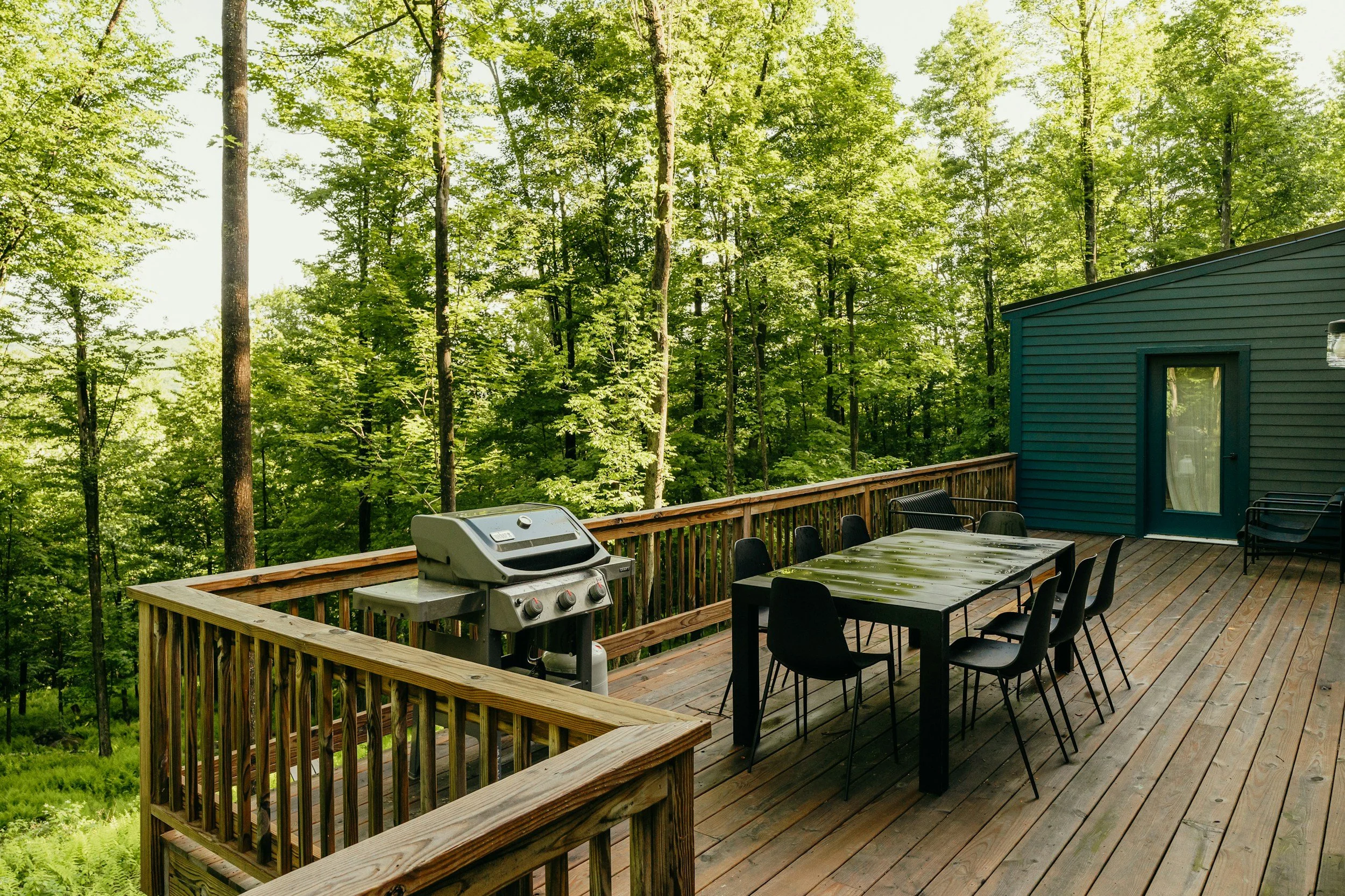
What outdoor seating works best for a tiny home STR?
Outdoor seating for an STR has to do something residential outdoor furniture doesn't have to do: hold up under constant use, varied weather, and guests who don't treat it the way they'd treat their own furniture.
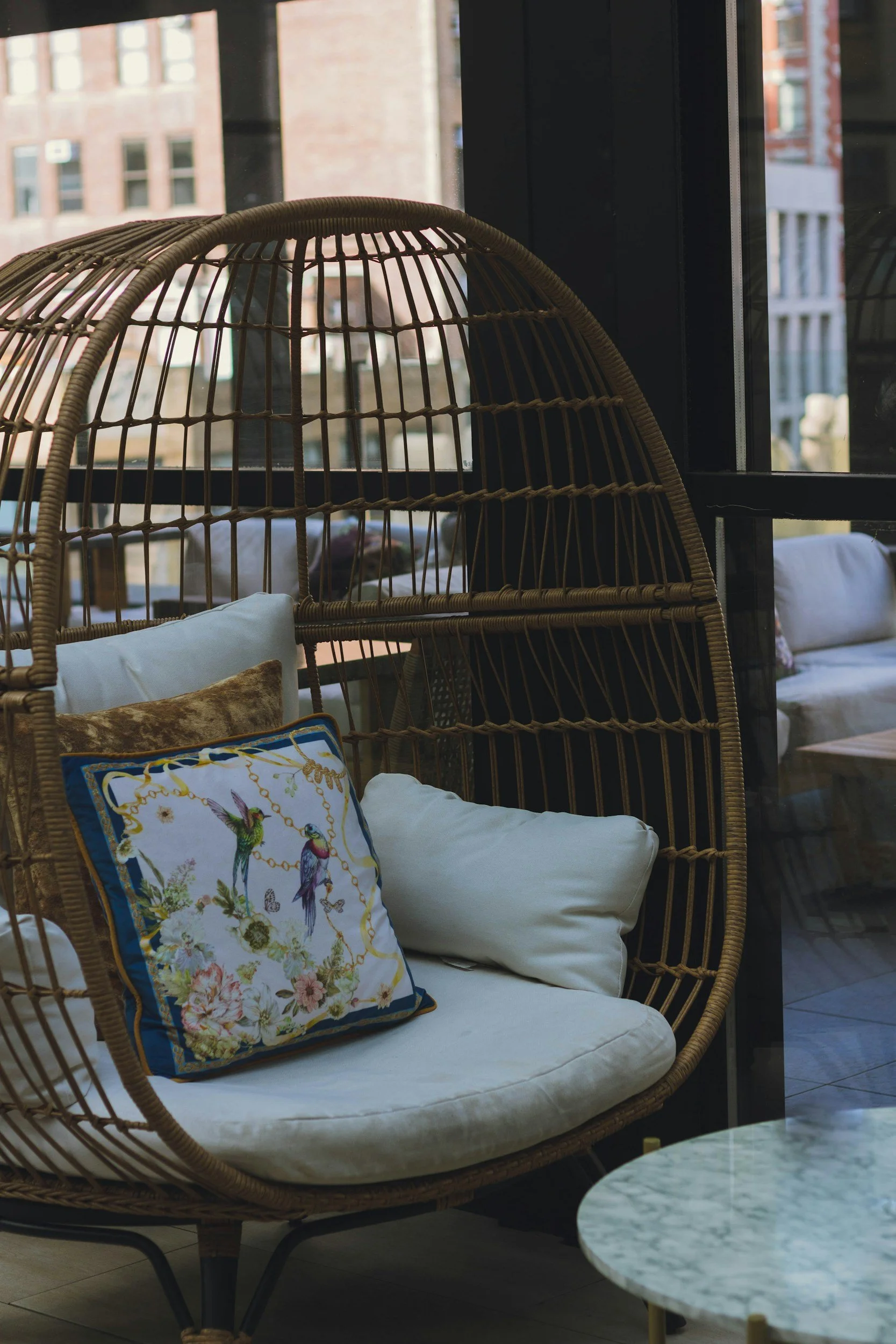
This means material matters enormously. Powder-coated steel, cast aluminum, teak, and all-weather wicker (with high-quality resin cores) are the most durable options for outdoor STR furniture. Avoid thin aluminum that dents easily, untreated wood that warps and cracks, and anything with fabric cushions that aren't rated for UV and moisture resistance. Cushion covers should be removable and washable — STR guests spill things, and you need to be able to clean up without replacing the entire cushion. This guide to outdoor furniture materials from Architectural Digest is a useful reference for understanding which materials hold up best in different climates.
For seating configuration, think about creating an outdoor room rather than just placing chairs outside. An outdoor sofa with a coffee table, a couple of armchairs, and a fire feature creates a living room dynamic that guests instinctively know how to use. Two Adirondack chairs facing a view is a simpler setup that works beautifully for properties where the view is the main event.
The one thing to avoid: uncomfortable seating. This sounds obvious, but a significant percentage of outdoor furniture is more decorative than functional. If your guests can't comfortably sit in the outdoor chairs for more than twenty minutes without shifting or getting up, the outdoor space won't get used the way it should — and you'll stop seeing it mentioned in reviews.
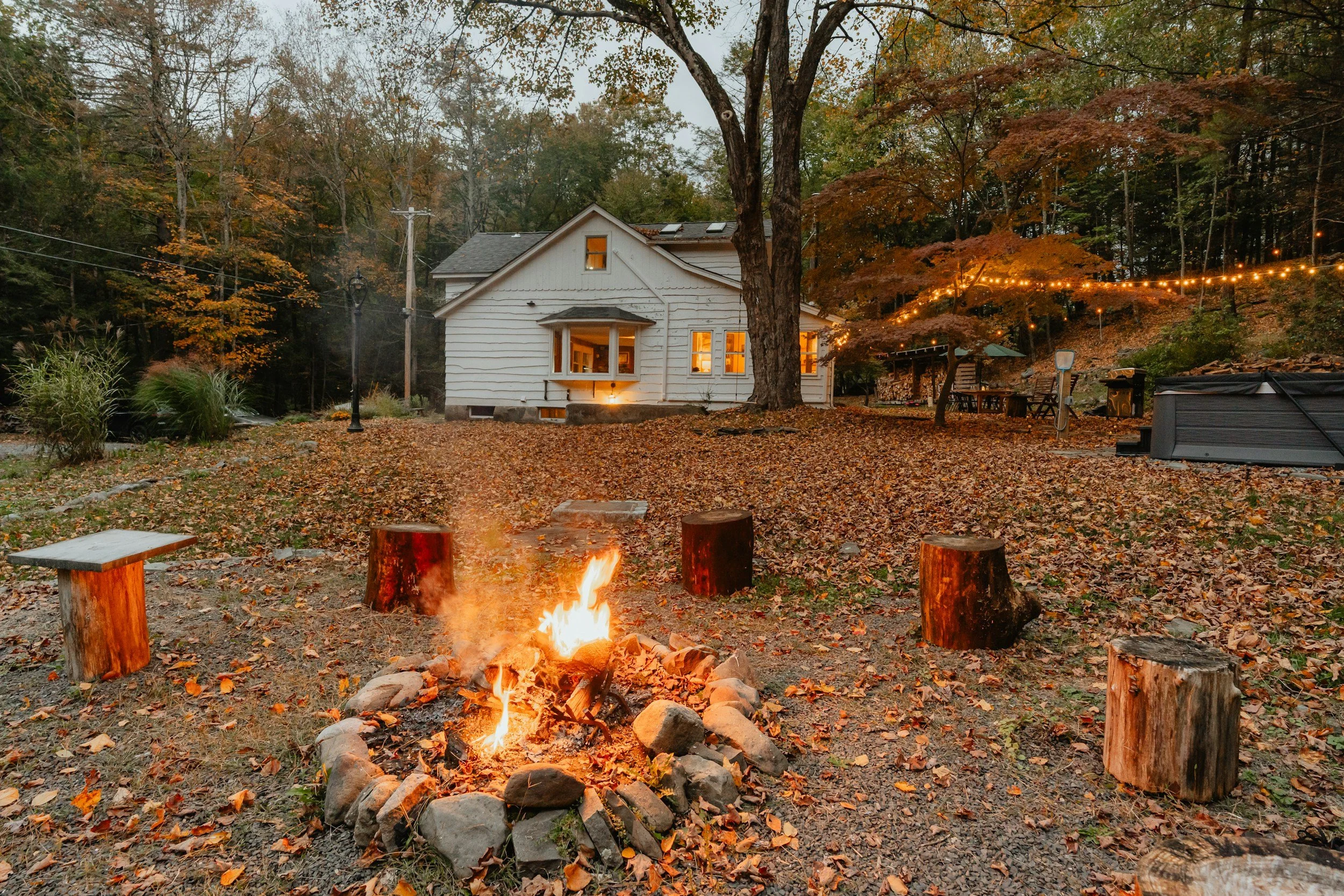
How do you create atmosphere in a small outdoor space?
Lighting is the single most effective tool for creating atmosphere in any outdoor space — and it's one of the most affordable upgrades you can make.
String lights — the warm Edison-bulb style, strung overhead in a zig-zag pattern or along the perimeter of the outdoor area — immediately transform a functional outdoor space into an atmospheric one. They look beautiful in photos, they extend the usability of the outdoor area into the evening, and they cost a fraction of what they contribute in perceived value.
For a tiny home STR outdoor space, a simple string light setup can cost as little as $50 to $150 in materials and be installed in an afternoon. The ROI on that investment — in listing photo quality, in guest experience, in reviews that specifically mention the ambiance — is extraordinary. Apartment Therapy's roundup of outdoor lighting ideas has solid practical options across a range of price points if you want a starting point for shopping.
Beyond string lights, consider pathway lighting that guides guests from the indoor space to the fire pit or seating area. Small solar stake lights are inexpensive, require no wiring, and make the property feel safer and more polished after dark. A lantern or two on the outdoor table adds warmth and a finishing touch.
Cover matters for weather flexibility. A pergola, a shade sail, or even a simple umbrella extends the usability of the outdoor space in both hot sun and light rain. Covered outdoor seating is consistently rated higher by guests than uncovered seating because it removes the weather variable from the outdoor experience. In mountain markets like Western NC where afternoon thunderstorms are a regular feature of summer, a covered seating area isn't a luxury — it's a booking differentiator. How design choices translate directly to bookings and revenue applies to outdoor spaces just as much as interior ones.
What is the one outdoor feature that gets the most five-star review mentions for tiny home STRs?
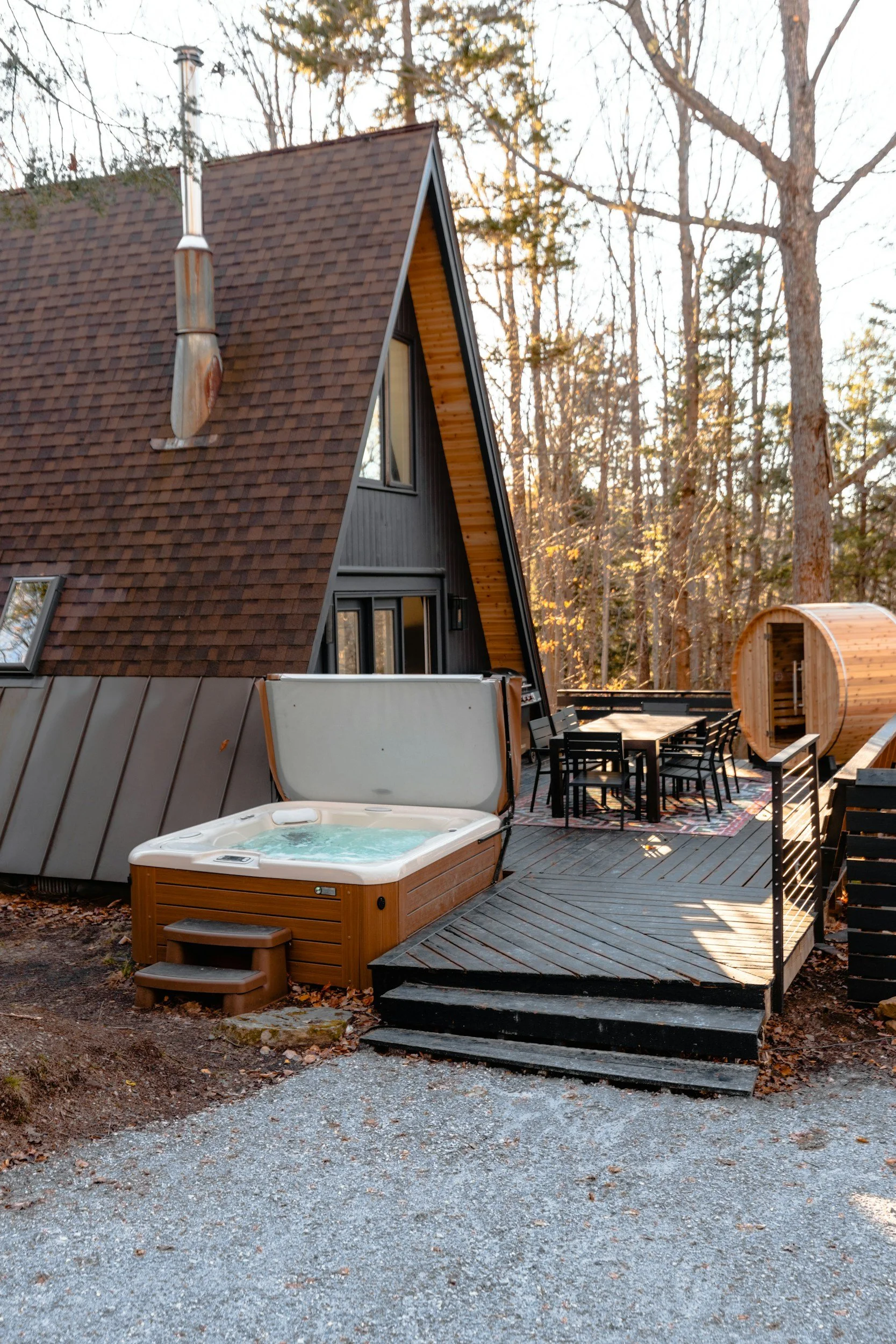
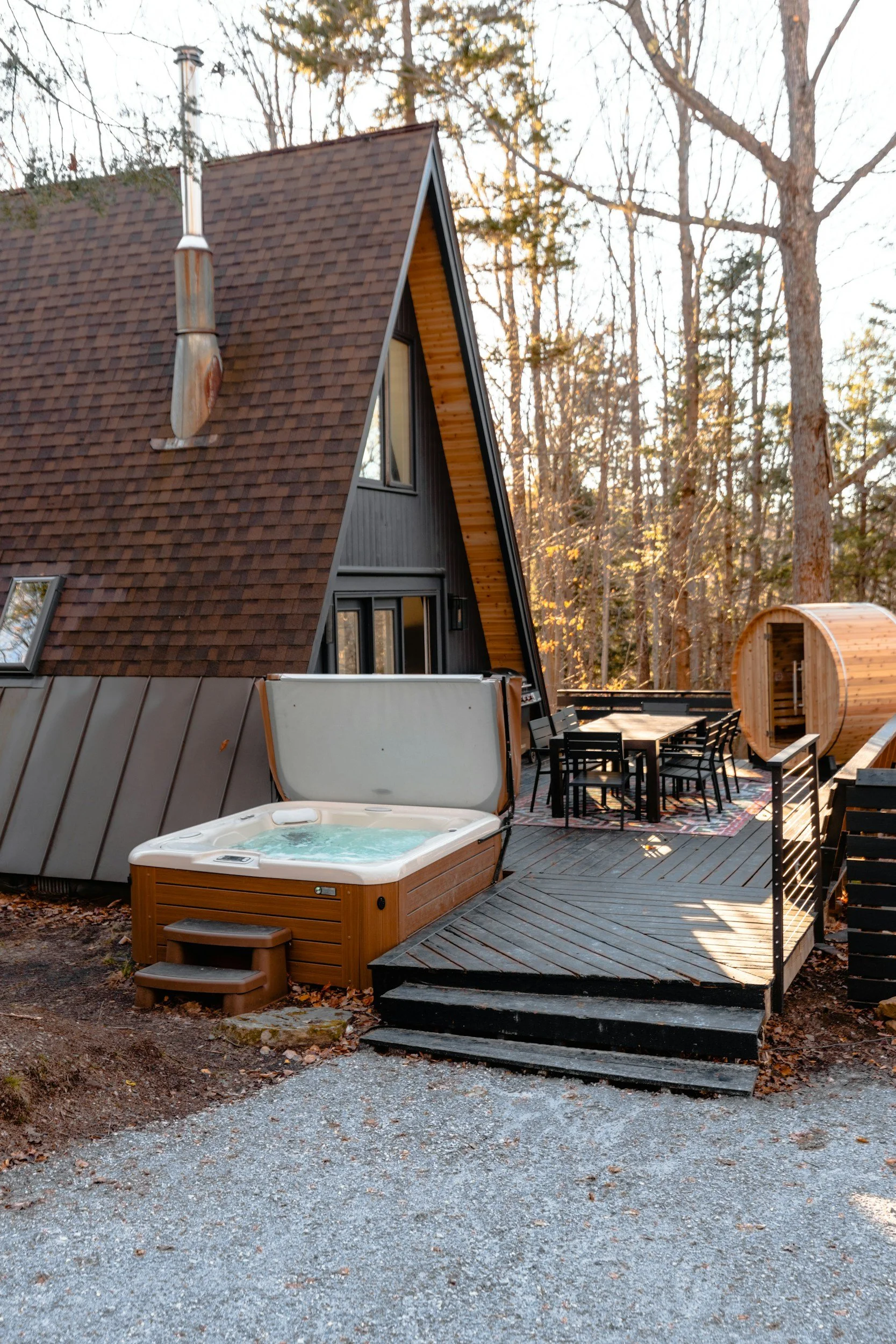
Hot tubs and soaking tubs win this category by a wide margin — and have for years. In outdoor STR spaces, nothing generates reviews, drives bookings, or justifies premium pricing the way a hot tub does.
The math on a hot tub investment for an STR is well-established at this point. A quality hot tub costs between $5,000 and $12,000 installed, depending on size and features. Properties with hot tubs in popular markets consistently command $30 to $80 more per night than comparable properties without. At modest occupancy, that premium pays back the hot tub cost within one to three years — and continues generating returns indefinitely. Lodgify's data on amenity impact puts hot tubs among the top three amenities for booking conversion in leisure markets.
If a full hot tub isn't in the budget or isn't practical for your property, a cedar soaking tub is a compelling alternative. A Japanese-style cedar soaking tub — either wood-fired or electric — costs significantly less, is more manageable for a rental context, photographs beautifully, and appeals to the same guest desire for an outdoor bathing experience that makes hot tubs so effective.
Beyond hot tubs, hammocks are the most booking-influential low-cost outdoor feature. A good hammock — hung between trees or on a quality stand, positioned with a view — costs under $200 and shows up in listing photos, guest photos, and reviews disproportionately to its cost. Pair a great outdoor space with a well-designed interior and you've got the combination that earns the kind of five-star reviews that mention the property by name and bring guests back the next season.
What outdoor upgrades should you skip for a tiny home STR?
Not every outdoor upgrade is worth it in an STR context. A few that consistently underperform:
Elaborate landscaping. Guests don't notice your perennial garden. They notice whether there's somewhere comfortable to sit, a fire to gather around, and good lighting. A beautifully landscaped property with no seating area will generate fewer mentions in reviews than a simple gravel pad with Adirondack chairs and a fire pit.
In-ground pools in mountain or cool-climate markets. The maintenance cost is high, the usable season is short, and the guest demand doesn't justify the investment in most mountain markets. Hot tubs dramatically outperform pools in mountain STR contexts.
Outdoor TVs. Guests who book tiny home STRs and nature-adjacent cabins are generally not going to a mountain cabin to watch television outside. An outdoor TV is a maintenance liability and a relatively low-value amenity for this guest type.
Children's play equipment unless your target guest is families with young children. If your market is couples and small groups of adults — which describes most tiny home STR markets — a playset takes up space and conveys a different guest profile than you're likely targeting.
Frequently Asked Questions
What outdoor amenities increase Airbnb bookings the most?
In mountain and nature-adjacent markets, fire features and hot tubs or soaking tubs have the highest impact on booking rate and nightly rate of any outdoor amenity. String lighting, comfortable covered seating, and hammocks also perform well relative to their cost.
How much does it cost to upgrade an STR outdoor space?
A basic but effective outdoor upgrade — fire pit, string lights, comfortable seating for four, and a hammock — can be accomplished for $1,500 to $3,000 in most markets. A full outdoor renovation including a hot tub, pergola, and landscaped seating area would run $8,000 to $20,000 depending on scope and location.
Does a hot tub increase Airbnb revenue?
Yes — consistently and significantly. Properties with hot tubs in popular markets typically command $30 to $80 more per night than comparable properties without, and see higher occupancy rates due to filtering by the "hot tub" amenity search option. The investment typically pays back within one to three years and continues generating returns indefinitely.
How do I make a small outdoor space feel bigger for an STR?
Use the vertical plane — string lights overhead, tall planters, a pergola or shade structure — to draw the eye up and create the sense of a defined outdoor room. Keep the floor surface consistent (gravel, pavers, or decking throughout rather than mixed materials). Position seating to face the best view or focal point. And avoid cluttering small outdoor spaces with too many pieces — fewer, better pieces feel more expansive than a crowded arrangement.
What is the best fire pit for a short-term rental?
A propane fire pit or fire table is generally the most practical choice for STRs due to ease of use, consistent performance, and lower maintenance than wood-burning options. For properties where the fire experience is central to the brand, a well-designed wood-burning fire pit with a spark screen is more atmospheric and more photogenic, but requires more guest management.
Do outdoor spaces matter for tiny home STRs in cold-weather climates?
Yes — possibly more than in warm climates. Guests who book tiny homes in cold-weather mountain markets specifically seek the outdoor cold-weather experience: fires, hot tubs, crisp air, and stargazing. A well-equipped outdoor space with a fire feature and a hot tub or soaking tub is one of the most compelling listings in a cold-weather market regardless of season.
Ready to transform your tiny home STR outdoor space into a booking magnet? At Sukkha Interior Design, we design outdoor and indoor spaces that photograph beautifully, earn five-star reviews, and command premium rates. Book a design consult and let's talk about what your property could be.

If you are looking to transform your space, interested in Asheville real estate, or just want to say hi, I'd love to connect!
Not quite ready for a full on design project? Take a step towards transformation with the 30 Minute Home Refresh Guide.
READ MORE
Let’s Connect