Small Space, Huge Personality: The Design Moves That Make Tiny Homes Feel Anything But
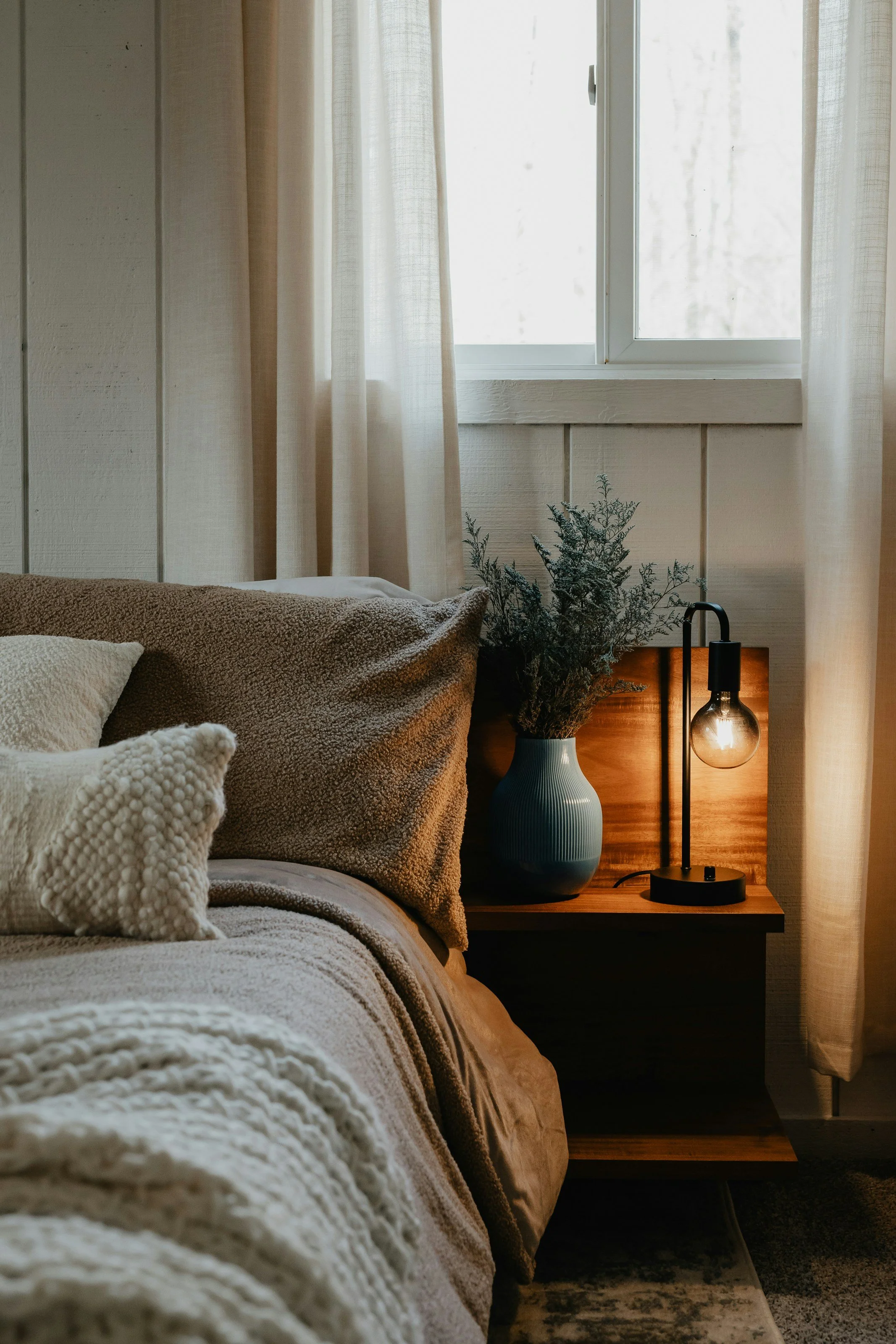
The short answer: The design moves that add the most personality to a tiny home without adding visual clutter are: a deliberate color palette with at least one bold choice, locally or personally meaningful art, a mix of textures within a cohesive color story, one or two statement pieces that carry the room's personality, and thoughtfully curated objects that tell a story. The key is intention — every element should earn its place and contribute to a unified point of view.
Why do so many tiny homes feel generic despite being small?
There's a design trap that a lot of tiny home owners fall into — and it's completely understandable. The space is small, you're worried about it feeling cluttered, so you keep everything neutral and minimal. White walls. Beige furniture. No art. As few objects as possible.
The result is a space that feels safe, functional, and completely forgettable.
Here's the paradox: the tiny homes and small STRs that feel the most spacious and welcoming are almost never the most minimal ones. They're the ones with personality — with a clear point of view, a deliberate color palette, art that means something, objects that have a story, and details that make you look twice. Paradoxically, a space with character feels bigger than a space without one, because there's something for the eye to engage with rather than a void that emphasizes the limitations. Dwell's coverage of well-designed small homes repeatedly bears this out — the most celebrated tiny homes are never the blandest ones.
The goal isn't minimalism for its own sake. The goal is intentionality — where everything that's in the space is there for a reason, and everything that's there contributes to a unified feeling.
Here's how to build that.
How do you add color to a tiny home without making it feel smaller?
Color is the most powerful personality tool in any interior — and the most misunderstood in small spaces. The conventional wisdom says "keep small spaces light and neutral." The reality is more nuanced.
Light and neutral absolutely has its place in tiny home design. Light walls reflect light, making a space feel more open. A cohesive neutral palette prevents visual fragmentation, which can make a small space feel chaotic. These are real design principles and they're worth following.
But "light and neutral" doesn't mean "colorless." And it definitely doesn't mean "beige everything."
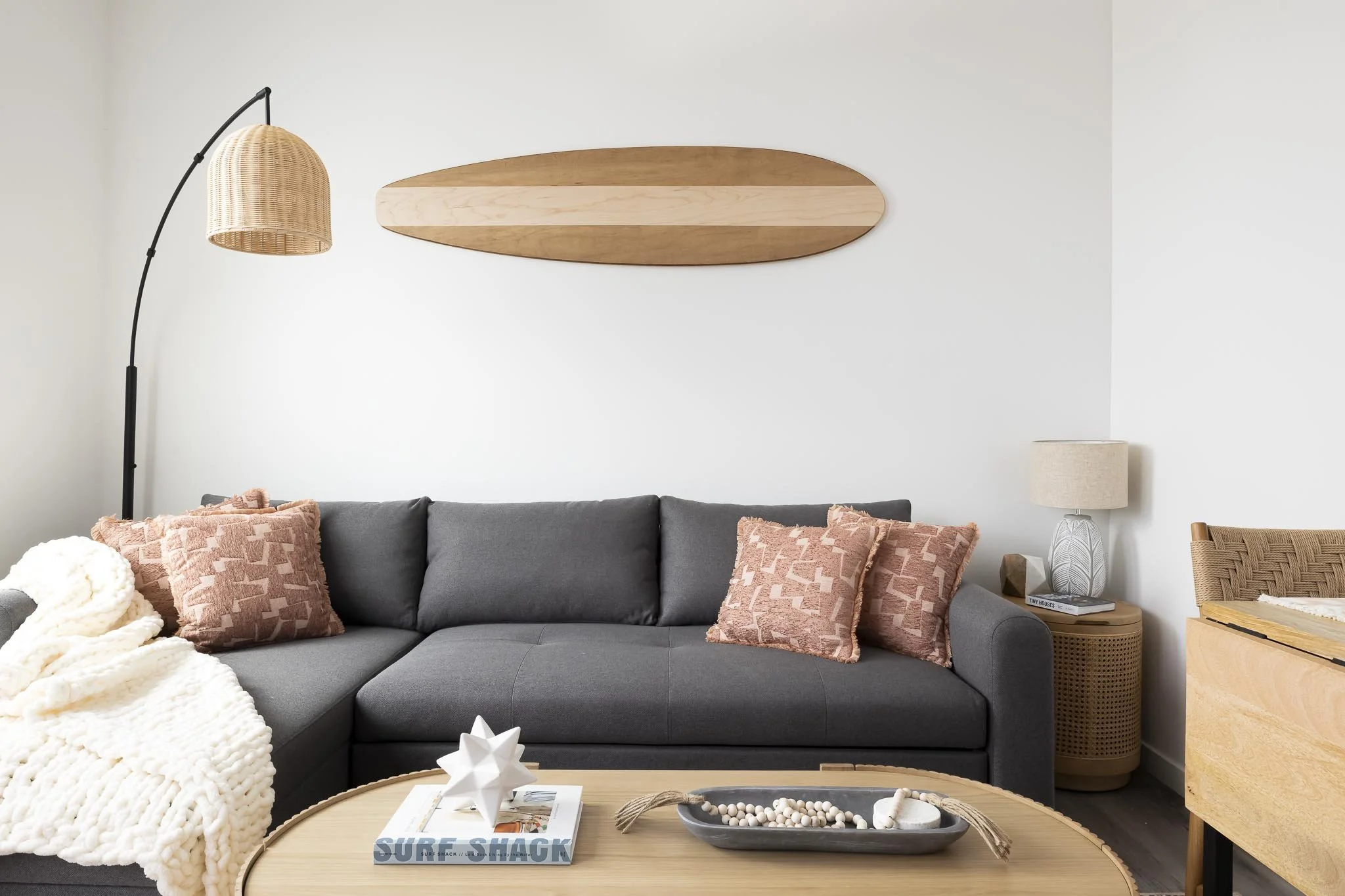
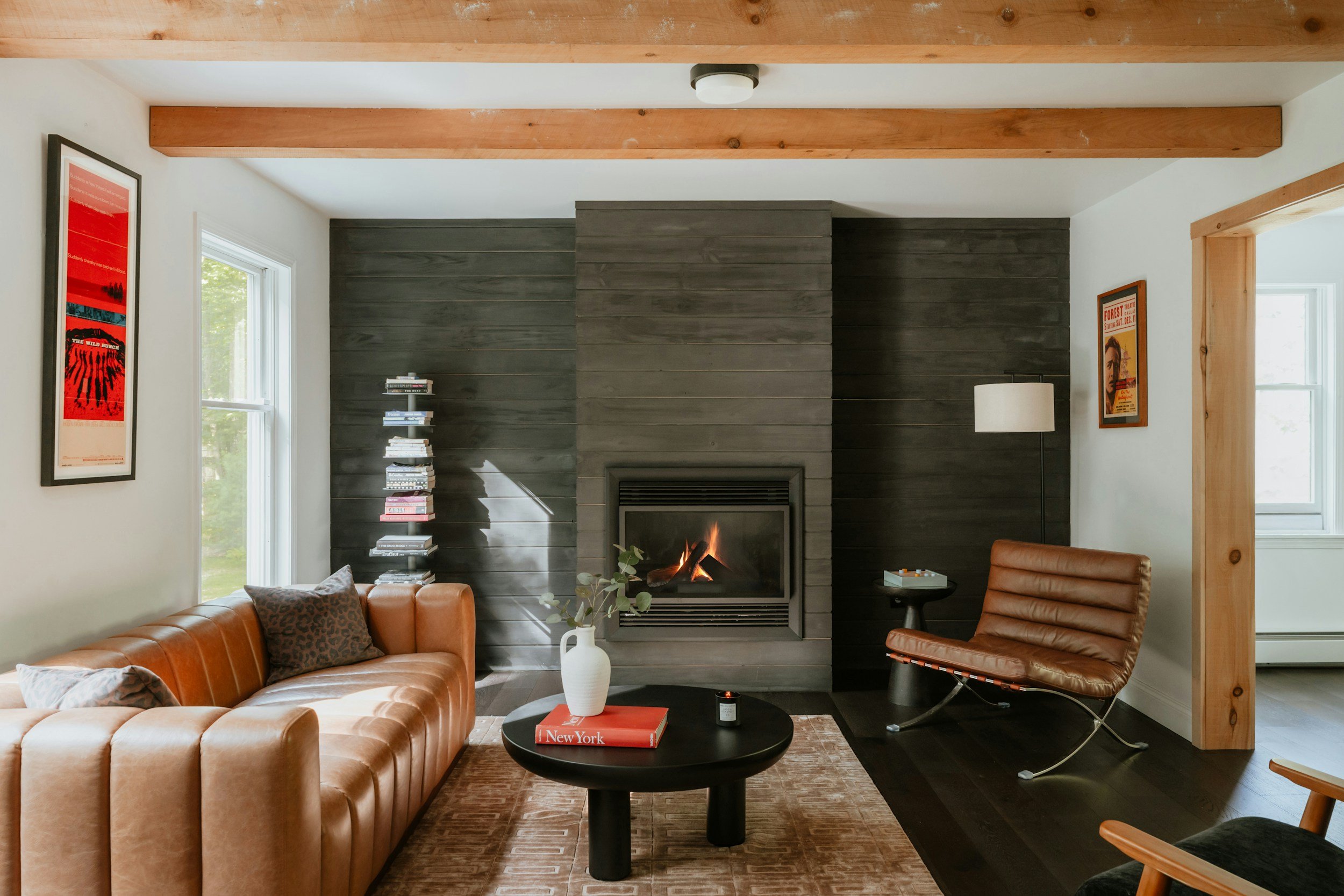
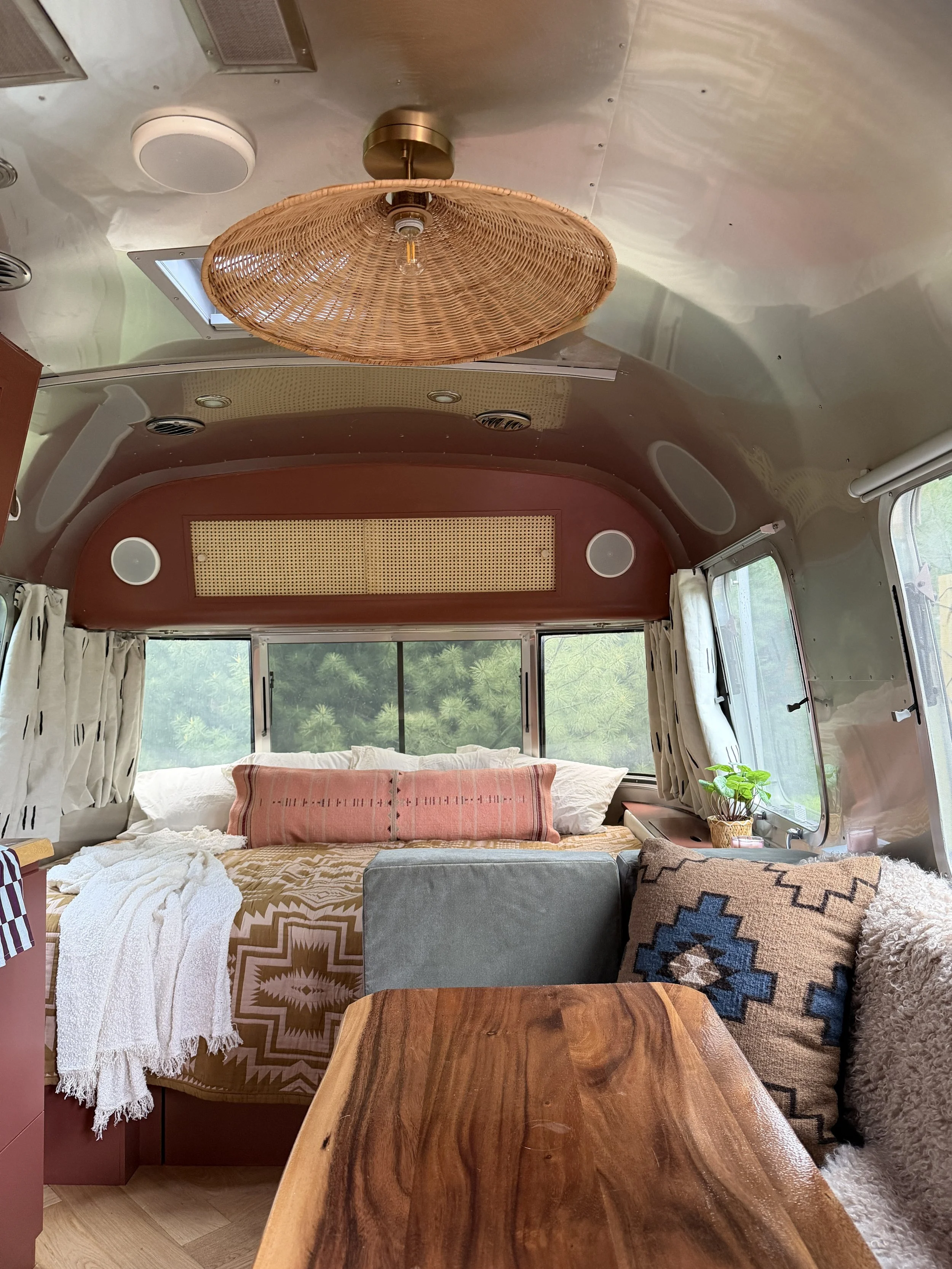
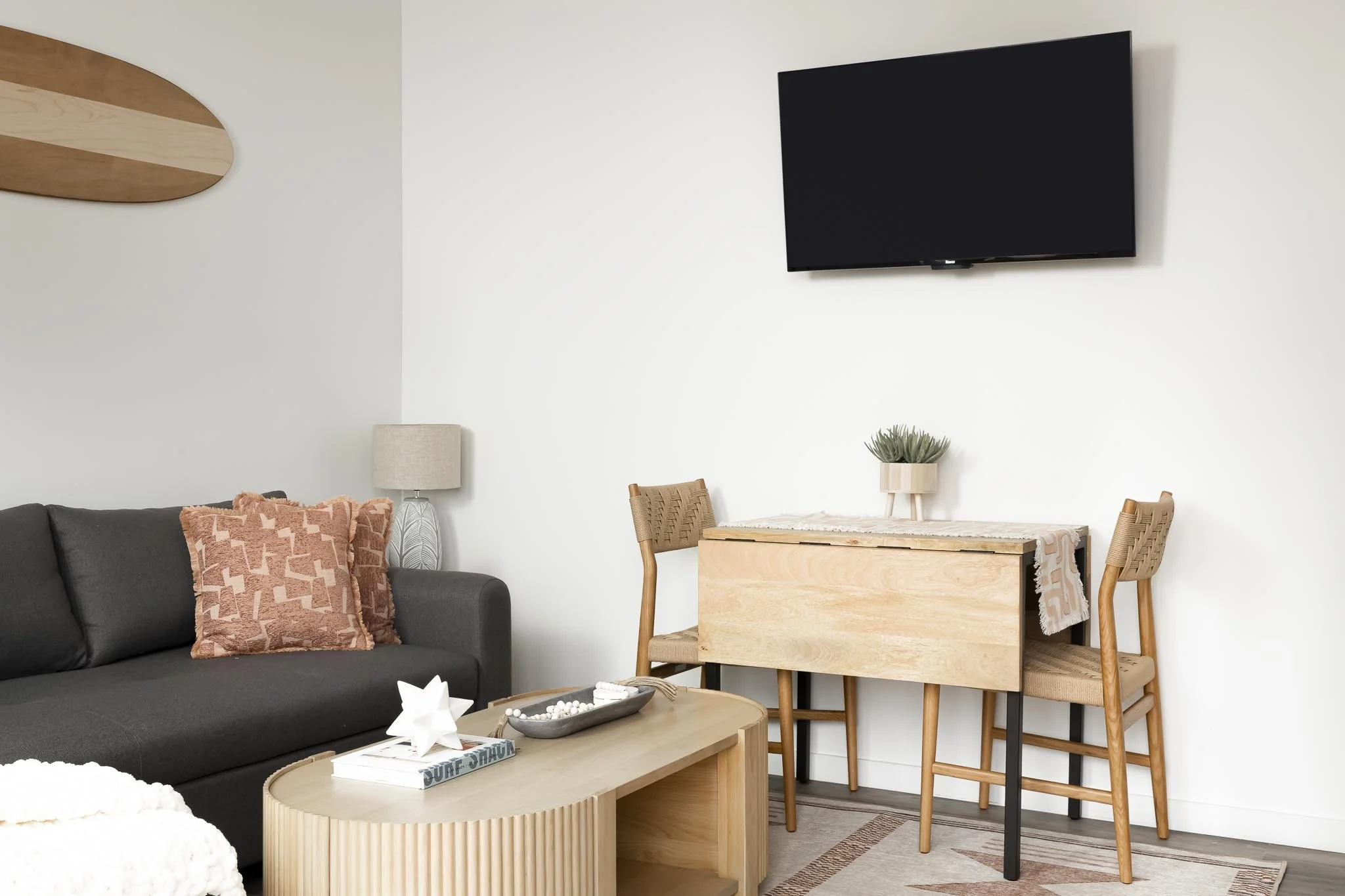
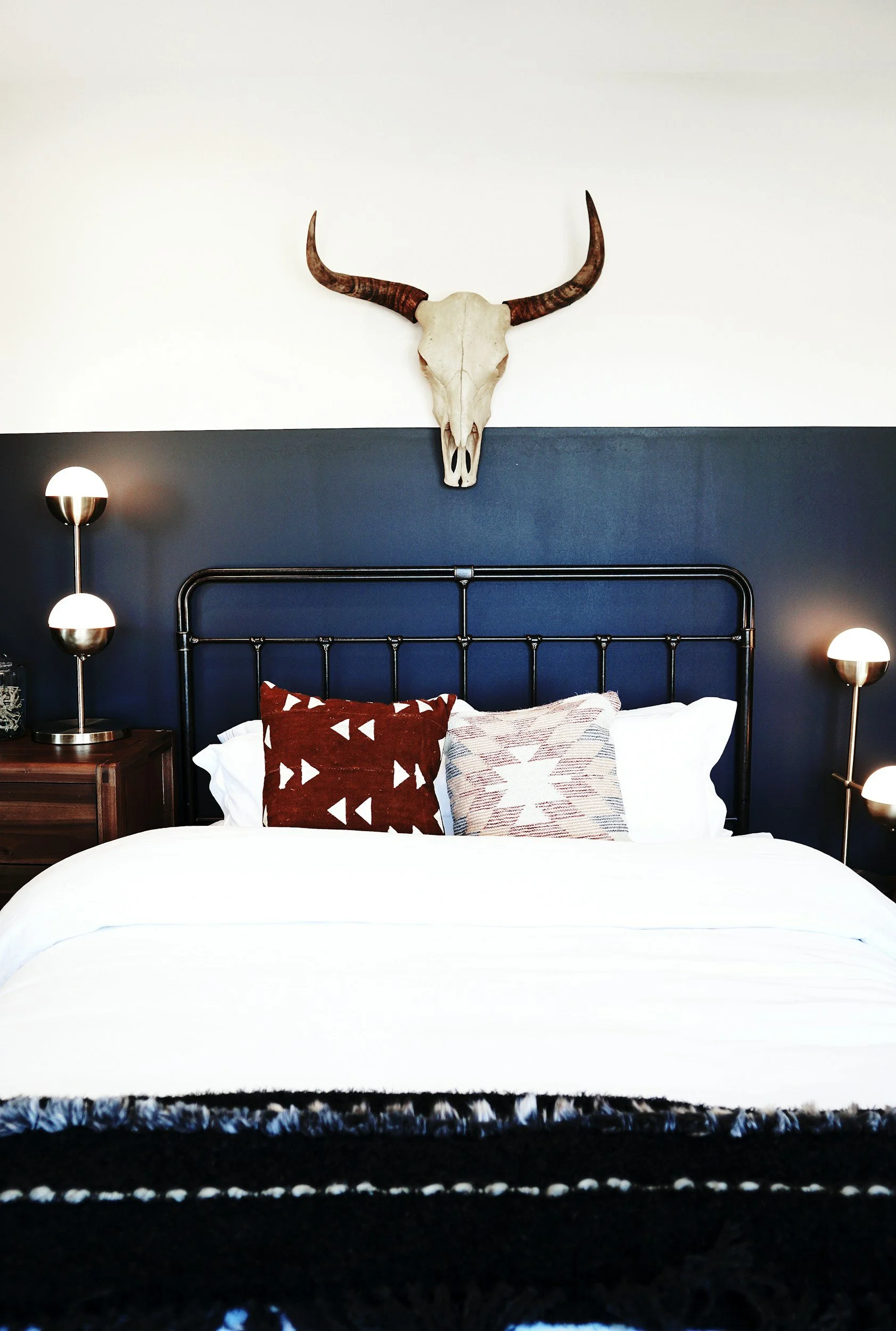
The most effective approach for a tiny home color palette is to establish a neutral foundation — warm white, soft greige, light sage, or cream walls — and then introduce personality through color in the elements that can carry it: a deeply colored velvet sofa, a saturated gallery wall, richly toned throw pillows, a statement rug, a painted accent wall in a bedroom or nook. Apartment Therapy's small space color research shows that strategic color placement in a small room creates perceived depth and visual interest without making the space feel compressed.
This approach keeps the overall read of the space light and open while giving the eye genuine moments of interest and depth. The color doesn't shrink the room because it's deployed strategically rather than everywhere at once.
For tiny home STRs, color is also a branding tool. A cabin with a consistent warm terracotta and deep green palette is more memorable and more bookable than a cabin that could belong to anyone. Distinctive color choices are one of the things guests most often mention in reviews — and one of the things that drives direct bookings from guests who want to come back to that specific aesthetic. This is also central to the full STR design process at Sukkha — establishing a clear color story is one of the first decisions made on every project.
How do you use art to add personality to a small space?
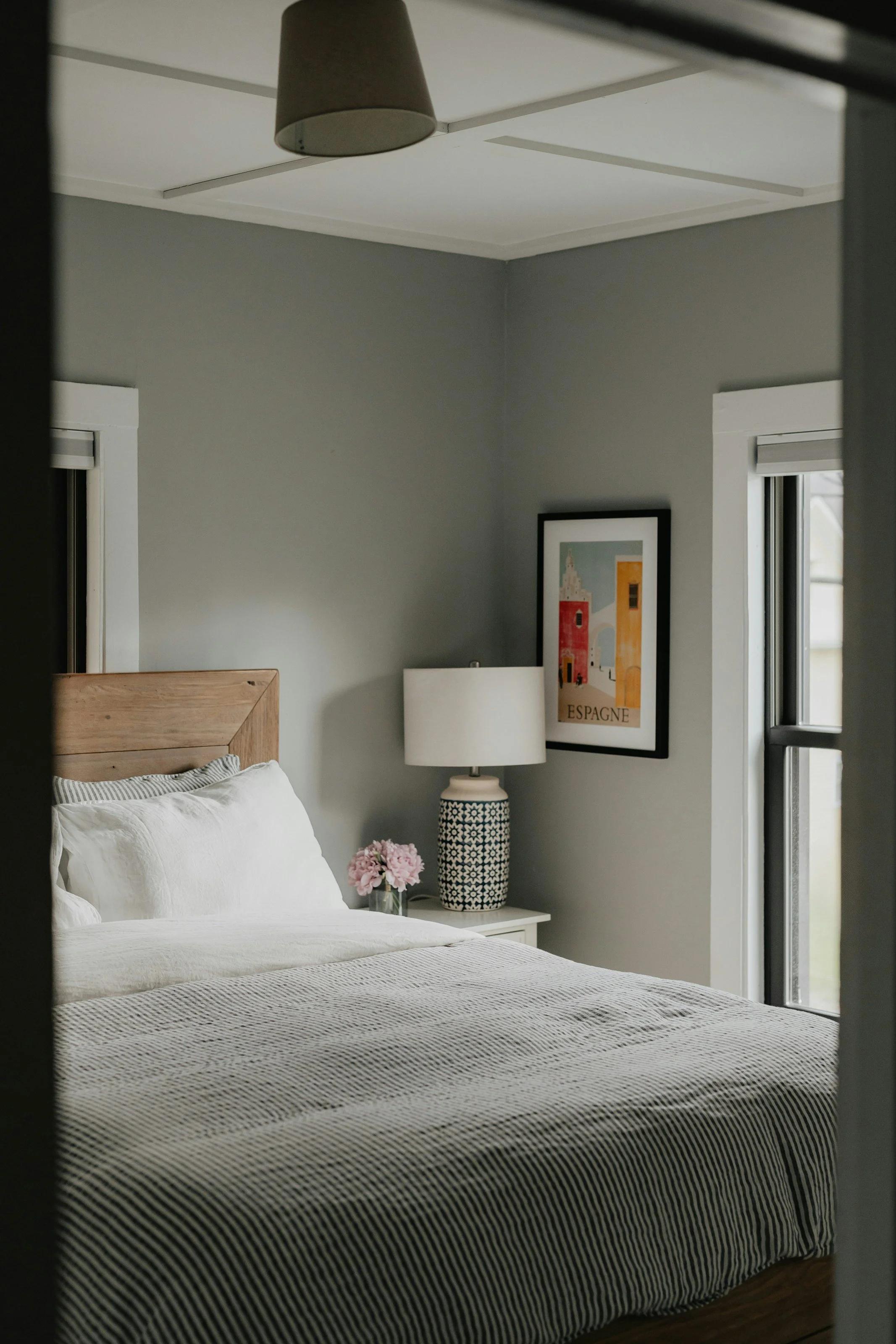
Art is the fastest way to give a small space a point of view — and the most commonly underused tool in tiny home design.
The error most tiny home owners make with art isn't hanging too much. It's hanging art that doesn't commit. A small, forgettable print in a basic frame, centered on a large wall, reads as decoration rather than design. It fills a space without contributing anything to the personality of the room.
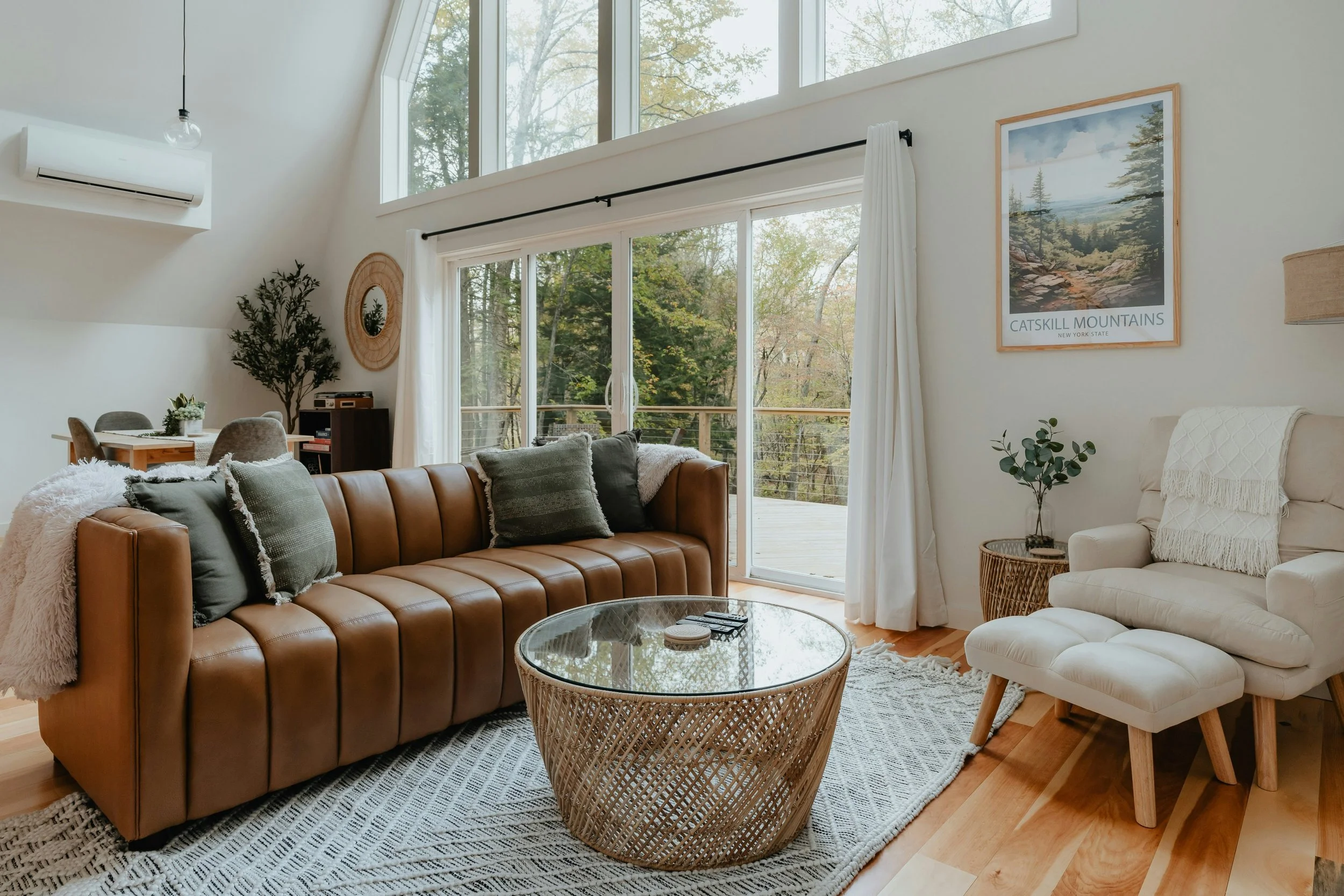
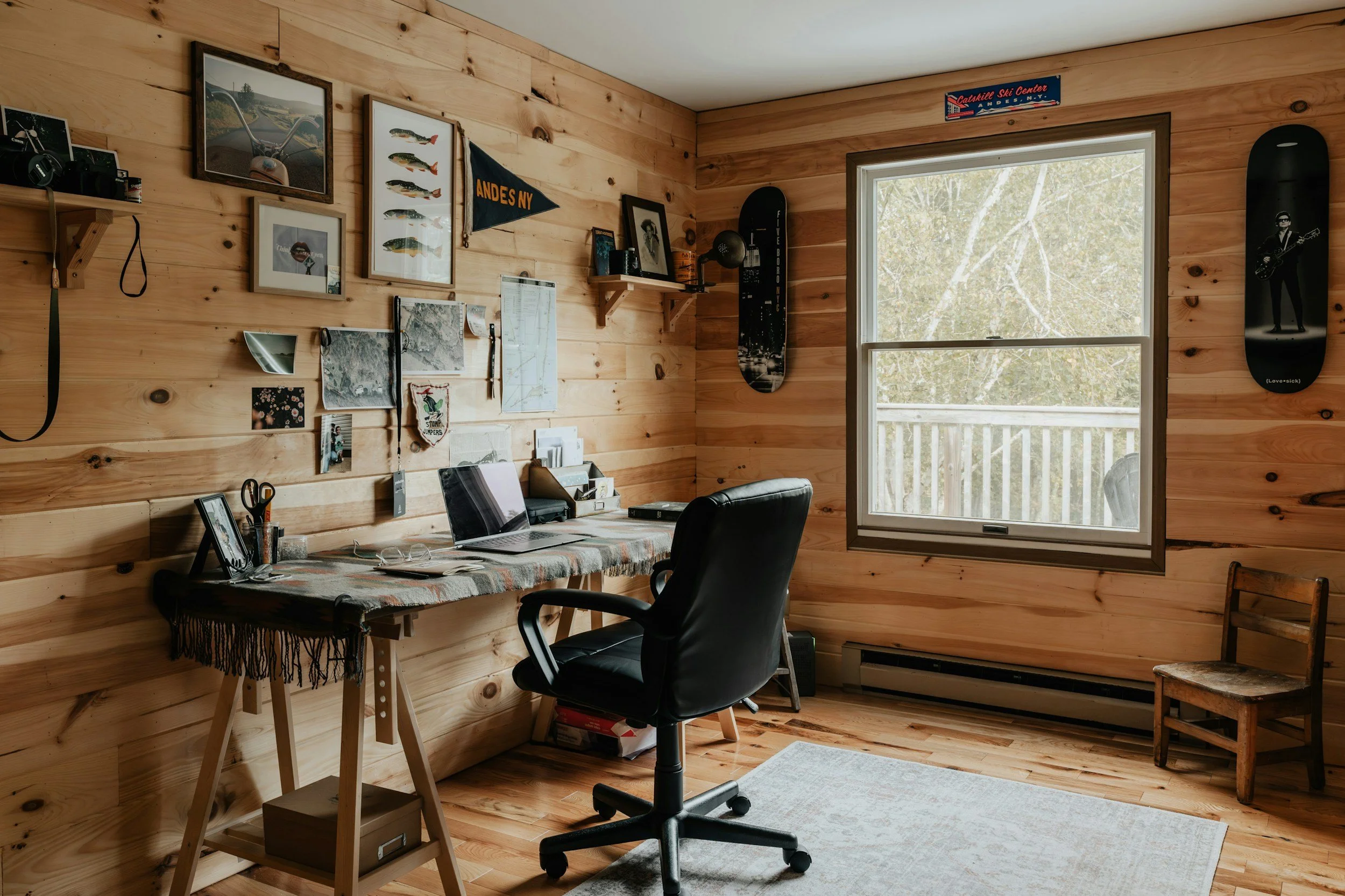
Art that works in a tiny home does one of three things: it's large enough to be a genuine focal point (a single large-format print can anchor an entire room); it's locally meaningful (art that connects the property to its location — a WNC mountain ridge, a botanical print of regional wildflowers, work from a local Asheville artist — tells a story about where you are); or it's personally significant in a way that gives the space character and specificity.
For STRs specifically, locally sourced art serves double duty. It adds genuine personality to the space, and it gives guests something to discover and connect to. The guest who asks about the artist in the living room, or who recognizes the ridge in the painting as the one they hiked that morning, has a richer experience of the property — and that experience shows up in reviews.
Gallery walls can work beautifully in tiny homes when they're composed with intention — a mix of frame sizes and shapes within a consistent color palette, a coherent theme or aesthetic, and enough breathing room between frames that the wall reads as curated rather than crowded. Architectural Digest's gallery wall guides are a solid starting point for understanding the proportions and spacing that make gallery walls look professional rather than haphazard.
What textures work best for adding warmth and character to a tiny home?
Texture is the thing that makes a space feel rich and layered rather than flat and two-dimensional — and it's the element most often left out of small space design because people are focused on color and pattern instead.
In a small space, texture does the work that pattern sometimes can't. A chunky knit throw, a linen pillow cover, a jute rug, a rough-hewn wooden shelf bracket, a woven basket — none of these add pattern or visual complexity, but together they create a tactile richness that makes a space feel genuinely inviting rather than just visually pleasing.
The principle for layering texture in a tiny home is to mix textures within a unified color palette. Smooth and rough. Soft and hard. Matte and slightly reflective. The variation in texture adds depth and interest without adding color complexity that might feel chaotic in a small space.
Specific texture combinations that work consistently well in tiny homes and mountain STRs: linen and leather and warm wood. Jute and cotton and matte ceramic. Velvet and natural fiber and raw wood. Each of these combinations creates layering and warmth while staying within a cohesive aesthetic. The Spruce's breakdown of texture in interior design explains the principles behind why texture variety matters and how to deploy it without creating visual noise.
What are the best statement pieces for a tiny home?
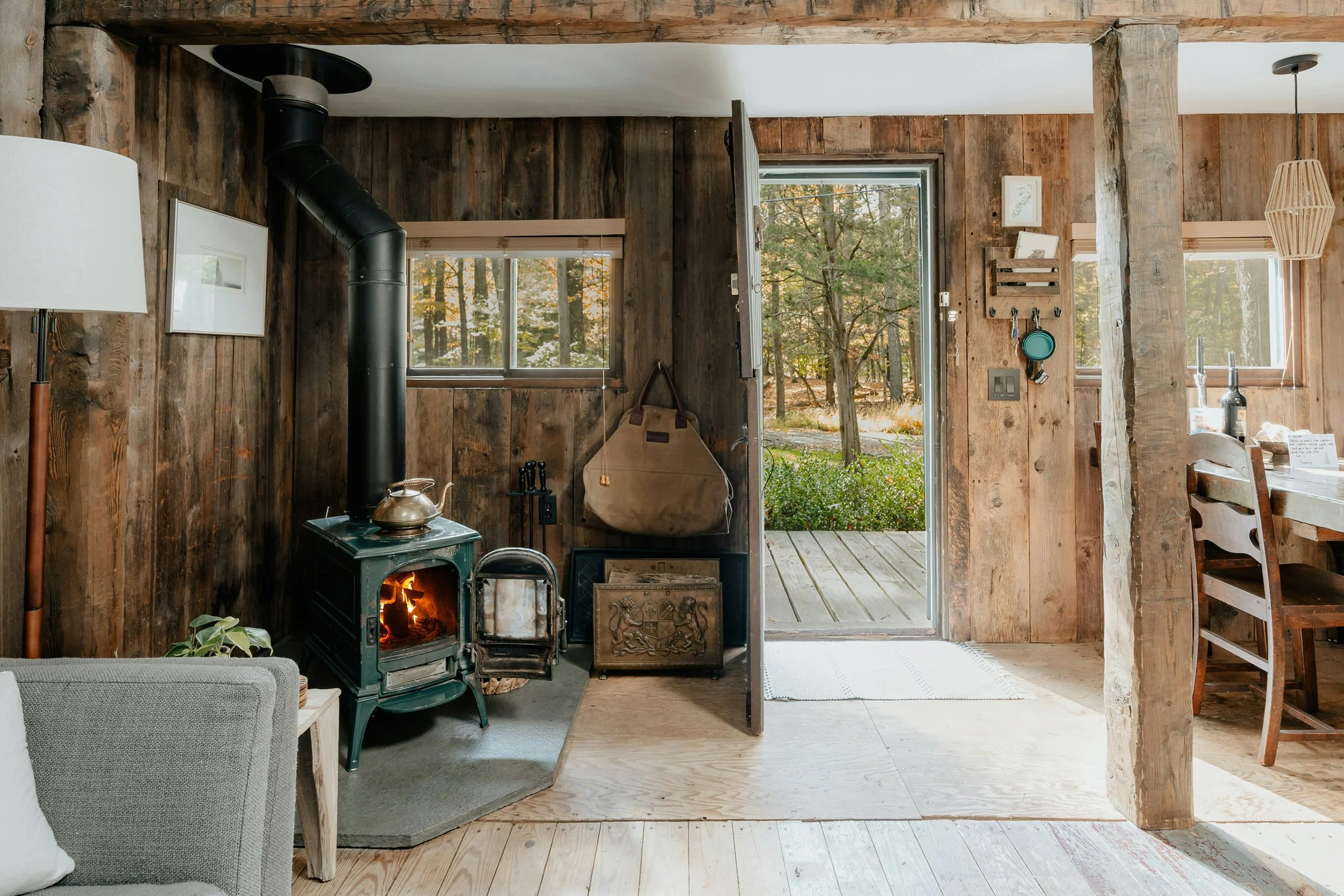
Every great tiny home interior has at least one statement piece — one element that's bigger, bolder, or more unexpected than everything around it, and that gives the room its personality anchor. The key is choosing that statement element intentionally rather than ending up with a bunch of medium-intensity pieces that compete with each other without any of them winning.
Statement pieces that work particularly well in tiny homes tend to be things that are large in visual presence without being large in physical footprint. A striking light fixture — a sculptural pendant, a cluster of Edison bulbs, an architectural sconce — draws the eye up and creates presence without taking up floor space. A large-format piece of art creates impact on an empty wall. A boldly colored or unusually shaped armchair adds personality to a corner without requiring much square footage. House Beautiful's roundup of statement lighting for small spaces is worth bookmarking if you're not sure which direction to go — a great fixture is almost always the right call.
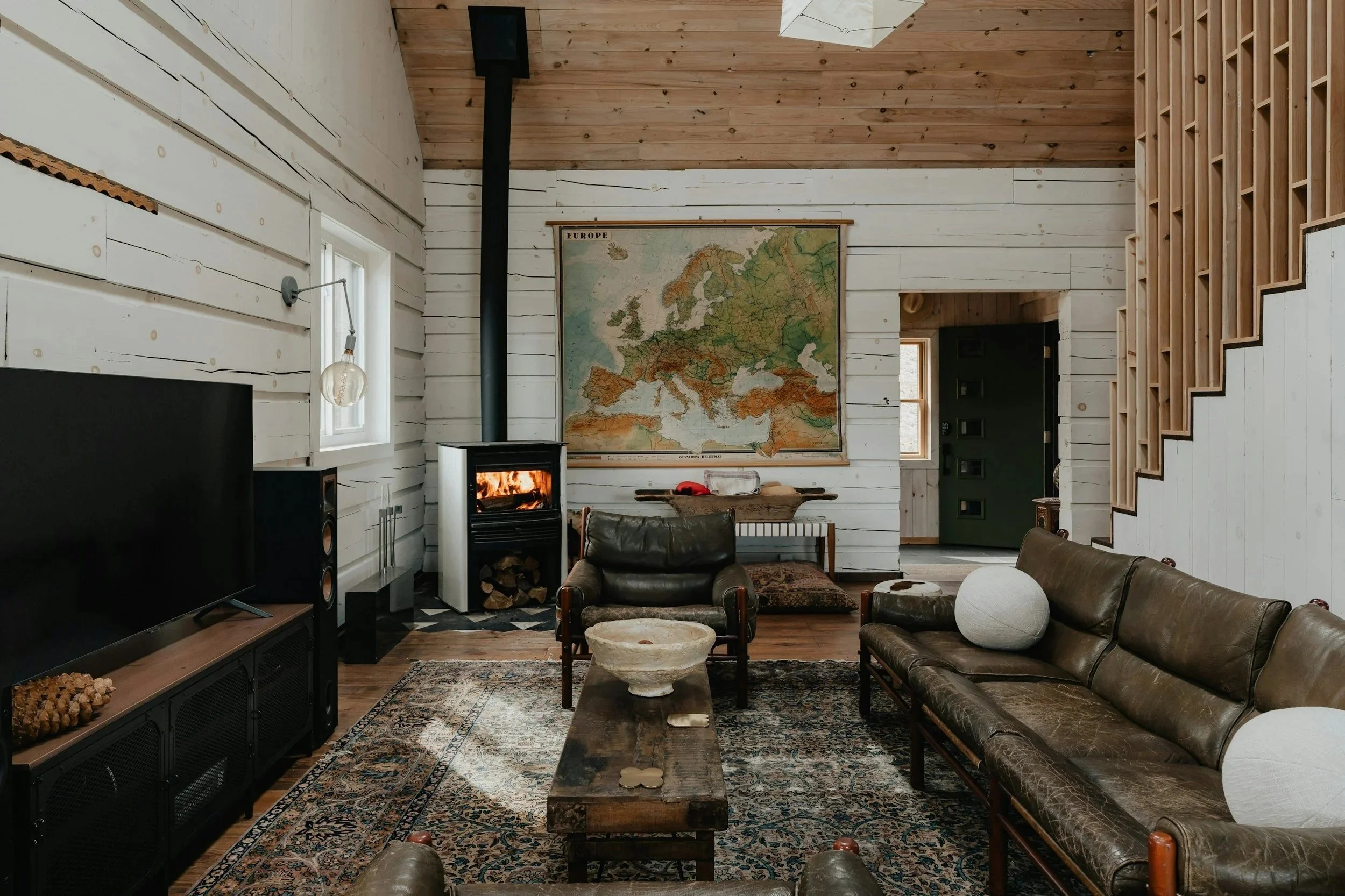
For STRs, statement pieces are also often the thing guests photograph and post. The unusual light fixture, the locally made ceramic collection, the vintage map of the mountain range — these become part of the property's visual identity and part of the story guests tell when they share their stay. This is exactly why how design directly impacts ADR and occupancy is a real, measurable relationship — a distinctive, bookable aesthetic translates directly into revenue.
The mistake to avoid: having too many statement pieces. When everything competes for attention, nothing wins and the space feels chaotic. Choose one or two things to be statements and let everything else support them.
How do you add personal touches to a tiny home STR without making it feel like someone's house?
This is one of the most interesting design challenges in STR interiors — the space should feel personal and specific and full of character, but it shouldn't feel like guests are sleeping in a stranger's house surrounded by their family photos and personal memorabilia.
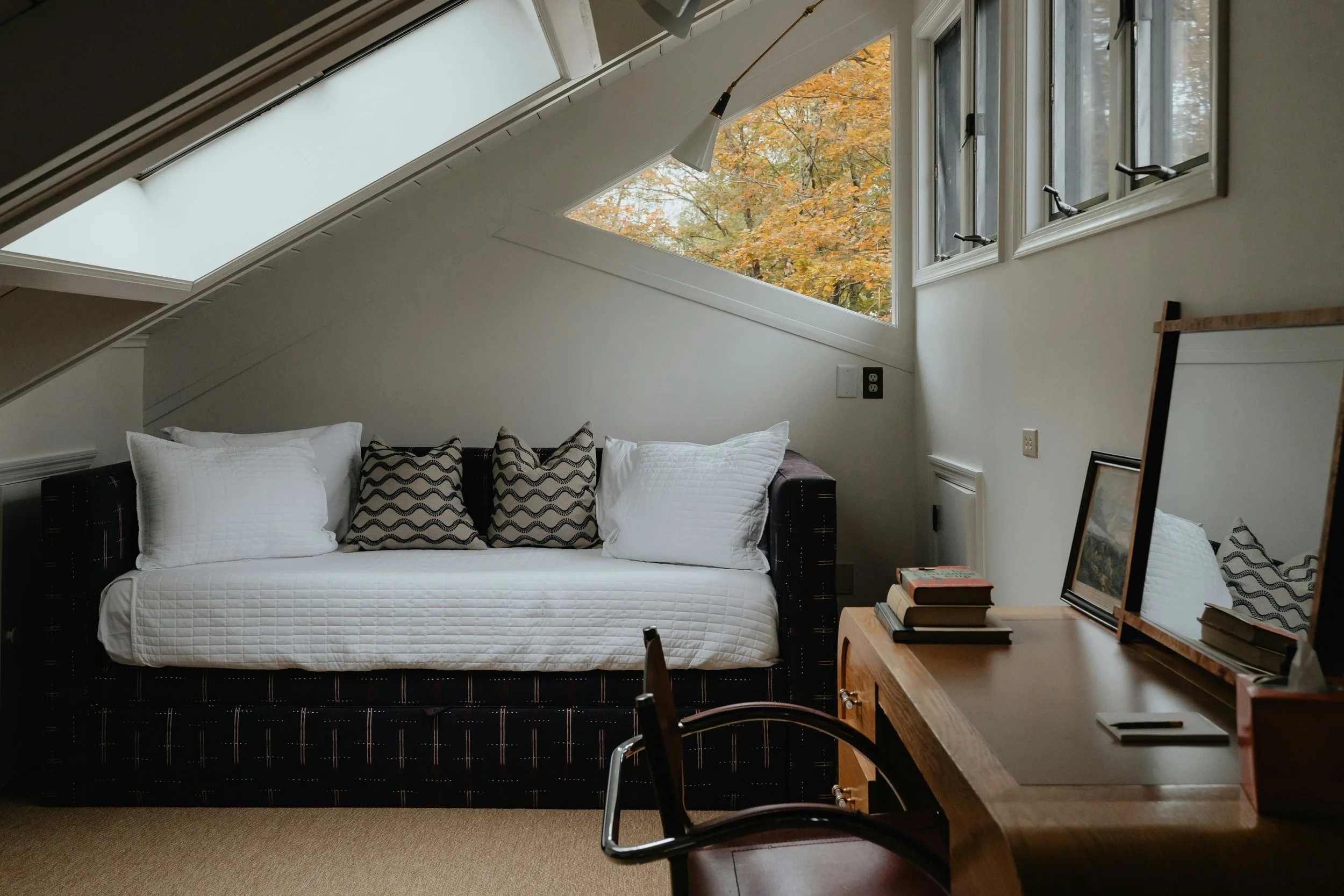
The solution is to add personality through objects and details that are interesting and curated without being personally identifiable. Local art and objects rather than personal photos. Books that are genuinely worth reading rather than a random collection. A small collection of regional field guides or trail maps. Locally made ceramics, glassware, or candles that connect the space to its place.
These objects tell a story about the property and its location rather than about the person who owns it. They give the space personality and intentionality while remaining welcoming and neutral from the guest's perspective.
Frequently Asked Questions
How do you add personality to a small space without making it feel cluttered?
Edit ruthlessly before you add anything. Every object in a small space should earn its place — it should either be functional, beautiful, or meaningful. Objects that are none of these should leave. Once you've established that baseline, add personality through art, textiles, and a few well-chosen objects rather than through accumulation. The goal is a space where everything belongs, not a space where nothing is in the way.
What design style works best for tiny homes?
There's no single style that works universally, but the design approaches that tend to photograph well, feel functional, and attract STR guests in mountain markets are: warm minimalism (clean lines with organic textures and warm tones), mountain modern (contemporary design with natural materials and regional references), and eclectic but edited (a mix of styles anchored by a consistent color palette). The most important thing isn't the style label — it's the intentionality and cohesion of the execution.
How do you make a tiny home feel more spacious with design?
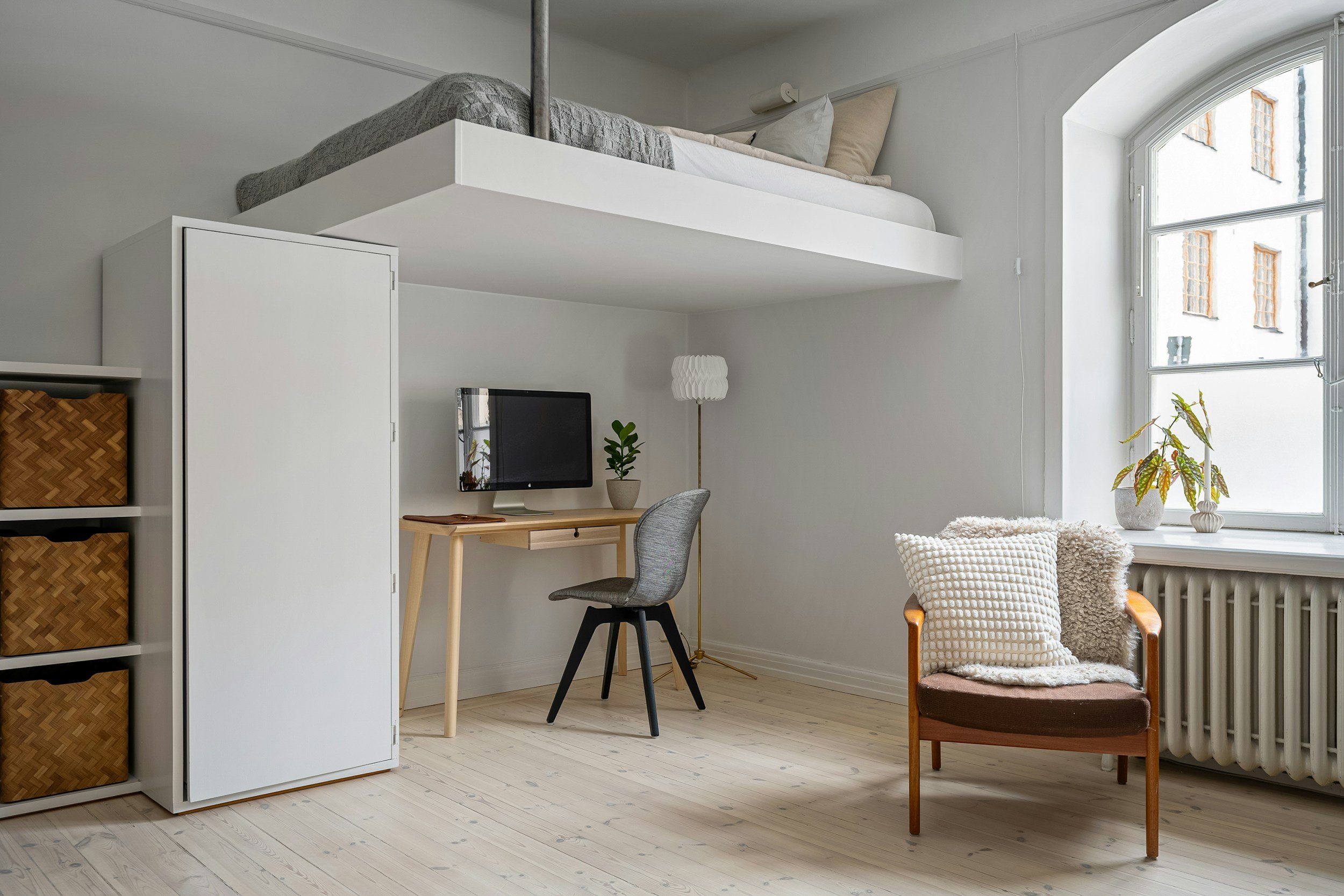
Keep sightlines clear — avoid furniture arrangements that block the view from the entry through the space. Use mirrors to reflect light and depth. Choose furniture that's appropriately scaled rather than defaulting to "small furniture" (sometimes a well-proportioned full-sized piece works better than a cramped undersized alternative). Maintain visual cohesion through a consistent color palette. And go vertical with storage and art to draw the eye up.
Can you use bold colors in a tiny home?
Yes — but strategically. A bold color on an accent wall, in a statement piece of furniture, or through richly toned textiles adds personality without overwhelming a small space. The key is deploying bold color in one or two places rather than everywhere at once, and grounding it with a neutral foundation on walls and larger furniture pieces.
What makes a tiny home STR memorable to guests?
The combination of a distinctive aesthetic, locally meaningful details, and the kind of thoughtful small touches that signal a host who genuinely cares about the guest experience. Guests remember spaces that feel considered — where every detail was chosen rather than just placed. That feeling of intention is what drives both five-star reviews and repeat bookings.
How much should I spend on decor for a tiny home?
The most effective approach is to invest significantly in a few high-impact pieces — a quality rug, a statement piece of art, a distinctive light fixture — and be more budget-conscious on the supporting elements. The ratio that works well for most tiny home STRs is roughly 60% of the decor budget on three to five anchor pieces and 40% on the supporting textiles, objects, and accessories.
Ready to give your tiny home or STR a design identity that stands out in a crowded market? At Sukkha Interior Design, we specialize in small spaces that feel big on personality and designed with genuine intention. Book a consult and let's build something memorable.

If you are looking to transform your space, interested in Asheville real estate, or just want to say hi, I'd love to connect!
Not quite ready for a full on design project? Take a step towards transformation with the 30 Minute Home Refresh Guide.
READ MORE
Let’s Connect