The short answer: The five seasonal swaps that make the biggest visual and experiential impact in a home or STR are: textiles (throw blankets and pillow covers), lighting temperature and sources, scent, greenery and natural elements, and one statement decorative object that anchors the seasonal shift. None of these require significant investment or time — together, they shift the entire feel of a space in an afternoon.

Why do seasonal swaps work so well in interior design?
Here's a design secret that doesn't get nearly enough attention: the way a space feels has less to do with the furniture and architecture than it does with the layering of sensory details that sit on top of those fixed elements. Change the textiles, the lighting, the scent, and the natural elements in a room, and you can make the same room feel like summer in June and like a cozy autumn evening in October — without touching a single piece of furniture.
This is why seasonal refreshes work disproportionately well for the amount of effort they require. You're not changing the bones of the space. You're changing the atmosphere. And atmosphere is what people actually experience when they walk into a room — not the sofa frame or the wall color, but the combination of visual warmth, sensory cues, and layered details that tell them how to feel.
For STR hosts specifically, this matters enormously. Guests who stay at your property in summer and come back in fall should feel like they're walking into a different experience — even though the property itself is the same. Seasonal variation is one of the easiest ways to justify repeat bookings and generate reviews that mention the property feeling "fresh" and "well cared for." Apartment Therapy's seasonal design research consistently finds that small, deliberate sensory changes have a larger perceived impact than structural changes on how welcoming a space feels.
Here are the five swaps that do the most work.

Swap 1: What textiles should I change for fall and winter?
Textiles — throw blankets, pillow covers, and area rugs — are the fastest, highest-impact seasonal swap in any space. They're also the most reversible, the most affordable, and the most forgiving if you change your mind.
For the transition from summer to fall, the shift is from light and airy to warm and layered. Replace linen or cotton throw blankets with chunky knits, sherpa, or velvet. Swap out lighter pillow covers for ones in deeper, warmer tones — terracotta, burnt orange, deep sage, rust, warm burgundy. If you have a sisal or jute rug, consider layering a smaller, softer rug over it for the cooler months. Parachute's guide to seasonal bedding transitions has practical advice on what to swap and how to layer that applies equally well to STR and primary residence contexts.
The key to making a textile swap feel cohesive rather than chaotic is to work within a consistent color palette. Pick two or three colors that feel autumnal to you and repeat them across the textiles in the room — a throw in one color, pillows in the second and third. The repetition is what makes the room feel designed rather than decorated.
For STR hosts, having a summer textile set and a fall/winter textile set stored separately makes the seasonal swap a 20-minute task rather than a design project. Invest once in two good sets of throws and pillow covers and rotate them twice a year. This kind of systematic seasonal care is also part of what makes a well-designed STR earn five-star reviews year-round — guests notice when a property feels current and intentional.
Swap 2: How do I adjust lighting for a seasonal refresh?

Lighting does more to control the mood of a space than almost any other element — and it's also one of the easiest things to adjust seasonally without any renovation or rewiring.
The seasonal lighting shift for fall and winter is away from bright, cool light and toward warm, layered, lower-light sources. This mirrors the natural change in daylight — shorter days, lower sun angles, more time spent indoors in the evening — and creates a space that feels appropriate to the season rather than fighting it.
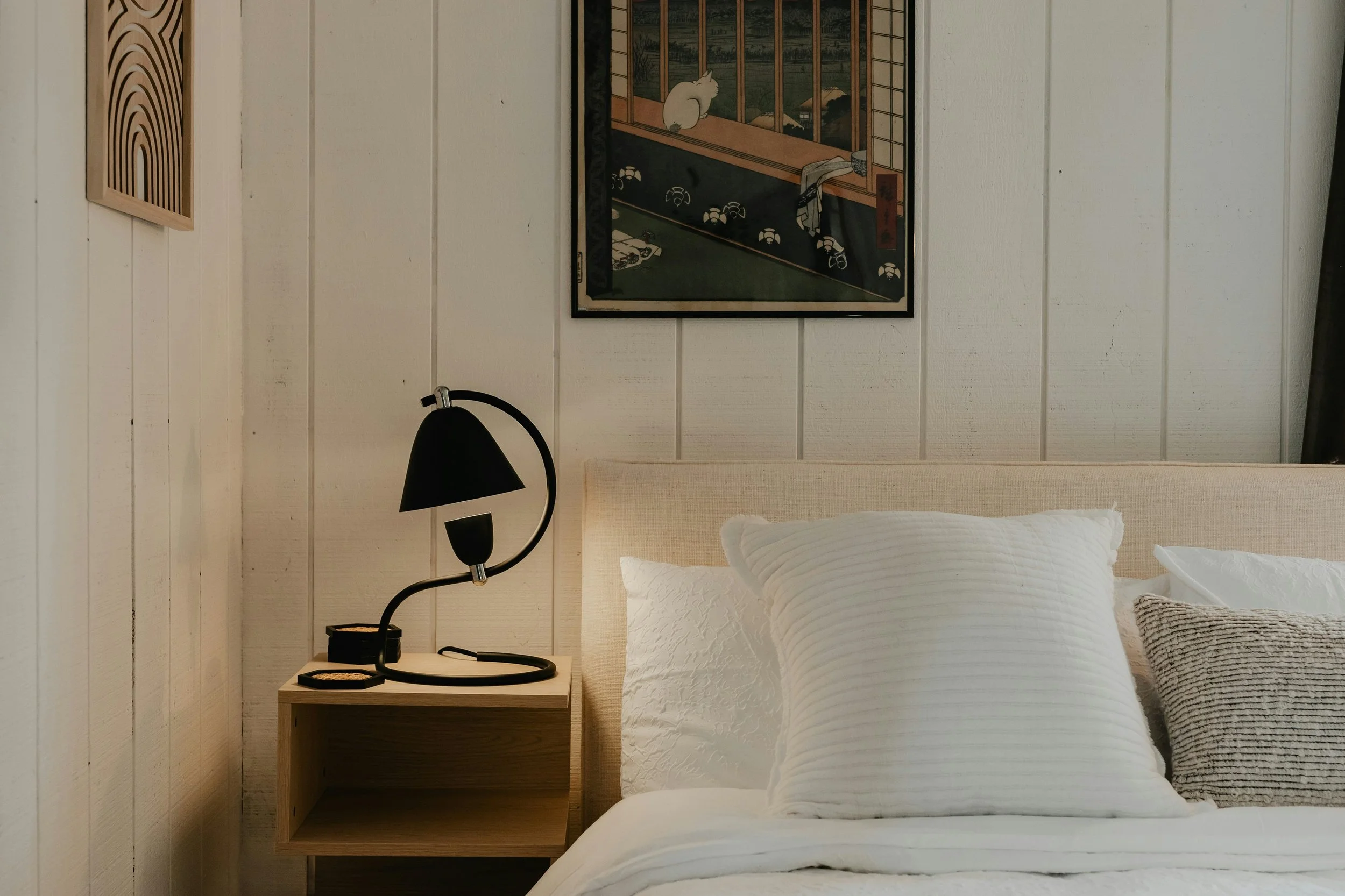
Practically, this means: swap cool-temperature bulbs (anything above 3000K) for warm-temperature ones (2700K or below). Add a table lamp or two to rooms that rely primarily on overhead lighting — the layering of light sources at different heights creates depth and warmth that a single overhead fixture simply can't. Add candles — real ones, LED flameless ones, or a combination — as a low-cost, high-impact source of warm ambiance. The Spruce's breakdown of light bulb color temperature explains exactly what to look for if you want to make this switch without buying the wrong bulbs.
For STRs, having a set of plug-in LED candles that guests can safely leave unattended is a thoughtful seasonal addition. They require no maintenance, create genuine atmosphere, and photograph beautifully for fall listing photo updates.
String lights — moved from outdoor use to indoor, draped over a mantle or along a bookshelf — are another easy and inexpensive way to add warm ambient light for the fall and winter months.
Swap 3: How does scent change the feel of a space seasonally?

Scent is the most underused tool in residential and STR design — and the one with the fastest impact on how a space feels when you walk into it. We process scent before we consciously register anything else in a room, which means the scent of a space shapes the guest's or homeowner's entire experience of it before they've even had a chance to look around.
For summer, the scents that feel appropriate are clean, light, and slightly botanical — linen, eucalyptus, sea salt, fresh citrus. For fall and winter, the shift is toward warm, grounding, and slightly sweet — vanilla, cedar, sandalwood, clove, amber, cinnamon.
The delivery method matters for both effectiveness and safety in a rental context. Reed diffusers are ideal for STRs because they're continuous, maintenance-free, and don't require an open flame. A quality reed diffuser in the entry or living area creates a consistent scent experience from the moment a guest walks in. Architectural Digest's roundup of the best home scents covers the formats and fragrance families worth considering for each season. Avoid plug-in air fresheners, which can be overpowering and chemical-smelling. And whatever you choose, use a light hand — a hint of scent is welcoming, an overwhelming one is a complaint waiting to happen.
For primary residences, candles are the most atmospheric option for fall and winter evenings. A single quality candle in a warm seasonal scent, lit in the living area for an hour or two in the evening, shifts the entire feel of a home in a way that's deeply connected to the season.
Swap 4: What natural elements work best for a fall seasonal refresh?

Natural elements — branches, dried botanicals, gourds, pinecones, seasonal fruit, leaves — are the designer's shortcut for making a space feel grounded, organic, and seasonally appropriate without looking like a Halloween store exploded inside your living room.
The key is restraint and intentionality. One well-placed grouping of seasonal natural elements reads as designed. A dozen spread across every surface reads as cluttered.
For fall, the most versatile and long-lasting natural element options are: a simple arrangement of dried pampas grass or dried wheat stems in a vase (lasts all season, photographs beautifully, works in modern and traditional spaces alike), a bowl of real gourds or decorative squash as a coffee table centerpiece, a few branches with fall leaves in a large floor vase, or a cluster of pillar candles surrounded by pinecones and small gourds on a tray. House Beautiful's seasonal decorating guides are a useful visual reference for how the best-executed versions of these natural element arrangements actually look.
For STRs, dried botanicals are the practical choice because they require no maintenance and last the entire season. Fresh botanicals — fruit, flowers, fresh branches — look more vibrant but require replacement and may not last the duration of a guest's stay.
Avoid fake or artificial botanicals unless they're genuinely high quality. A cheap faux fall wreath or plastic leaves will make a thoughtfully designed space look like an effort was made and fell short.

Swap 5: What is the one statement piece that anchors a seasonal refresh?
Every good seasonal refresh has one anchor — one piece that is clearly, specifically, intentionally seasonal and gives the room a focal point for the shift. Everything else in the refresh supports this anchor.
In fall and winter, the most effective anchor pieces are: a large-format art print with a warm, autumnal palette (easy to swap in and out of an existing frame), a seasonal wreath on an interior door or above a fireplace (not a craft store wreath — something with dried botanicals, simple greenery, or natural materials), a significant textile like a chunky oversized throw draped over the back of a sofa, or a large vase with a dramatic arrangement of dried branches or stems.
The anchor piece works because it gives the eye a place to land and a clear seasonal signal. Once you have it, the rest of the refresh supports it rather than competing with it — the textiles, the lighting, the scent, the natural elements all reinforce the same seasonal story.
For STRs, the anchor piece is also often the piece that shows up in the listing photo update. A fresh listing photo that reflects the current season — showing the property in its fall configuration — signals to potential guests that the property is actively maintained and seasonally updated, which increases trust and booking intent. How great photography and design work together to drive ADR and occupancy is the underlying reason seasonal photo updates are worth doing every single year.
Frequently Asked Questions
How do you refresh a space for fall without spending a lot of money?
Focus on textiles and lighting — the two highest-impact, lowest-cost seasonal swaps. A new throw blanket in a warm autumnal tone ($30-60), two new pillow covers in complementary colors ($20-40 total), and a warm-temperature light bulb swap (under $20) can shift the entire feel of a room for under $100. Add a $15 reed diffuser in a warm seasonal scent and you've done a complete seasonal refresh for minimal investment.
What colors work best for a fall seasonal refresh?
Warm, earthy tones that echo the natural color palette of the season: terracotta, rust, burnt orange, deep sage, warm burgundy, camel, and cream. The most versatile approach is to anchor on one or two of these colors in your textiles and let neutral walls and furniture carry the rest. Avoid going too literal with the classic orange-and-black Halloween palette — the earthy version of fall colors works year-round from September through November and feels more designed than themed.
How do you do a seasonal refresh for an Airbnb?
For an STR, the most practical seasonal refresh focuses on: a textile swap (throw blankets and pillow covers stored and rotated by season), a scent change (swap the reed diffuser fragrance), adding seasonal natural elements that don't require maintenance (dried botanicals, pinecones, small gourds), and updating your listing photos to reflect the current season. The entire swap should take under an hour once you have your seasonal sets established.
What is the easiest way to make a home feel like fall?
Scent and textiles together are the fastest way to shift a space into autumn. Pull out a chunky knit throw, add a warm-scented candle or reed diffuser, and the space reads as fall before you've changed anything else. Add warmly colored pillow covers and a few natural elements on a tray and the transformation is complete.
Should I update my Airbnb listing photos for each season?
Yes — updating your main listing photo to reflect the current season signals to guests that the property is actively maintained, adds visual freshness to your listing, and helps guests visualize what their specific stay will look and feel like. A fall listing photo showing warm textiles, a lit fire, and cozy details will convert better with fall travelers than a summer photo showing outdoor furniture and bright light.
How far in advance should I do a seasonal refresh?
For an STR, aim to complete your seasonal refresh two to three weeks before the peak of the new season — early September for fall, early December for winter, mid-March for spring. This ensures that guests booking during the transition period are already experiencing the updated version of the space, and gives you time to update listing photos before the seasonal booking surge.
Want your home or STR to feel intentional and beautifully designed every season of the year? At Sukkha Interior Design, we help homeowners and STR hosts create spaces that feel considered, cohesive, and genuinely welcoming — no matter the time of year. Book a consult and let's talk about your space.

If you are looking to transform your space, interested in Asheville real estate, or just want to say hi, I'd love to connect!
Not quite ready for a full on design project? Take a step towards transformation with the 30 Minute Home Refresh Guide.
READ MORE
Let’s Connect