40 Square Feet, Zero Excuses: How to Design a Tiny Home Bathroom That Actually Works
The short answer: The best tiny home bathrooms prioritize vertical storage, open sightlines, large-format tiles, and layered lighting. A wet bath or frameless glass shower, floating vanity, wall-mounted toilet, and recessed niches are the highest-impact moves you can make in a small bathroom — without touching the footprint. Get the layout, tile, lighting, and details right, and a 40-square-foot bathroom can feel like a boutique hotel. Get them wrong, and it feels like a gas station restroom. The difference is almost always in the decisions, not the square footage.
What is the best layout for a tiny home bathroom?
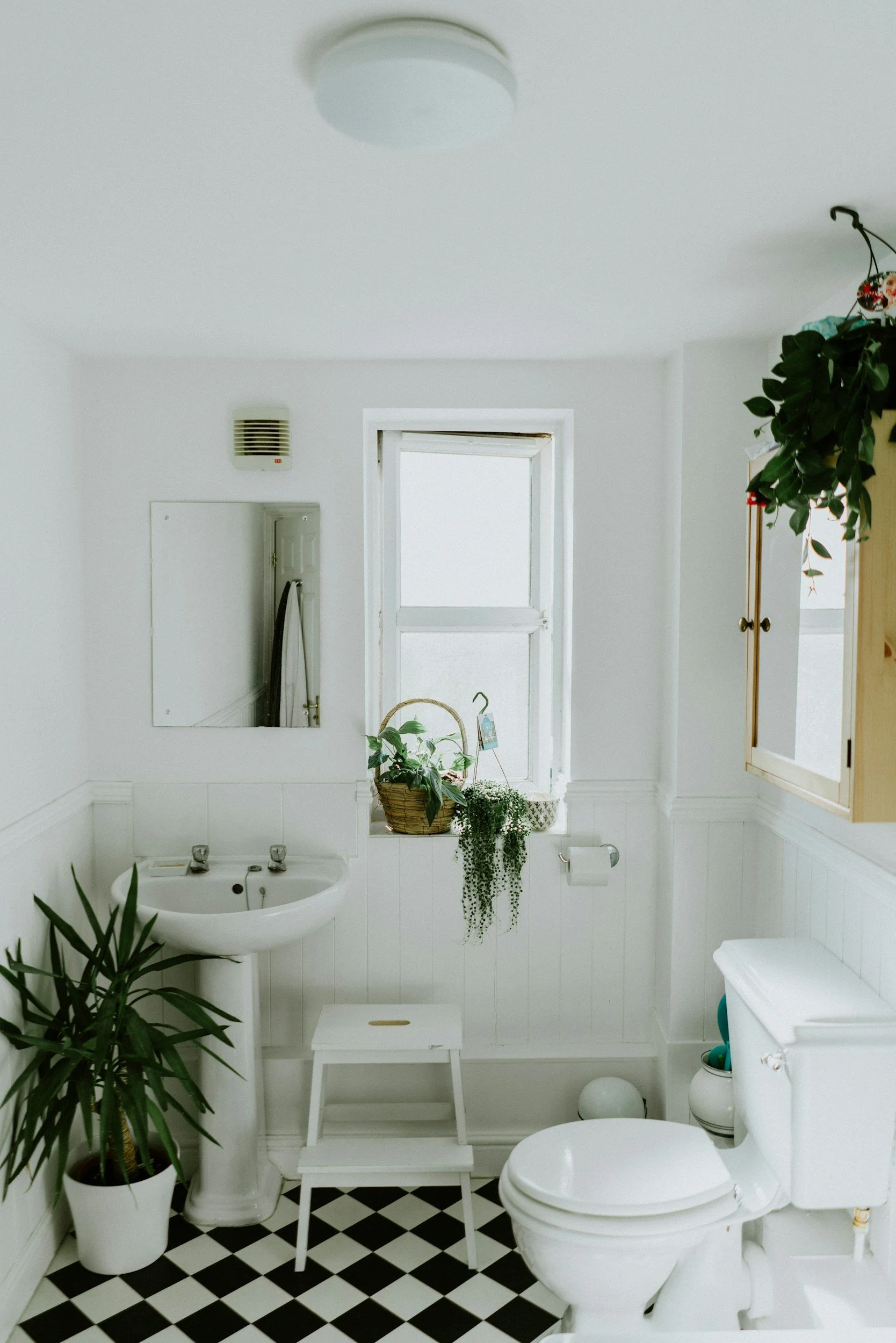
Let's be honest for a second. The bathroom is the room most tiny home owners dread designing — and the one guests notice first when something feels off. It's small, it's functional by necessity, and there's approximately zero margin for error. One wrong tile choice and suddenly your peaceful mountain cabin feels like a highway rest stop.
But here's what most people get wrong: they treat the tiny bathroom like a problem to solve rather than a space to design. They focus on what they can't fit instead of being strategic about what they can. They shove everything in based on whatever's left over after the toilet takes its corner, cross their fingers, and hope for the best. That's not design. That's furniture Tetris, and it never ends well.
The most common layout mistake is treating the toilet as an afterthought — shoved into whatever corner is left, leaving guests with their knees touching the vanity or the door swinging directly into their face. Not exactly the five-star experience you're going for.
In a compact bathroom, a wet bath or wet room layout — where the shower and the rest of the bathroom share one fully waterproofed space — is often your smartest option. It eliminates a separate shower enclosure entirely, which immediately opens the room up. Pair it with a wall-mounted toilet and a floating vanity, and suddenly your tiny bathroom has actual breathing room. Your guests feel the difference the moment they walk in.
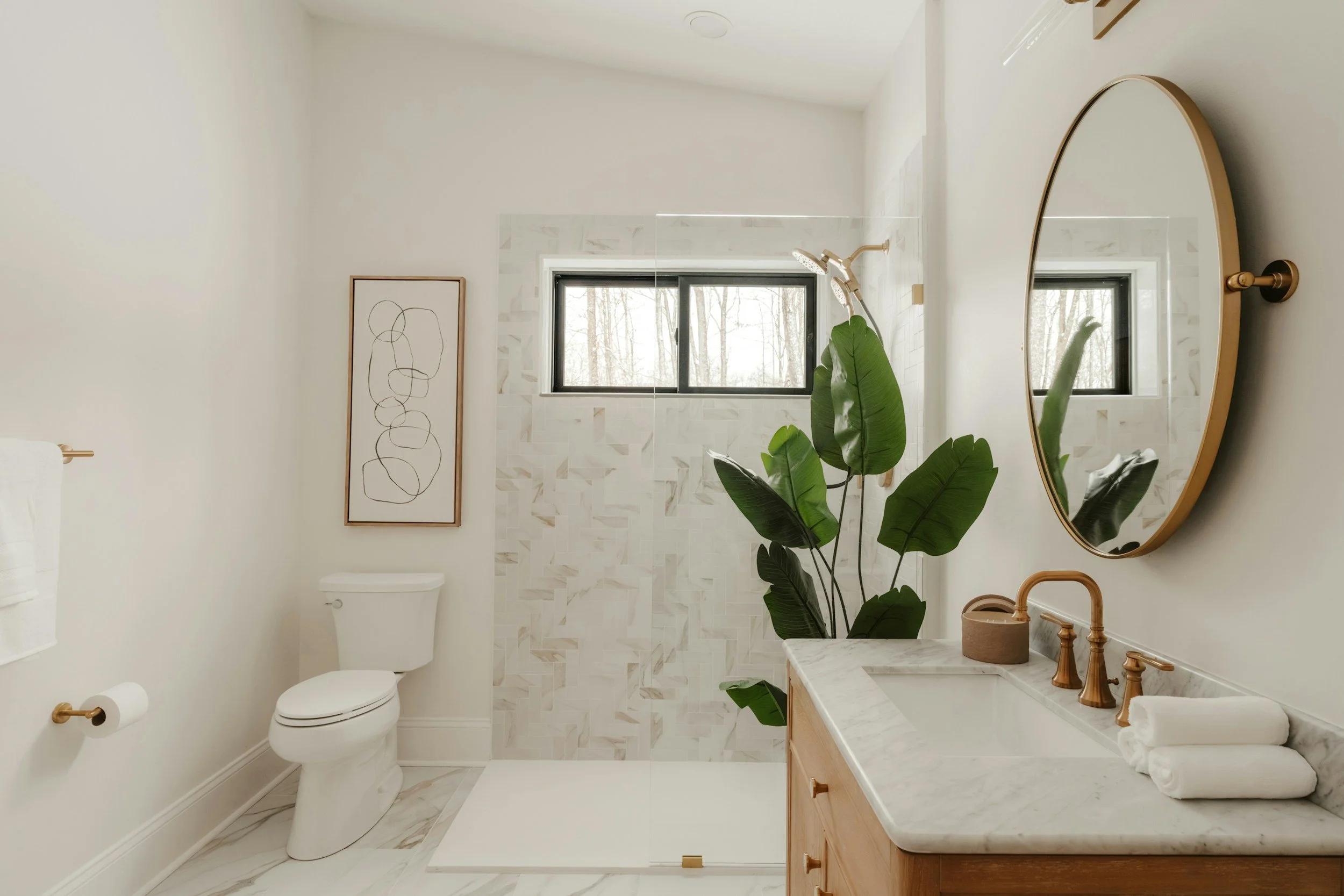
If a wet bath doesn't suit your aesthetic, a corner shower with a frameless glass panel is the next best move. Glass keeps sightlines open so the eye travels through the space rather than crashing into a wall. A shower curtain reads as small and temporary. Frameless glass reads as intentional and considered. The cost difference is real, but so is the visual payoff — and in a short-term rental, that payoff shows up directly in your booking photos and your reviews.
The principles that make tiny home bathrooms work are the same ones that make any small space work: intentionality, scale, and eliminating anything that doesn't earn its place. If you want to go deeper on those fundamentals, this breakdown of micro-living design lessons is a good place to start.
How do you maximize storage in a tiny home bathroom?
In a small bathroom, the floor is not your friend. Floor space is limited, and you will lose every battle you fight for it. The ceiling, however, is wide open real estate — and most people completely ignore it.
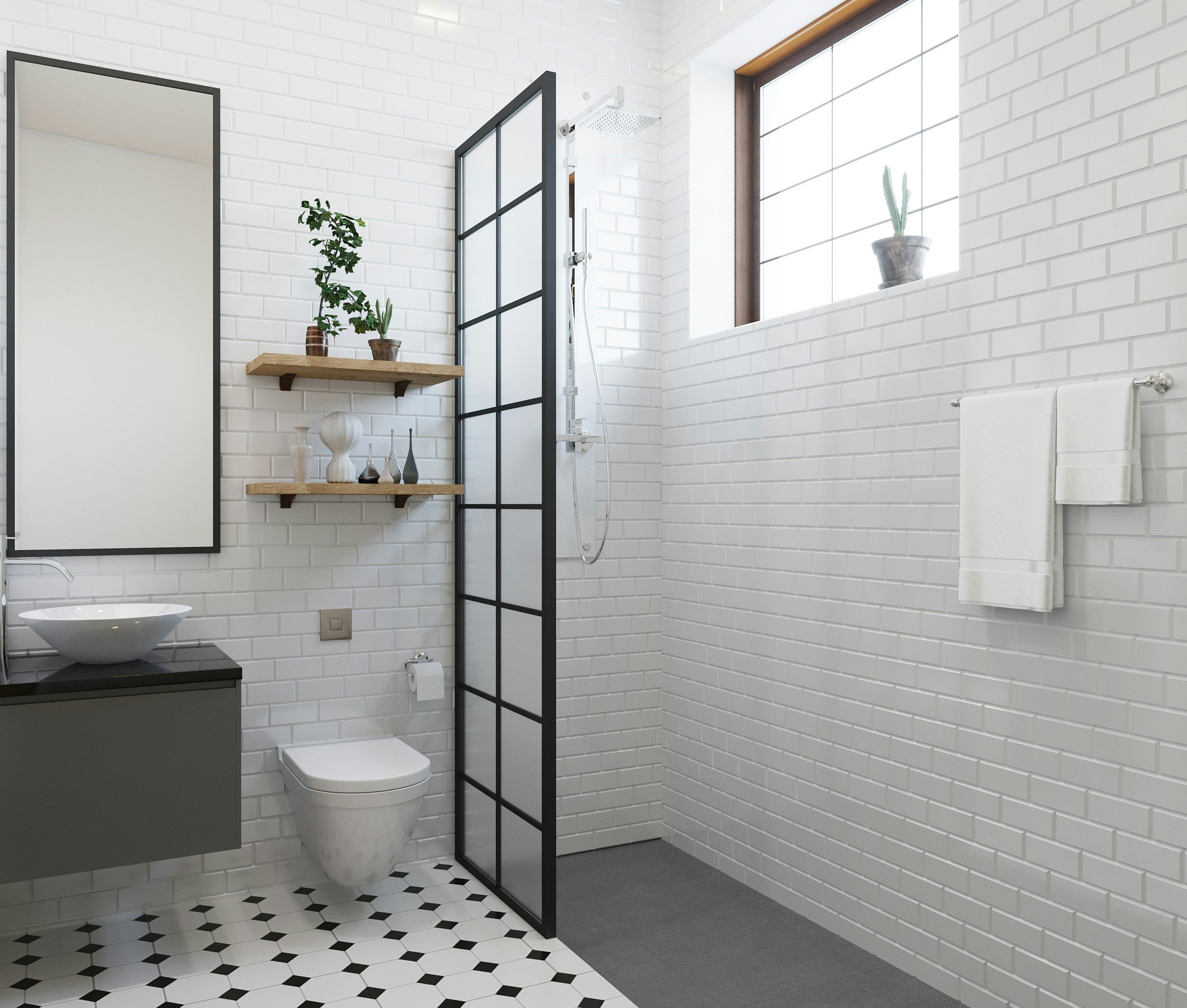
Tall, floor-to-ceiling storage is one of the highest-impact moves in a tiny bathroom. A slim tower cabinet beside the vanity, open shelving stacked above the toilet, or recessed shelving built directly into the wall between studs — all of these deliver serious storage without consuming a single square foot of floor space. Vertical storage also draws the eye upward, which makes the room feel taller. It's doing double duty, and in small spaces, everything should.
Recessed shower niches deserve a special mention. They are inexpensive to build during construction or renovation, they keep shampoo bottles off the floor and out of the wire caddy that belongs in a college dorm, and they make the shower feel custom and intentional. Build two — one at shoulder height, one lower — and your guests will think you thought of everything. Because you did.
Hook rails on the back of the door and on any open wall space are another vertical win. A simple matte black or brushed brass rail with a few substantial hooks handles towels, robes, and bags without taking up any footprint at all. Skip the towel bar. It holds one flat towel and looks like it belongs in a hospital. Hooks are more functional, photograph better, and take up less visual space.
One more storage tip that gets overlooked constantly: the space above the door. A narrow floating shelf up there — out of the way but completely accessible — is perfect for extra toilet paper, spare towels, or a small basket of backup toiletries. Your guests will notice you thought of it. No one ever thinks of it.
What tiles make a small bathroom look bigger?
Color and finish choices in a tiny bathroom are where most people either accidentally shrink the room or cleverly expand it. The good news is that the formula is pretty simple once you know it.
Keep the major surfaces light and cohesive. That doesn't mean everything has to be white — it means the walls, floor, and large tile areas should stay in the same color family so the eye reads the space as one continuous surface rather than a series of chopped-up zones. A warm cream, a soft greige, or a light stone tone all work beautifully and photograph well, which matters enormously if this is a short-term rental. Listing photos in a bathroom with mismatched tile, a dark accent wall, and a busy floor look cramped even if the room is a perfectly fine size. Cohesion creates the illusion of space.
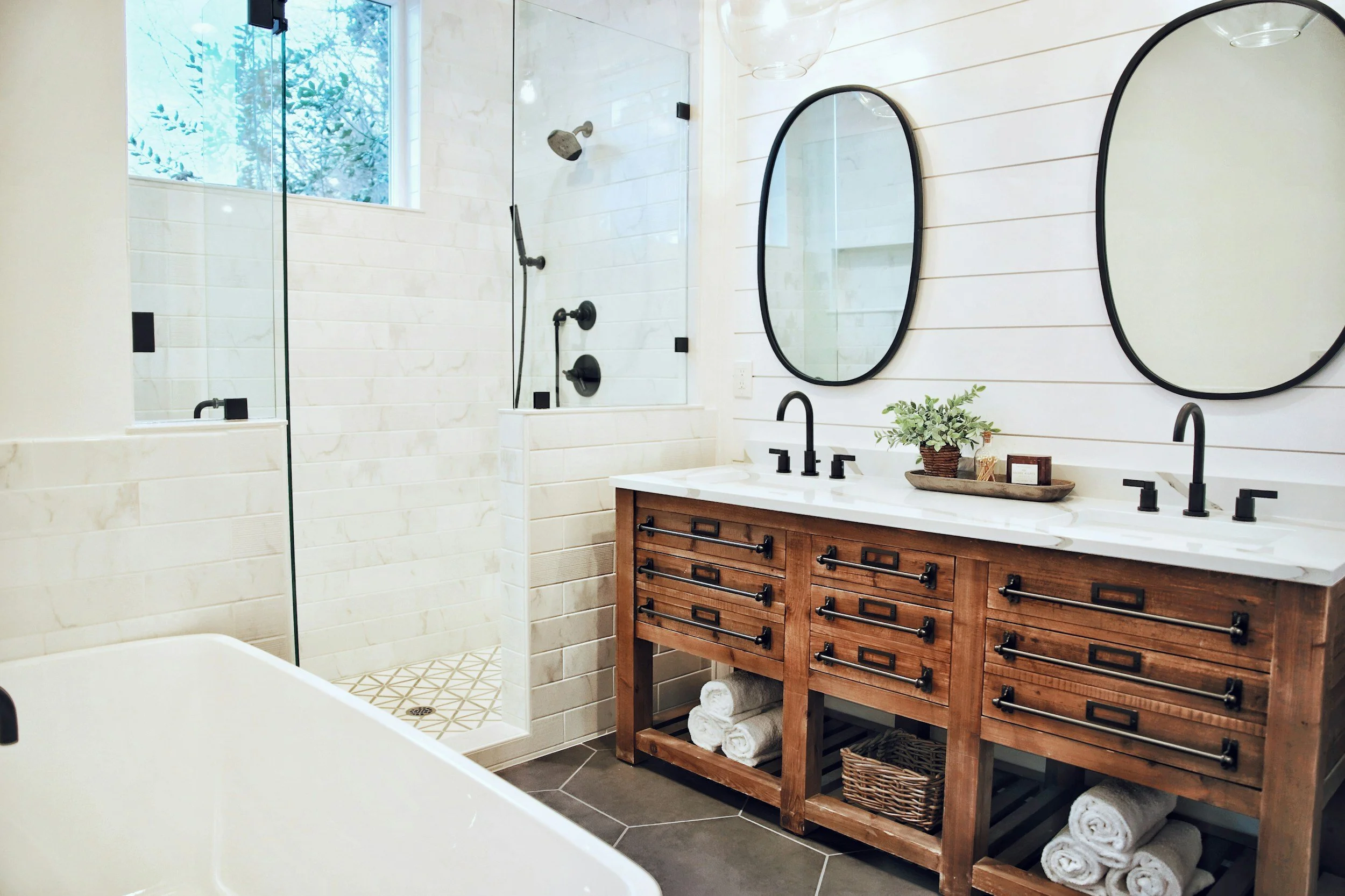
Large format tiles are your best friend on the floor. Counterintuitively, a bigger tile in a small space makes the room feel larger because there are fewer grout lines breaking up the visual field. A 12x24 tile laid in a brick pattern will make your bathroom floor look significantly more expansive than a 4x4 mosaic — and it's easier to clean. Both of those things matter when you're turning over a rental between guests.
On the walls, take your tile all the way to the ceiling in the shower — and if budget allows, carry it onto one full accent wall. Full-height tile draws the eye up, adds the perception of height, and eliminates the visual interruption of a paint line partway up the wall. It's the move that most clearly separates a thoughtfully designed STR bathroom from a flipped rental with a rushed finish.
Then add depth and personality with fixtures and accents. A matte black faucet, a vintage-style mirror with a warm wood frame, a bold encaustic tile on the shower floor — these details make the bathroom feel designed rather than just assembled, without overwhelming the space.
What is the best lighting for a tiny home or STR bathroom?
Lighting in a tiny bathroom isn't optional — it's structural. Bad lighting makes even a beautifully designed small bathroom feel dingy and cave-like. Great lighting makes a simple bathroom feel like a boutique hotel and photographs like a magazine spread. The same principle applies throughout your entire property — if you want to understand how much lighting strategy matters across every room, this post on lighting upgrades for tiny homes and STRs gets into the details.
The non-negotiable is good vanity lighting. Overhead lighting alone casts shadows on faces — unflattering for guests trying to get ready, and unflattering for your listing photos. Side-mounted sconces at face height on either side of the mirror are the gold standard. They eliminate shadows, make the room feel symmetrical and considered, and make everyone look better. That last one matters more than you think in a rental.
If sconces aren't in the budget, a backlit or lighted mirror is a strong alternative. The light wraps around the face rather than casting straight down, and the mirror itself becomes a design statement rather than just a utility item.
For the rest of the bathroom, recessed lighting keeps the ceiling clean and uncluttered. In a tiny space, a pendant or decorative ceiling fixture can feel like too much visual noise. Keep the ceiling simple and put the personality in the fixtures at eye level. And don't skip the dimmer switch. Guests use the bathroom at all hours, and being blasted with bright overhead light at 2am is nobody's idea of a good time. A dimmer costs almost nothing and immediately elevates the feel of the entire room.
What small details make an STR bathroom stand out to guests?
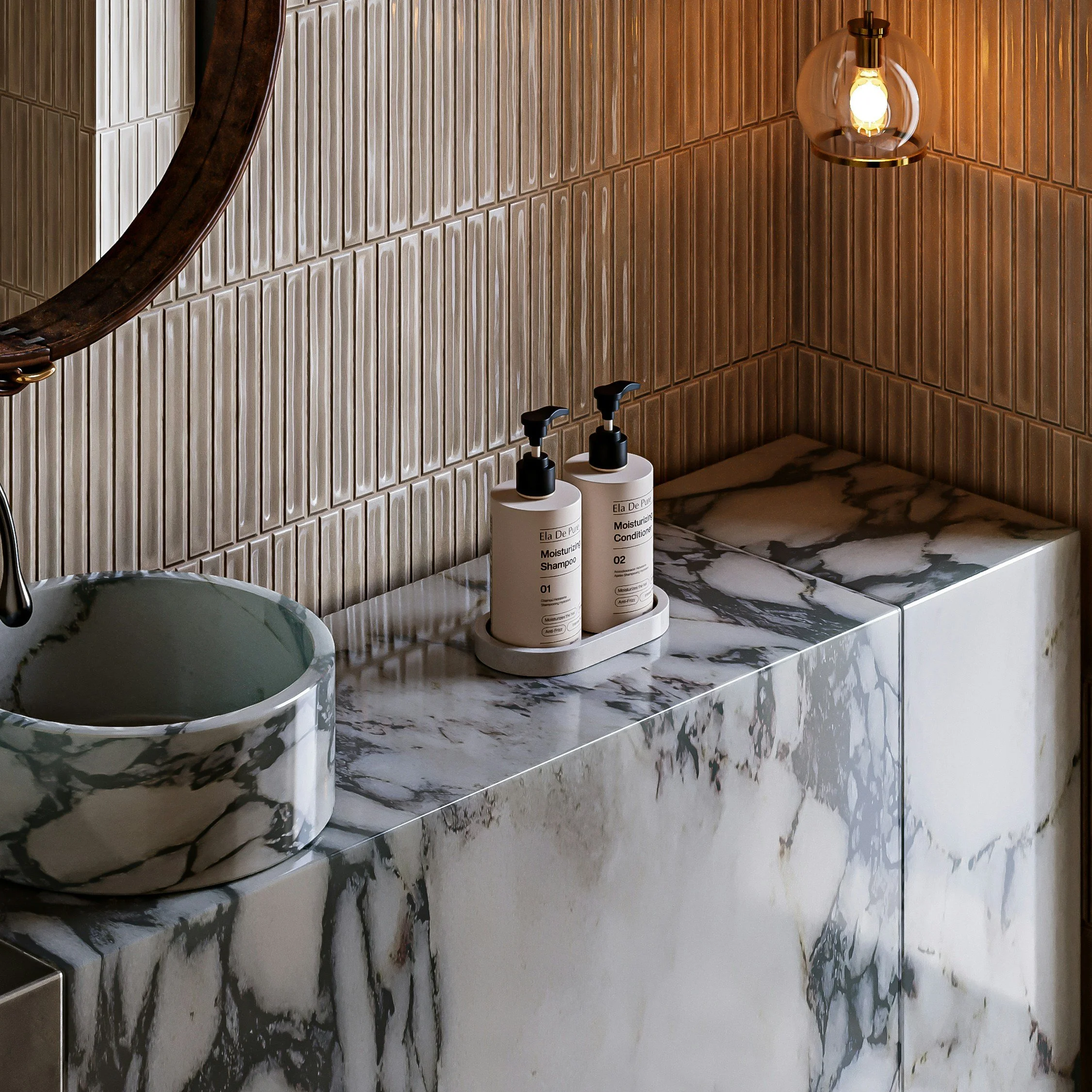
Guests notice bathrooms. A beautiful, well-stocked bathroom gets mentioned in reviews. A sad, disorganized one does too — just not in the way you want. The good news is that the details that move the needle don't have to be expensive. They just have to be intentional. This is the same principle behind creating an Instagram-worthy space — it's not about spending more, it's about spending smarter.
A real mirror with a frame that feels considered rather than a builder-grade rectangle. Quality hooks instead of flimsy towel bars that wobble when you touch them. A small tray on the vanity to corral the soap dispenser, a candle, and a small plant so everything looks placed rather than abandoned.
Matching towels in a neutral color — white, cream, or warm sand — make the bathroom feel cohesive and are easy to keep looking fresh. Avoid bright colors or busy patterns for STR towels. They date quickly, photograph poorly, and read as an afterthought even when they weren't.
If there's a window in the bathroom, treat it like a design element rather than a construction detail. A simple roman shade in natural linen, or frosted film on the lower half of the glass for privacy, makes the window feel intentional. A bare window with no treatment looks unfinished even if the rest of the room is impeccable.
And finally: smell matters. A quality reed diffuser or a candle on the vanity tray that smells like something pleasant — eucalyptus, cedar, light citrus — is one of the lowest-cost, highest-impact moves in an STR bathroom. Guests can't explain why it feels right. They just know it does.
Frequently Asked Questions
What is the best shower option for a tiny home bathroom?
A wet bath or a corner shower with a frameless glass panel are the two best options for tiny home bathrooms. Both maximize the sense of space and eliminate bulky enclosures that visually shrink a small room.
How do I make a tiny bathroom feel bigger without renovating?
Replace a shower curtain with a glass panel, add vertical shelving above the toilet, swap in a large-format mirror, and improve the lighting with side-mounted sconces or a backlit mirror. These changes cost relatively little and make an immediate visual difference.
What color should I paint a small bathroom to make it look larger?
Light, warm neutrals — soft whites, warm creams, greige tones, and light stone colors — make small bathrooms feel larger by keeping the eye moving continuously rather than hitting a hard visual stop.
How much storage do I need in a tiny home bathroom?
Plan for at minimum: a recessed medicine cabinet or large mirror above the vanity, at least one recessed shower niche, a vertical storage tower or open shelving stack for towels and supplies, and hook rails on any open wall or door space. In a tiny bathroom, every wall is a storage opportunity.
Are wet baths a good idea for short-term rentals?
Yes — when designed well, wet baths are a highly practical and visually appealing choice for STRs. They are easy to clean, extremely durable, and can look genuinely beautiful with the right tile and fixtures. Many guests find them more luxurious than a traditional enclosed shower.
What flooring is best for a tiny home bathroom?
Large-format porcelain or ceramic tile in a light neutral tone is the most practical and visually effective choice. It's water-resistant, durable, easy to clean, and makes the floor look more expansive than small mosaic tiles. If you want to add visual interest, use a subtle pattern or a contrasting grout color rather than a smaller tile format.
Designing a tiny home or short-term rental and not sure where to start? At Sukkha Interior Design, we specialize in small spaces that work hard and look beautiful. Book a consult and let's talk about what your space could be.

If you are looking to transform your space, interested in Asheville real estate, or just want to say hi, I'd love to connect!
Not quite ready for a full on design project? Take a step towards transformation with the 30 Minute Home Refresh Guide.
READ MORE

Let’s Connect