Feel-Good Interior Design for Real Life: How to Create Spaces That Support Your Energy & Focus
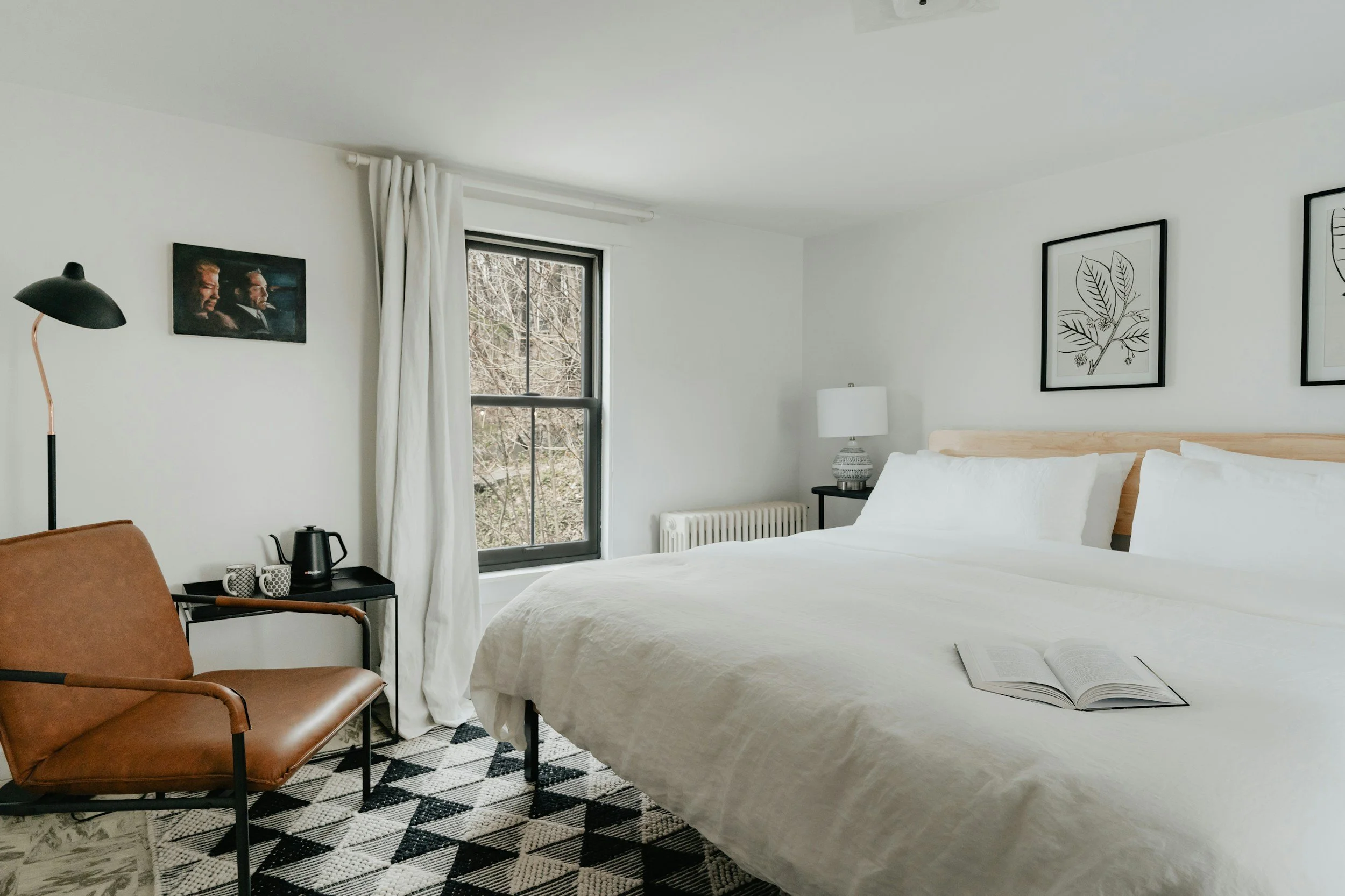
Here’s something I’ve learned again and again—through client homes, tiny spaces, Airbnbs, my own Avion renovation, and years of studying how environments affect people:
Your home is either draining you or energizing you. There is no neutral.
Every color, every layout, every texture, every lighting choice… it all influences how you feel in your daily life. Your home can support your focus, boost your energy, and make your days feel smoother—or it can quietly sabotage all three.
And the truth is, most people have no idea how much their space is affecting them until it’s transformed.
When a client’s bedroom makes them sleep deeper.
When their home office suddenly feels effortless to work in.
When their living room actually helps them unwind instead of distracting them.
When their Airbnb gets reviews like "This space felt so peaceful."
That’s feel-good design.
And it's not just about pretty things—it’s about designing for real life.
Today, we're going deep into how to create spaces that support your energy, focus, and well-being. Whether you're a busy professional, a remote worker, a parent juggling everything at once, or an investor designing for guest experience, these principles apply to every home and every lifestyle.
Let’s talk about how to build a space that feels good, works beautifully, and supports your everyday life—from the moment you wake up to the moment you go to sleep.
Why “Feel-Good Design” Isn’t a Trend—It’s a Strategy for Better Living
Feel-good design isn’t about matching pillows or choosing the right aesthetic.
It’s about answering one essential question:
“How do you want to feel in this space?”
Because design isn’t just visual—it’s emotional, functional, and sensory.
Scientific research in environmental psychology shows that our surroundings directly influence our cognitive function, mood, productivity, stress levels, and even how well we sleep. When a space supports your nervous system instead of overwhelming it, everything in your day becomes easier.
Feel-good design matters because:
✔ Your environment shapes your habits
✔ Clutter increases stress hormones
✔ Lighting affects circadian rhythms and energy
✔ Layout impacts focus and workflow
✔ Colors influence mood, motivation, and mental clarity
✔ Comfort affects emotional regulation
✔ Texture impacts sensory processing
✔ Storage impacts how overwhelmed or at ease you feel
Which means:
Good design is not a luxury. It’s a form of well-being.
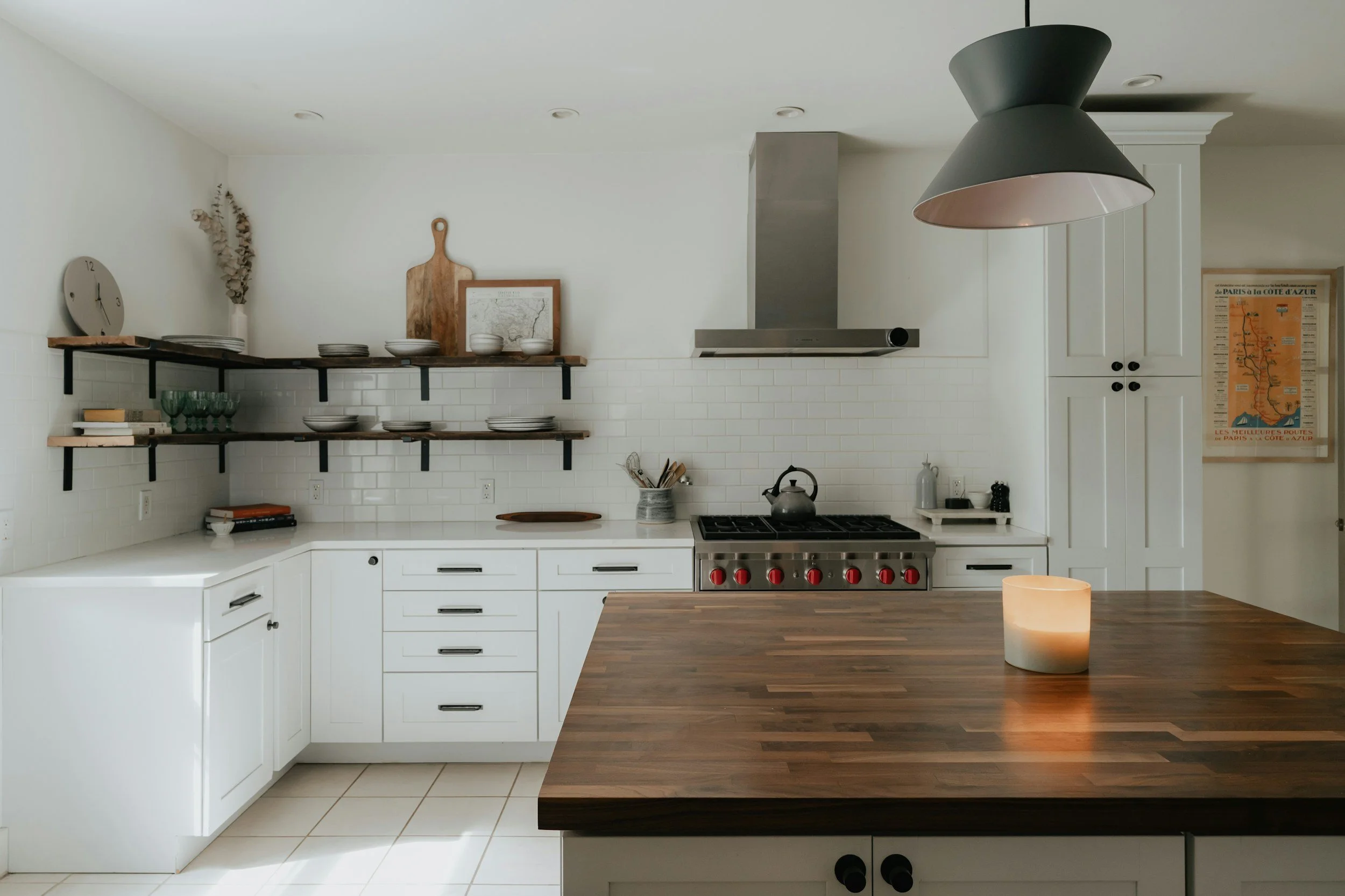
Design That Supports Energy: What That Actually Means
Energy-supportive design isn't about being “high vibe” or filling your home with crystals (unless that’s your thing—no shade).
It’s about creating spaces that:
✨ Feel calm but not dull
✨ Encourage movement but avoid chaos
✨ Support morning energy and winding down
✨ Make daily tasks feel easier, not heavier
✨ Reduce decision fatigue
✨ Make your home feel like a partner, not a project
Think of it like designing your environment to give you tiny boosts of momentum throughout the day.
Here’s how we build energy-supportive spaces at Sukkha Interior Design:
1. Start With the Flow (The Secret Sauce of Feel-Good Spaces)
You know that feeling when you walk into a room and something just feels “off,” even if you can’t name why?
That’s flow.
Flow is:
How easily you move through a space
How naturally furniture placement supports your routine
How welcoming or awkward a room feels
How “blocked” or “open” energy feels
When the layout is wrong, you feel it instantly.
When the layout is right, you don’t notice it at all—your space feels effortless.
How to Create Better Flow:
Keep natural pathways open
Avoid placing furniture where you constantly have to “navigate around” it
Create zones with intention (reading nook, workspace, etc.)
Anchor each area with a rug, lighting, or furniture grouping
Make sure the entryway into each room feels open and inviting
Good flow = good energy.
Your home should help you move—not slow you down.
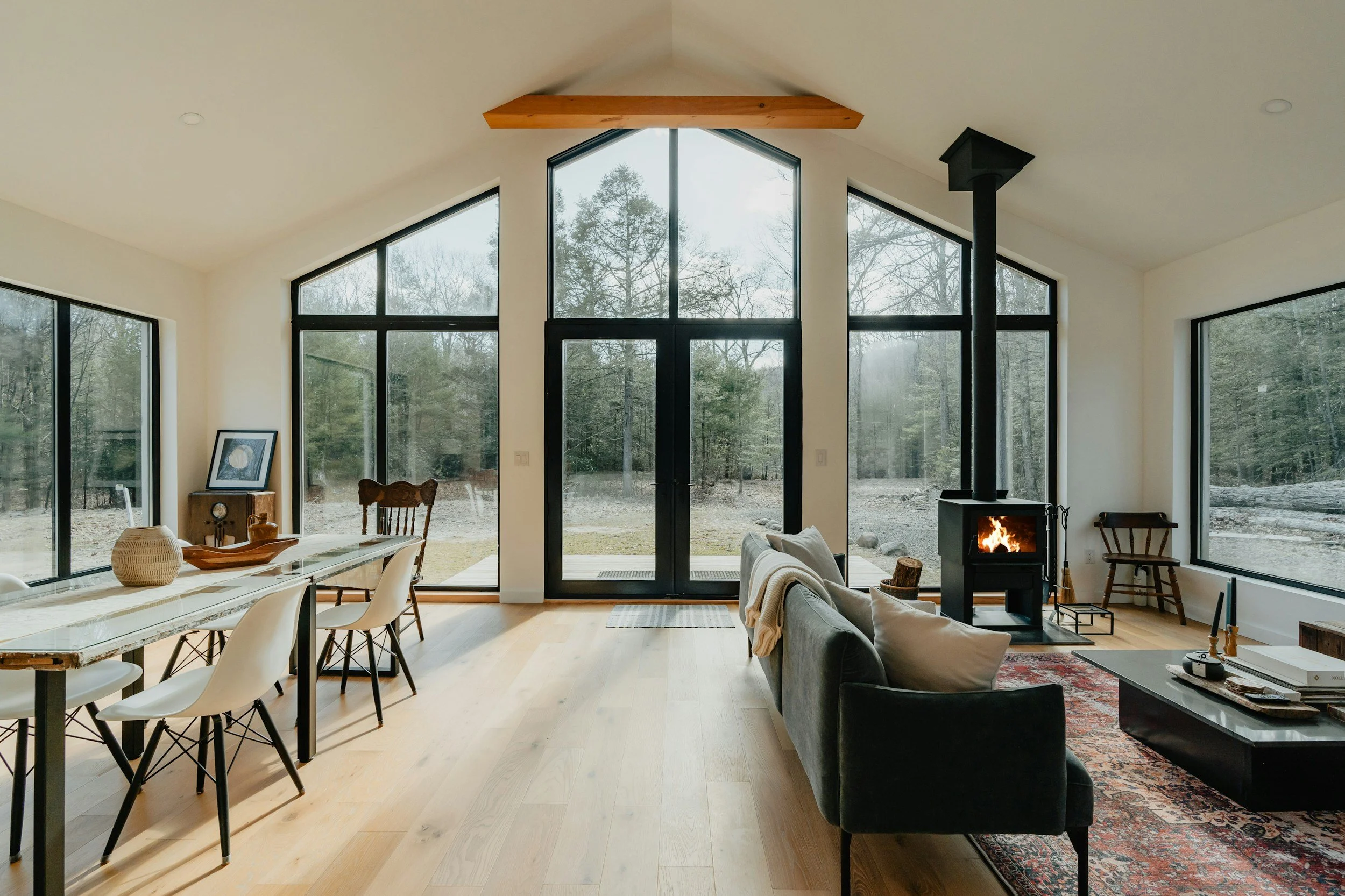
2. Design for Natural Light (Your Most Powerful Mood Booster)
Light is one of the biggest factors in your energy and focus.
Natural light impacts:
Serotonin levels
Motivation
Alertness
Sleep cycles
Mood regulation
And yet most homes block their best light without realizing it.
Quick Ways to Improve Light:
Use lighter window treatments that diffuse, not block
Add mirrors to bounce natural light deeper into the room
Choose a warm-to-neutral light temperature (2700–3000K)
Layer lighting for different times of day
Avoid overhead-only lighting (harsh, flat, unflattering)
If you want to feel more awake, alive, and inspired in your space, start with the light.
3. Your Color Palette Matters More Than You Think
Color psychology is real—and powerful.
The right palette can create peace, creativity, focus, or energy.
The wrong palette can create overwhelm, irritability, or decision fatigue.
Colors That Support Energy & Focus
Soft greens (calming, grounding)
Muted blues (clarity, relaxation)
Warm neutrals (comfort, warmth)
Earthy tones (stability, calm)
We’re not talking about saturated color explosions—just intentional, supportive hues that make your nervous system breathe a little deeper.
This is why so many of my clients love palettes like SW Acacia Haze, Oyster White, Drift of Mist, or even Moody Blue—warm, soft, grounded, and amazingly livable.
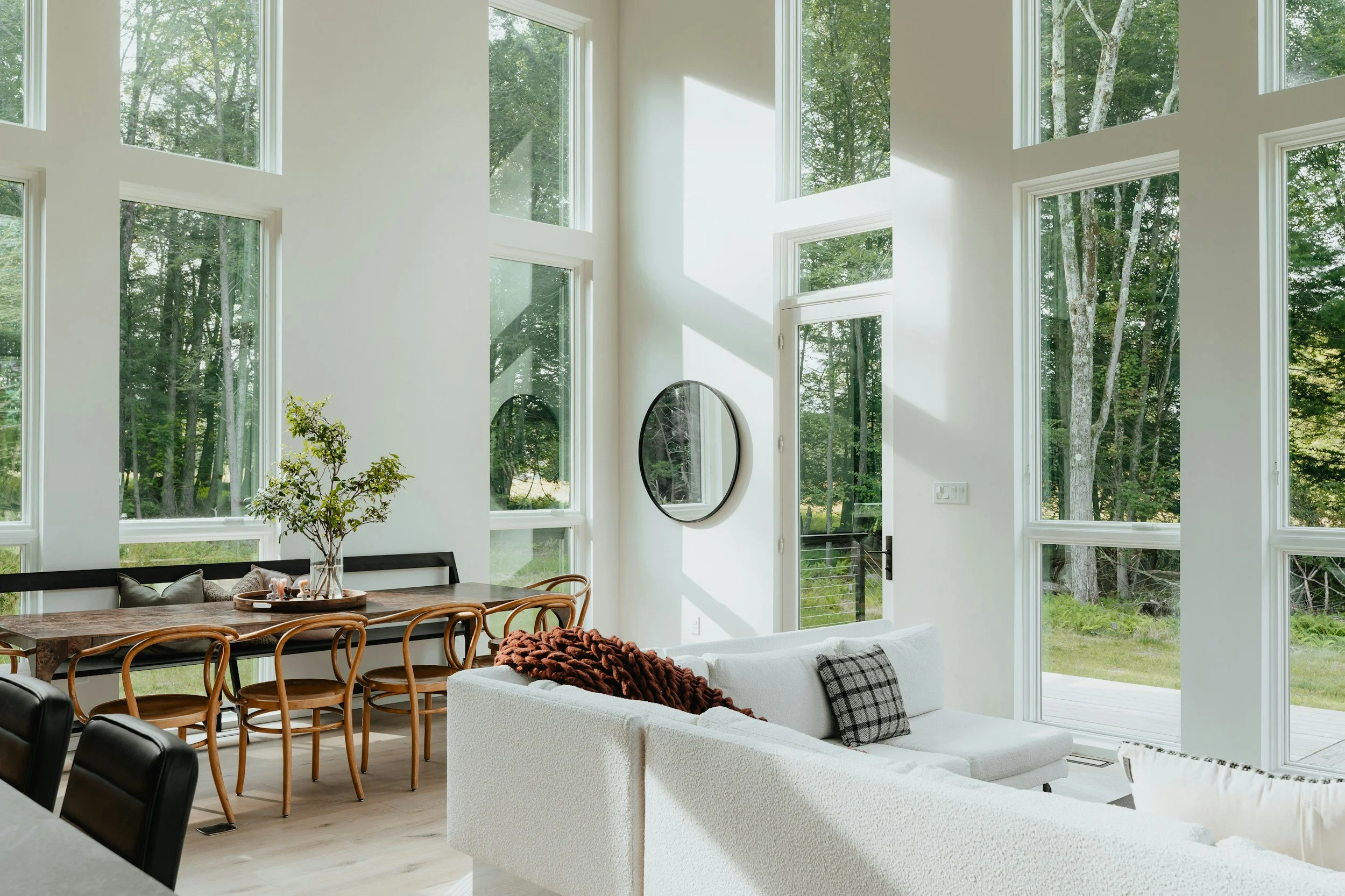
4. Declutter With a Purpose (Not Perfection)
Clutter has been scientifically shown to increase:
Stress hormones
Overwhelm
Low-grade anxiety
Mental fatigue
But here’s the thing:
Decluttering doesn’t mean living like a minimalist monk. It means letting your environment breathe.
How to Declutter Strategically:
Keep surfaces mostly clear
Use closed storage as much as possible
Choose furniture that hides visual noise
Create a “drop zone” for everyday items
Use baskets, trays, and hidden organizers
Feel-good design simplifies your physical space so your mental space can expand.
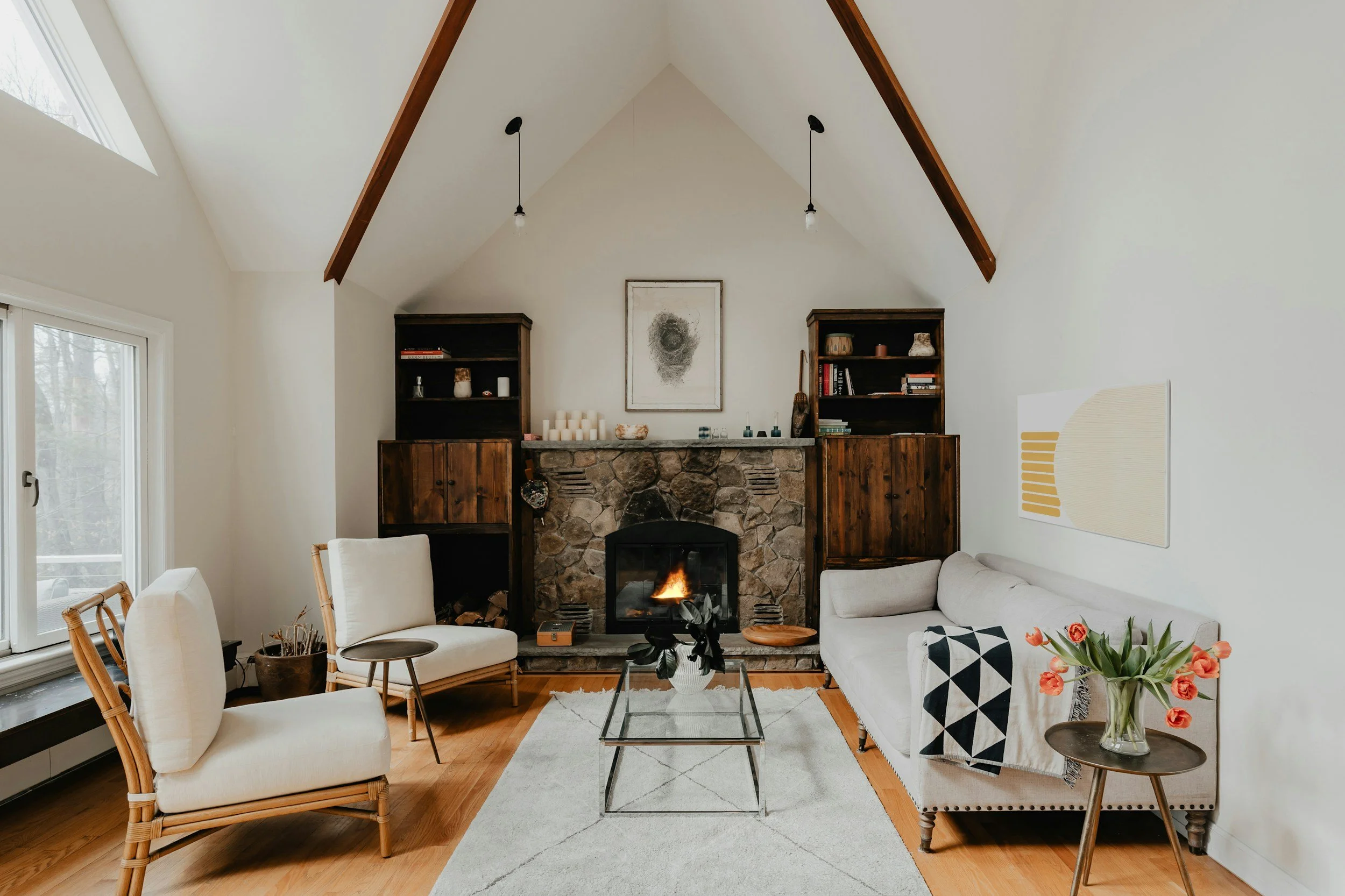
5. Add Sensory Layers (The Key to Feel-Good Design)
Most people decorate visually.
Designers design sensory experiences.
To create a truly feel-good home, you need sensory balance:
Texture
Soft + structured
Smooth + woven
Natural + modern
Tone
Warm woods
Organic fabrics
Natural stone
Sound
Soft rug = less echo
Textiles absorb noise
Furniture creates acoustic comfort
Scent
Calming scents (lavender, cedarwood)
Crisp scents (citrus)
Seasonal shifts for cozy months
Touch
Comfortable seating
Intentional layers
Blankets, pillows, hand-feel materials
Sensory design turns a home into a sanctuary.
6. Support Your Daily Rituals (This Is Where Real Life Changes)
Your environment should support your best self—not the version of you that’s tired, rushing, or overwhelmed.
Designing for rituals means creating micro-spaces that make daily life feel lighter.
Examples:
✨ A coffee station that kicks off your morning with ease
✨ A reading chair that naturally invites you to unwind
✨ A kitchen that encourages healthier meals
✨ A yoga mat that’s easily accessible (not buried in a closet)
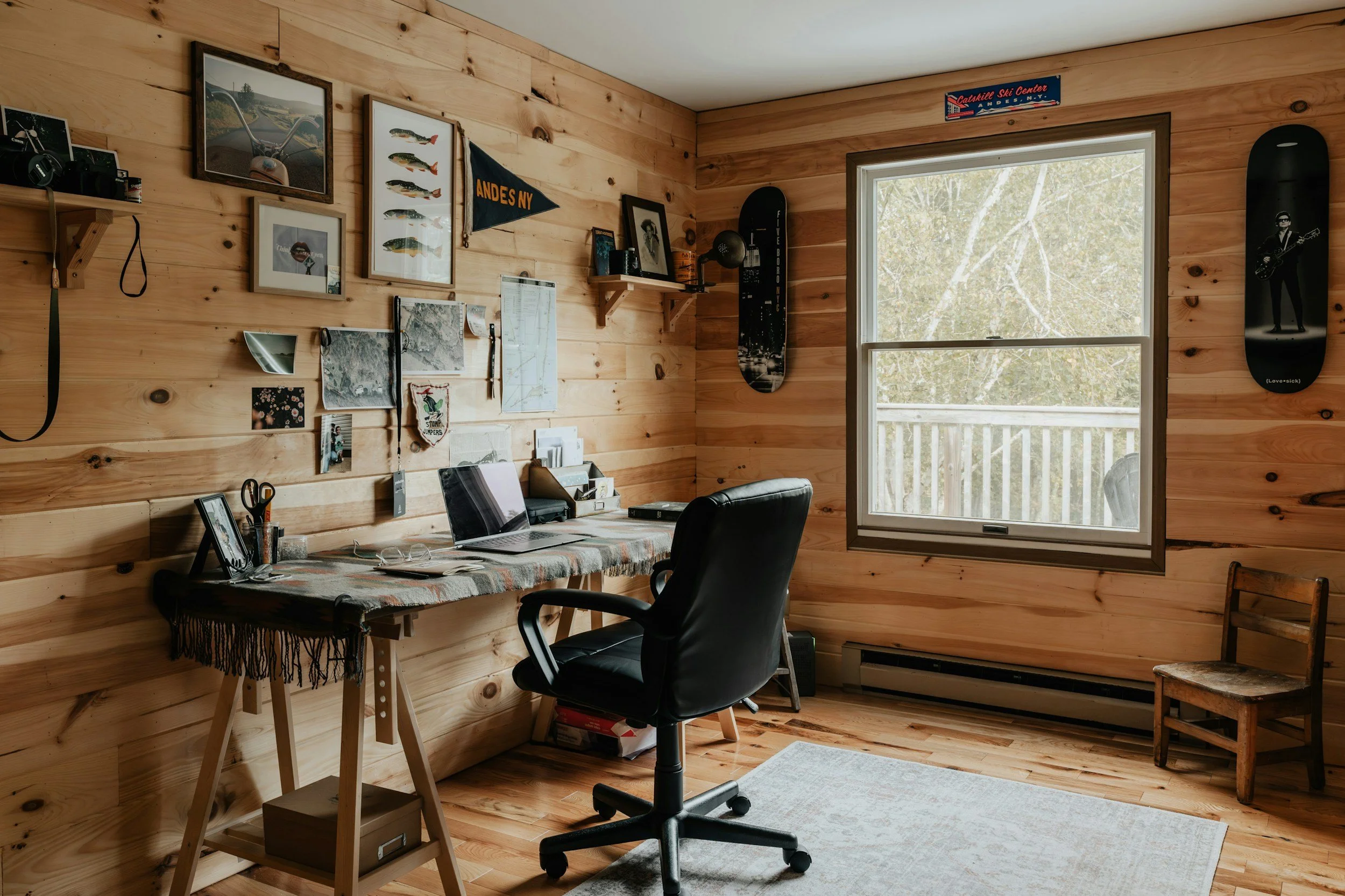
✨ A desk setup that keeps you focused, not scattered
Good design helps you show up for yourself.
7. Functional Comfort Is the Real Luxury
Forget stiff designer furniture that looks pretty but feels like a museum piece.
Feel-good design prioritizes comfort above all.
Comfort =
Sofas you can actually curl up on
Beds that feel like boutique hotels
Chairs that support your posture
Textures you want to touch
Lighting that doesn’t strain your eyes
A beautiful room is nice.
A beautiful room that FEELS good is unforgettable.
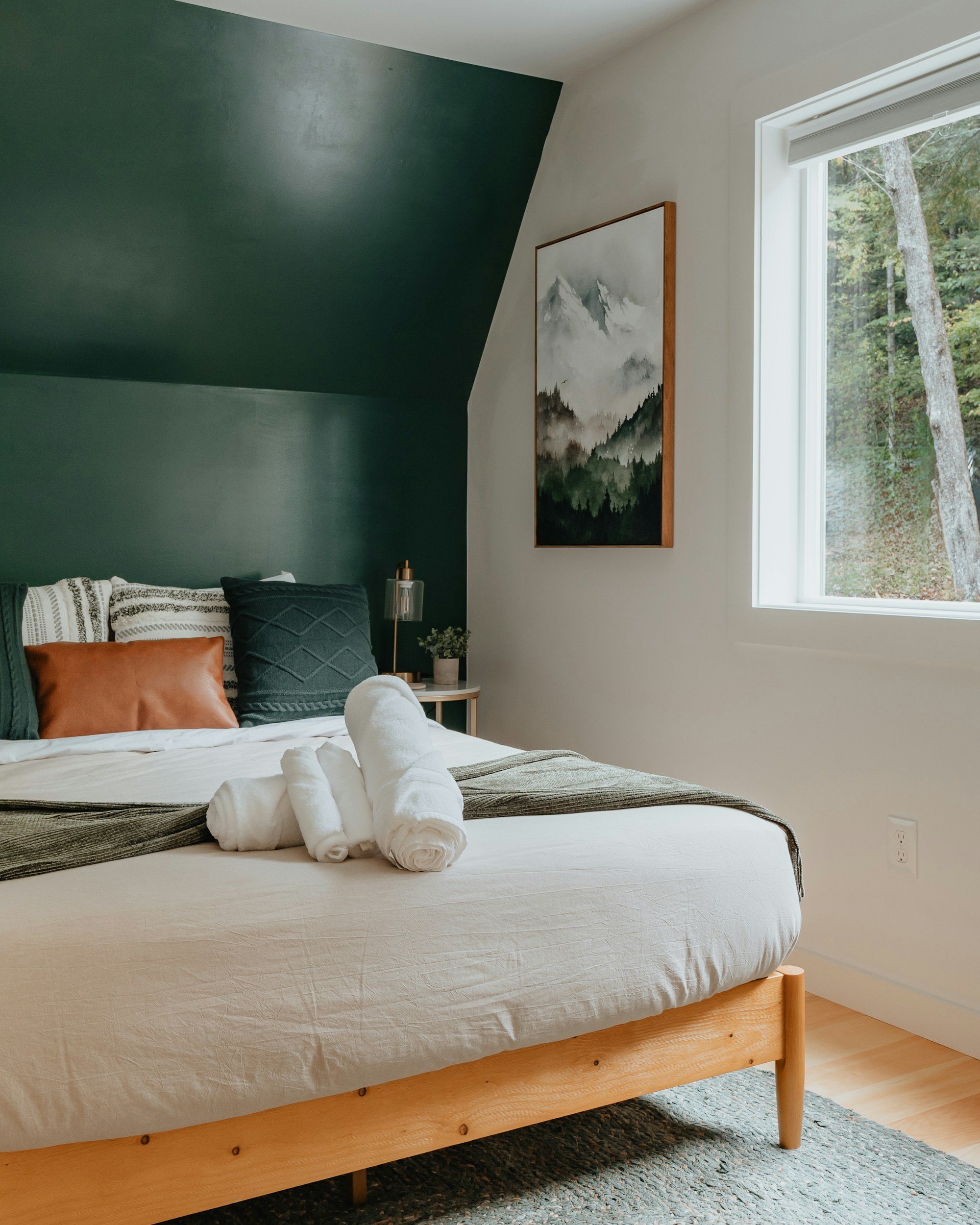
8. Bring Nature In (Biophilic Design is a Game-Changer)
Biophilic design—a fancy way to say “design inspired by nature”—is proven to:
Reduce stress
Improve mood
Increase productivity
Boost focus
Lower anxiety
How to Add Biophilic Elements
Plants (real or high-quality faux)
Natural woods
Earthy materials
Stone, clay, linen
Landscape-inspired artwork
Organic shapes
It creates an instant sense of calm—like a deep breath for your home.
Creating Spaces That Support Focus (Especially for Remote Workers)
If you use your home to work, create, or think—your environment shapes your output.
What matters for focus:
✔ A distraction-free layout
✔ Lighting that mimics natural daylight
✔ Ergonomics that keep your body comfortable
✔ A color palette that calms mental chatter
✔ Storage that minimizes visual noise
✔ A desk setup with boundaries and intention
Your brain wants clarity.
Design can give it that.
Why Feel-Good Design Is the Future of Homes (and STRs)
People are craving spaces that help them feel:
Less overwhelmed
More grounded
More focused
More productive
More connected
More like themselves
Whether you’re designing a home or a rental, this is the shift:
People want real-life support—not just aesthetics.
And the spaces that deliver that?
Those are the ones people return to over and over again.
Ready to Create a Home That Supports Your Best Self?
Feel-good design isn’t about perfection.
It’s about creating a space where your nervous system can breathe—where life feels smoother, calmer, more aligned, and more you.
If you want a home designed for real-life comfort, focus, and ease, I’d love to help.
✨ Download the Free 30-Minute Home Refresh Guide
Let’s create a space that feels good every single day.

If you are looking to transform your space, interested in Asheville real estate, or just want to say hi, I'd love to connect!
Not quite ready for a full on design project? Take a step towards transformation with the 30 Minute Home Refresh Guide.
READ MORE

Let’s Connect