Short Answer: Professional interior design increases short-term rental revenue through three measurable pathways: higher listing conversion (more viewers become bookers), higher nightly rate tolerance (guests pay more for spaces that look and feel premium), and stronger reviews (which compound into better search placement and more bookings). How much it moves the needle depends on the gap between where your property is now and what the top performers in your market are doing — which is exactly the math this post walks you through.
Is design a real revenue lever, or just a nice-to-have?
Every host asks some version of this question before hiring a designer: is this real, or is it marketing? Fair question. You should be skeptical of anyone who promises specific returns without ever having seen your listing.
Here's the honest answer: design doesn't increase revenue because it makes a space prettier. Prettier is a side effect. Design increases revenue because it changes three things guests actually respond to with their wallets:
Conversion. Your listing photos are competing against every other listing in the search results. A styled, professionally photographed space earns the click and the booking. An undistinguished-but-clean space earns a scroll-past. Same location, same price, different outcome.
Rate tolerance. Guests don't pay for square footage — they pay for how a place makes them feel in the first three photos and the first three minutes after walk-in. A space that reads "boutique" supports a rate that a space reading "spare bedroom energy" simply can't hold, no matter how clean it is.
Reviews. The details guests physically experience — the mattress, the bedding, the lighting, the one amenity they photograph for their group chat — are what turn a "nice stay" review into a glowing one. And reviews are the flywheel: better reviews mean better search placement, which means more bookings, which means more reviews. This isn't just host folklore — research from Cornell's Center for Hospitality Research found that lodging properties that raise their review scores can charge more without losing occupancy.
Understanding which of these three is underperforming in your listing is the starting point for any design investment. Strong conversion but a rate stuck below your comps? You need the quality signals that justify premium pricing. Competitive pricing but weak conversion? Your photos and first-impression design features need work. Solid bookings but a review score that won't budge? Focus on the guest-felt details. (We break down the mechanics in how design impacts ADR and occupancy.)
How do I know if my property is underperforming?
You can't know what design is worth to you until you know the size of your gap. Here's the audit, and it costs nothing but an honest hour:
Pull your numbers. Average nightly rate, occupancy, and review score over the last twelve months. Not your best month — the average. I know. Be brave.
Find your comps. Five listings in your market that are genuinely comparable — similar size, similar location quality, similar property type — that are consistently outperforming you. Market data tools like AirDNA, Rabbu, and Wheelhouse will show you rates and occupancy for comparable properties in your area.
Study the gap. Look at their photos, their amenities, their review language. What do their guests rave about that yours don't mention? That gap is your design brief, written for you by your own market.
If your metrics sit below the market median for your property type, the distance between you and that median is your potential upside. If you're already at or above it, design can still sharpen your position — but the returns are smaller, and an honest designer will tell you that up front. (More on when to invest and when to hold off in the design ROI playbook.)
How do I run the actual math?
Skip anyone's promises and run your own back-of-napkin projection. You need three numbers, all from your own audit:
Your current annual revenue (rate × booked nights)
The market median for your comps (from the tools above)
Your projected redesign cost (scoped to your specific gaps — more below)
The gap between your revenue and the comp median is your realistic upside range. Divide your projected design cost by that gap and you have a rough payback timeline. If the payback pencils out within a booking season or two, the investment case is strong. If your market has a low rate ceiling and the gap is small, it may not — and that's worth knowing before you spend, not after.
This is exactly the exercise we run with hosts in a design consult, using your real numbers instead of somebody's suspiciously round hypothetical ones.
What does an STR redesign actually include?
A meaningful redesign is not a gut renovation. For most underperforming properties, the scope targets the handful of things that drive all three revenue pathways:
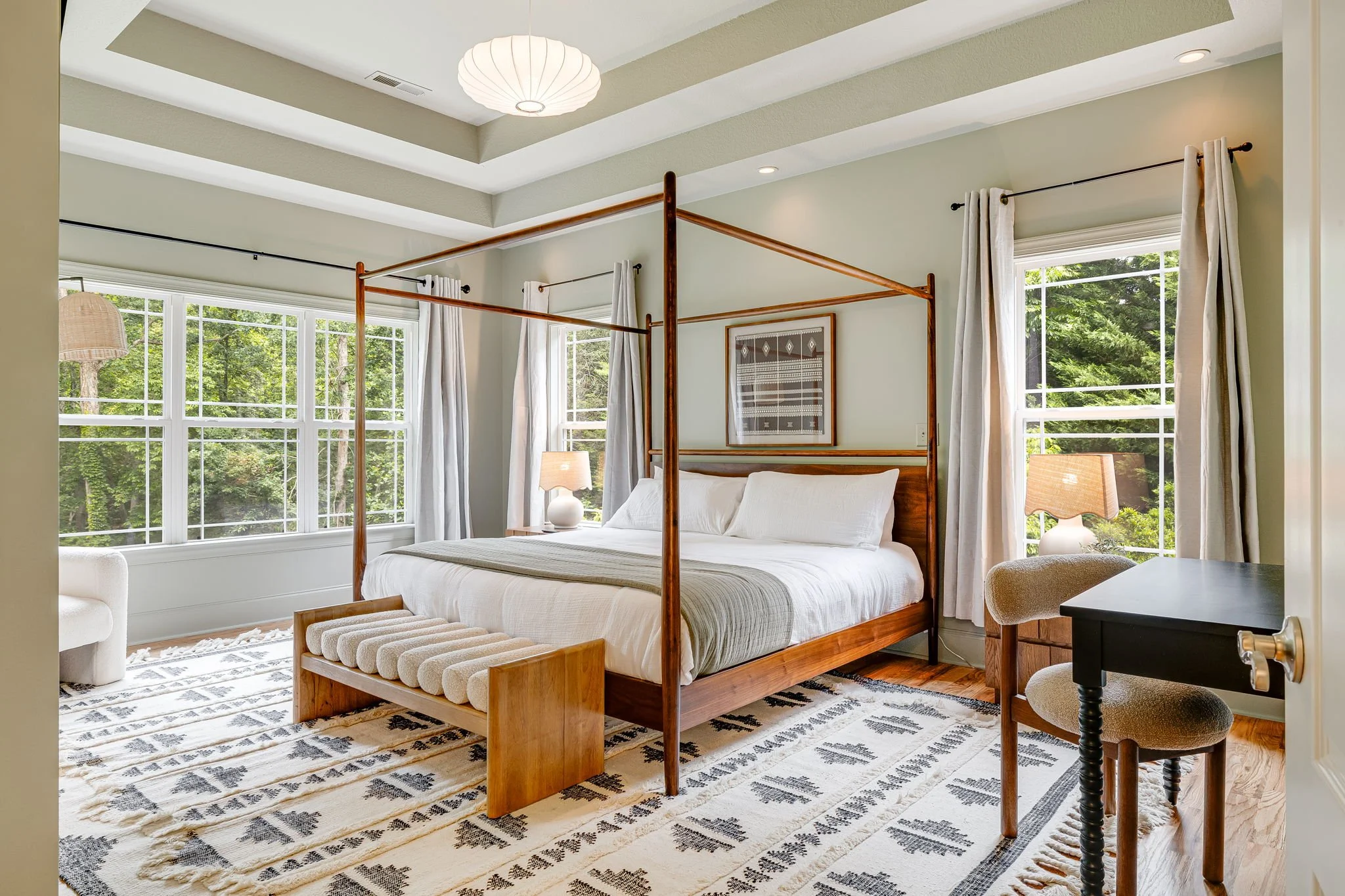
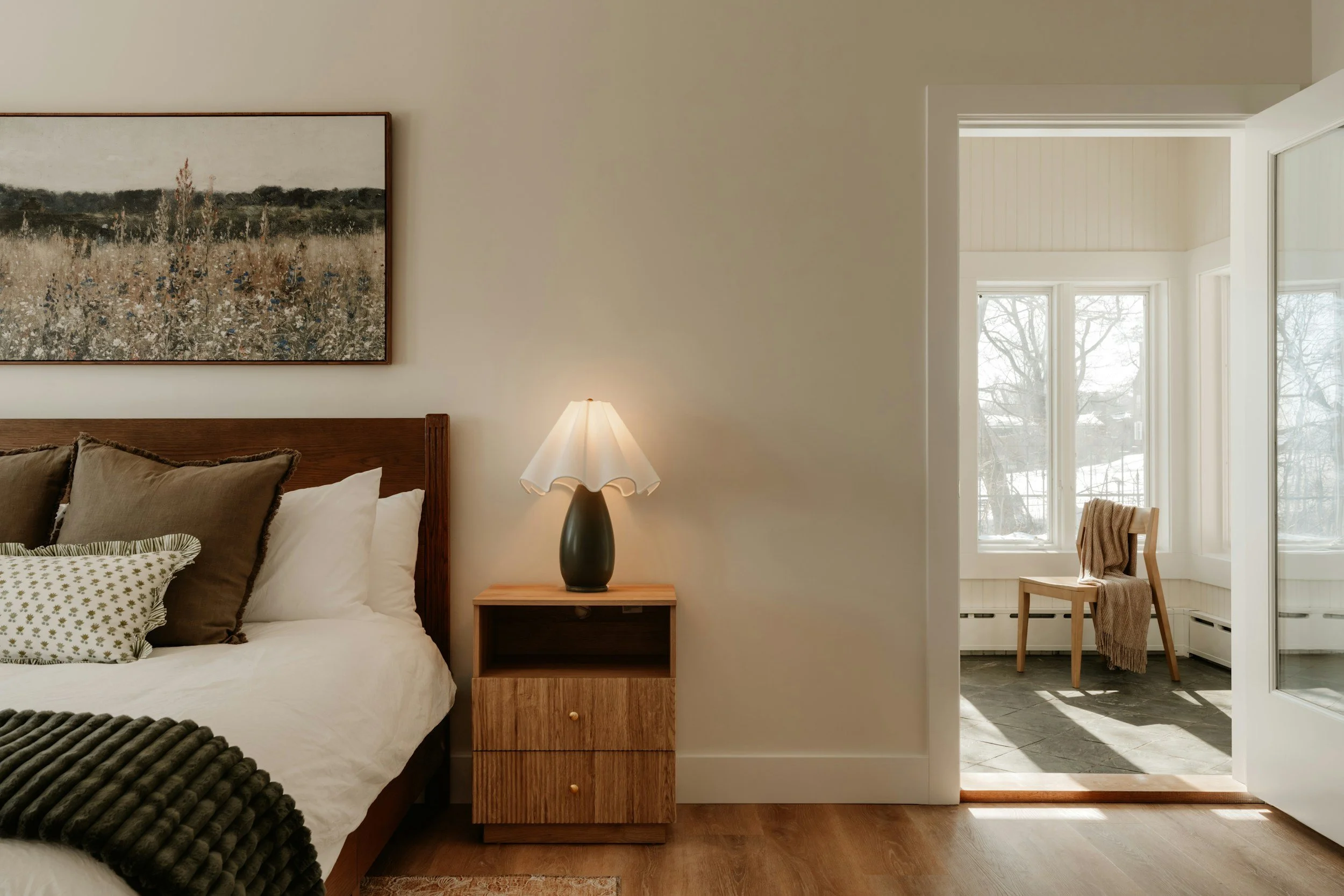
Mattress and bedding. The single most guest-felt improvement in any STR, and the one most likely to move your review score. Hotel-style layering — quality mattress, duvet, euro shams, proper pillows — is the difference between "comfortable" and "I slept better than I do at home."
Seating scaled to the space. Especially in small properties and tiny homes, correctly scaled furniture in performance fabric changes how a room photographs and how it lives.
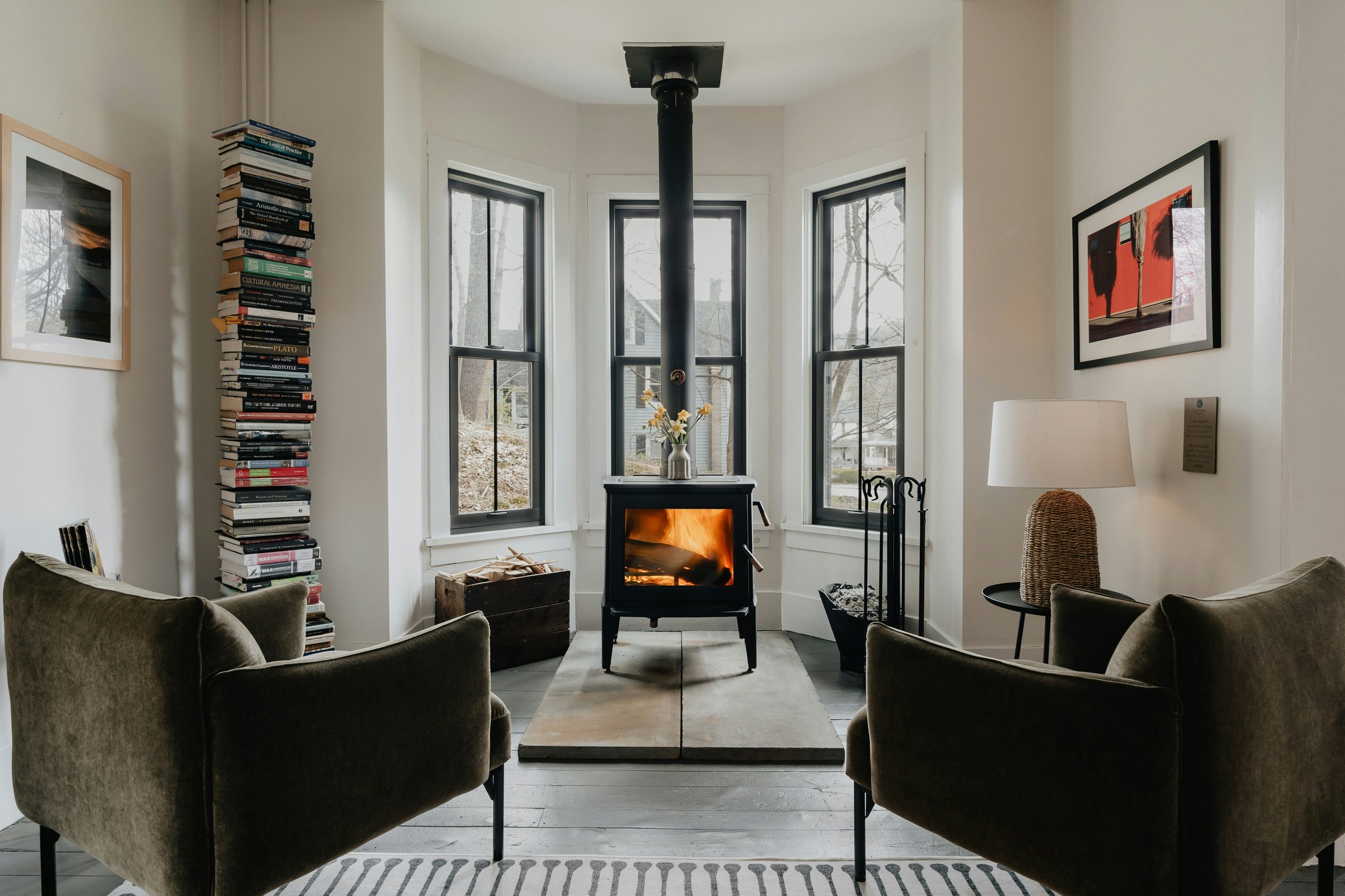
Lighting. Layered lighting — a statement fixture, bedside sconces, a floor lamp, dimmers — is the cheapest transformation per dollar in interior design. Overhead-only lighting is why your photos look like a dentist's office.
Color and window treatments. A cohesive palette and real curtains (not the builder-grade blinds, I'm begging you) do more for photo performance than almost any single furniture purchase.
Styling. Art, plants, textiles, the small curated objects that make a space photograph like a place rather than a checklist.
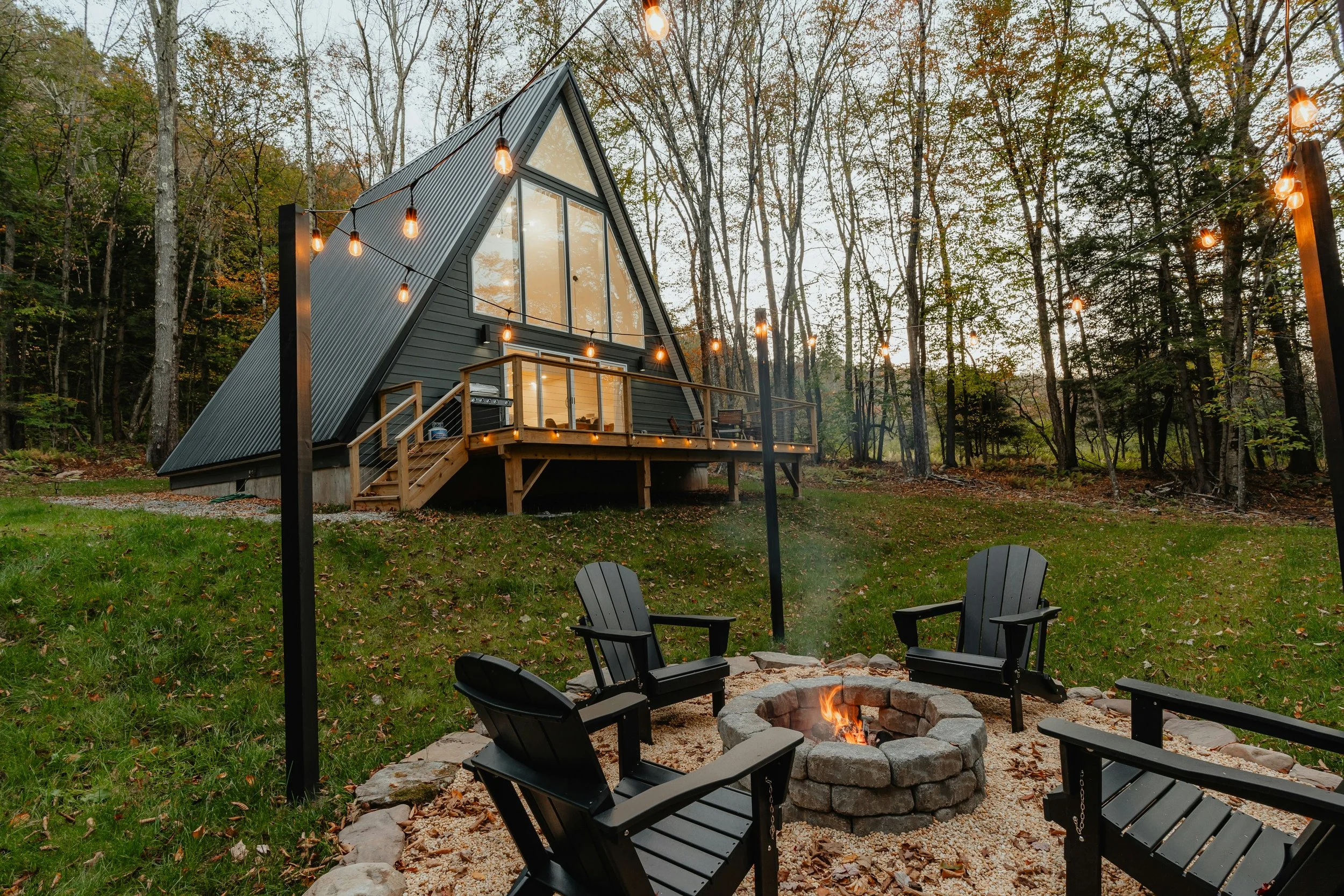
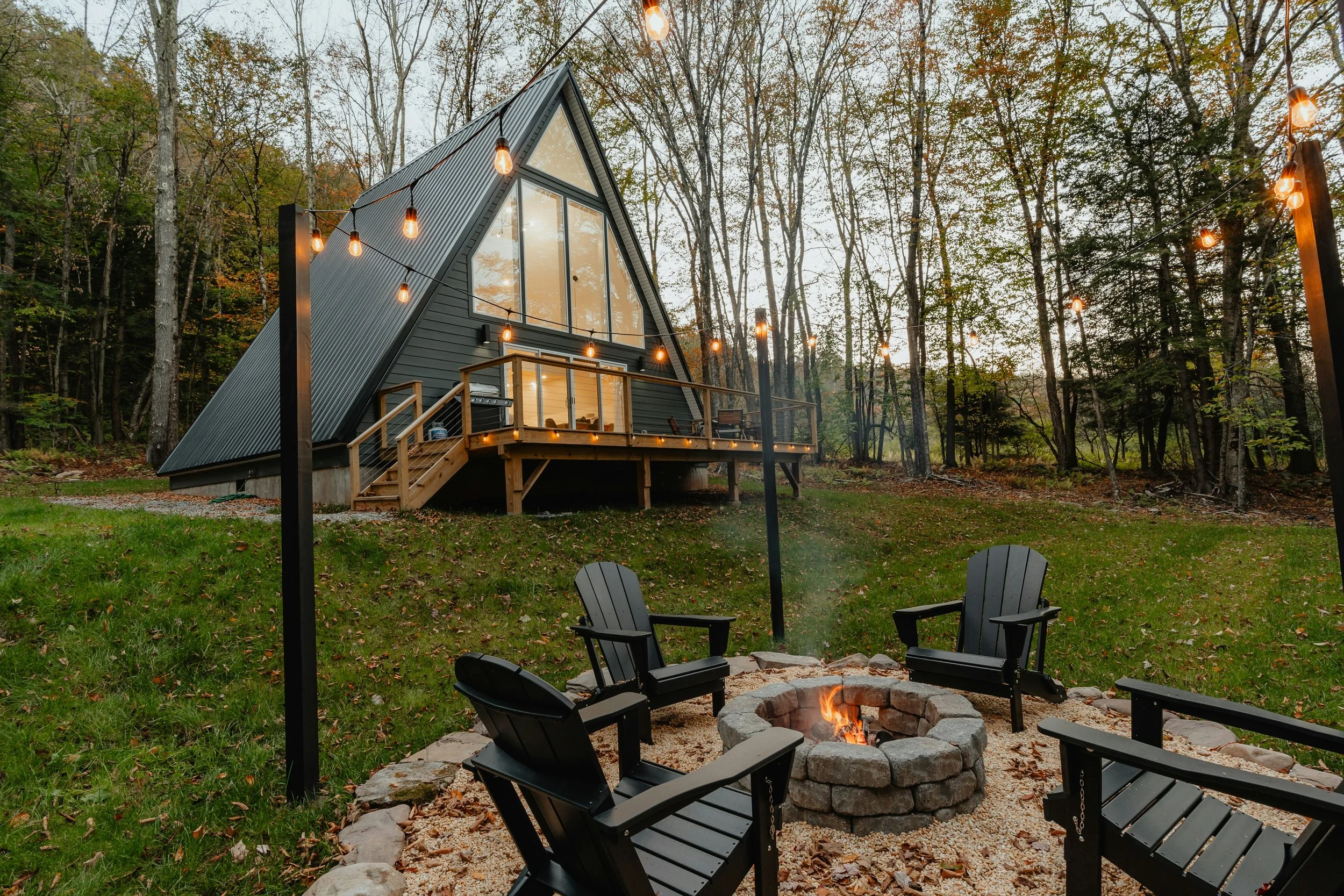
One signature outdoor or amenity moment. A fire table, a hammock corner, a proper porch setup — the thing guests mention by name in reviews and photograph for their group chat. In our experience, this is often the most review-generating line item in the whole project.
Professional photography. Non-negotiable, and always last. All of the above is wasted if smartphone photos are what greet people in search results. Photography is the lowest-cost, highest-leverage step in nearly every STR improvement plan.
Do I have to do everything at once?
No — and for a lot of hosts, you shouldn't. The transformation compounds just fine in stages:
Start with the mattress and bedding, because it's the most guest-felt change and the fastest route to better reviews. Add lighting next. Then work through color, styling, and your signature amenity in order of impact for your specific gaps. Reshoot photography once the space has genuinely changed. Each step improves your market position; the cumulative effect is the full result.
When does design not pay off?
An honest section, because you deserve one. Design investment produces the smallest returns for properties that are already performing near the top of their market, and for properties in markets with low rate ceilings where premium positioning has limited room to run. If that's you, a full redesign may not be the right spend — targeted improvements or better photography alone might be.
The largest returns go to properties with a significant, visible gap between their current performance and their market's top performers. Which, not coincidentally, describes most hosts who go looking for design help in the first place.
Frequently Asked Questions
How much does an STR redesign cost? It depends entirely on the size of your property and the size of your performance gap — which is why we scope every project to your specific numbers rather than quoting a one-size-fits-all figure. The audit above tells you what your upside is; the design plan tells you what it costs to capture it. When the second number is meaningfully smaller than the first, you have your answer.
How long does it take to see results? Conversion improvements tend to show up first, once new photography goes live — that's the fastest-moving metric. Occupancy and review improvements compound more slowly, because they depend on new bookings generating new reviews. Plan to judge the full impact over months, not weeks.
Does design matter more than location? Location sets your ceiling — the maximum rate and occupancy your market will support. Design determines how close to that ceiling you actually get. A well-designed STR in a good-but-not-great location routinely outperforms a poorly designed one in a slightly better spot. Both matter; design is the one you can still control after closing day.
What is a good review score? The closer to 5.0, the better — higher-rated listings earn more guest trust, and rating is a factor in how platforms surface and badge listings in search. Coverage of the Cornell research in Travel Weekly noted that a one-point ratings swing can move room rates by double digits in the hotel world — guests vote with their wallets, and the incentive is no different for STRs. More useful than any single threshold: compare your score to your five comps. If they're outscoring you, guests are noticing something, and their review language will usually tell you exactly what.
How do I find out if my STR is underperforming? Pull your rate, occupancy, and review score, then compare against market data from tools like AirDNA, Rabbu, or Wheelhouse. Consistently below the median for comparable properties means you're underperforming — and the size of that gap is the size of your opportunity.
Want a second set of eyes on your numbers? At Sukkha Interior Design, we work with hosts to find the highest-ROI improvements for their specific property and market — no hypothetical math, just yours. Book a consult and let's look at your listing together.

If you are looking to transform your space, interested in Asheville real estate, or just want to say hi, I'd love to connect!
Not quite ready for a full on design project? Take a step towards transformation with the 30 Minute Home Refresh Guide.
READ MORE


Let’s Connect