The short answer: The biggest furnishing mistake STR hosts make is spending in the wrong places. Splurge on the mattress, bedding, sofa, and any item guests will touch or sleep on daily. Save on decorative accessories, artwork, throw pillows, and anything purely visual. A well-furnished STR doesn't require a massive budget — it requires a strategic one. Spend where guests feel it, save where guests only see it, and never buy anything that won't survive two years of turnover.
How much does it cost to furnish a short-term rental?
This is the question every new STR host asks, and the answer that nobody wants to hear: it depends — but it depends less on the size of your property and more on where you choose to spend.
The average cost to furnish a one-bedroom STR from scratch ranges from $5,000 to $15,000 depending on quality level and market. A tiny home or studio can be done well for $3,000 to $6,000. A two-bedroom mountain cabin with outdoor furniture typically runs $8,000 to $18,000. Those are wide ranges — and the difference between the low and high end isn't always reflected in the guest experience or the booking rate.
What determines whether your furnishing budget translates into revenue is not the total amount spent, but the allocation. Hosts who spend $12,000 the wrong way consistently underperform hosts who spend $6,000 the right way. The framework below tells you exactly how to allocate.
Where should you splurge when furnishing an Airbnb?
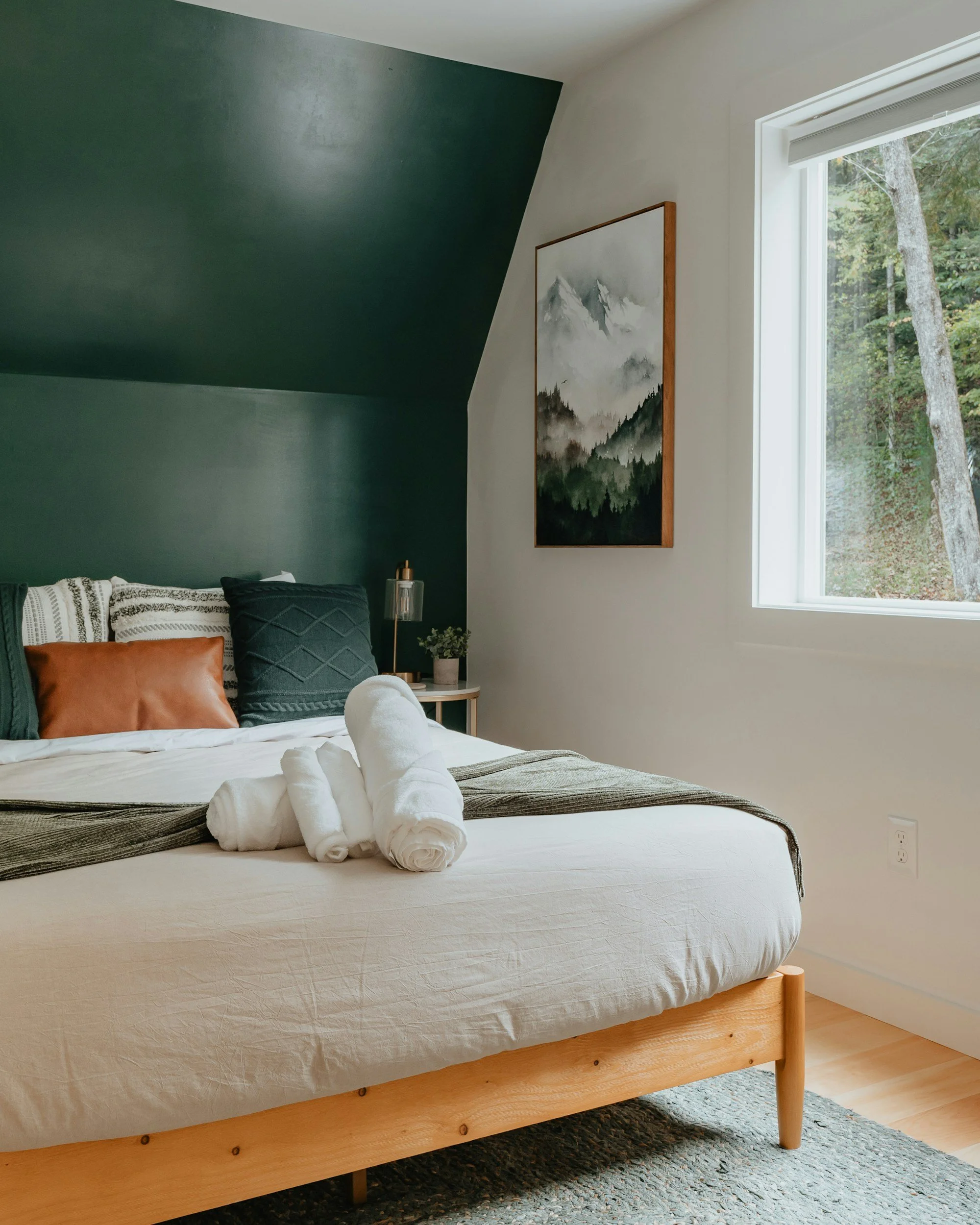
The mattress — never cut corners here. A bad mattress is the fastest path to a one-star review. Guests will forgive a lot — a small space, a dated kitchen, a bathroom without great lighting — but they will not forgive a mattress that makes them sleep badly. Budget $600 to $1,200 for a quality mattress per bed, and don't go below that number regardless of how tight the overall budget is.
A memory foam or hybrid mattress in the medium-firm range works best for the widest range of guests. Firm mattresses generate complaints from guests who sleep on their side. Very soft mattresses generate complaints from guests who sleep on their back. Medium-firm splits the difference and pleases the most people most of the time.
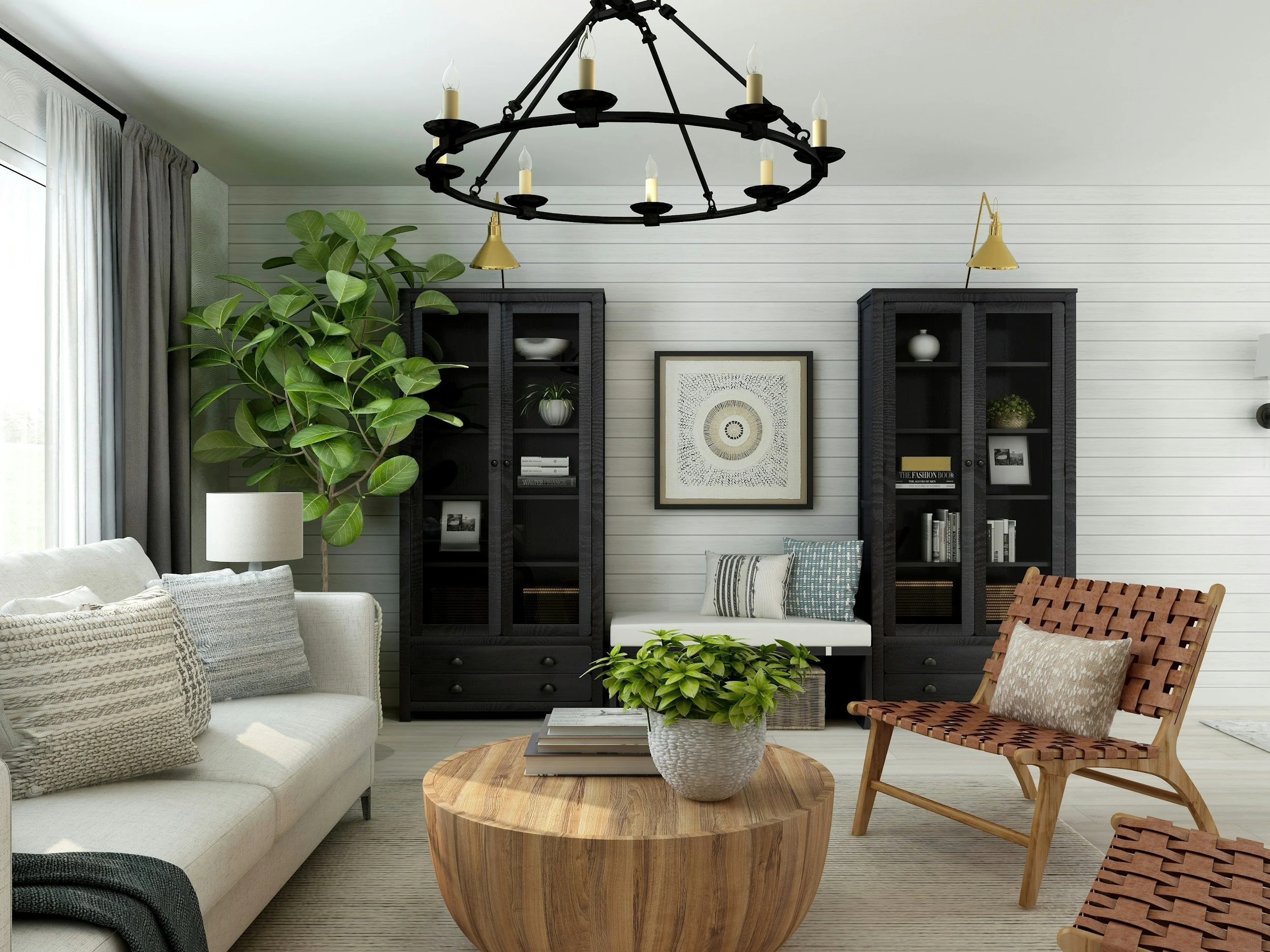
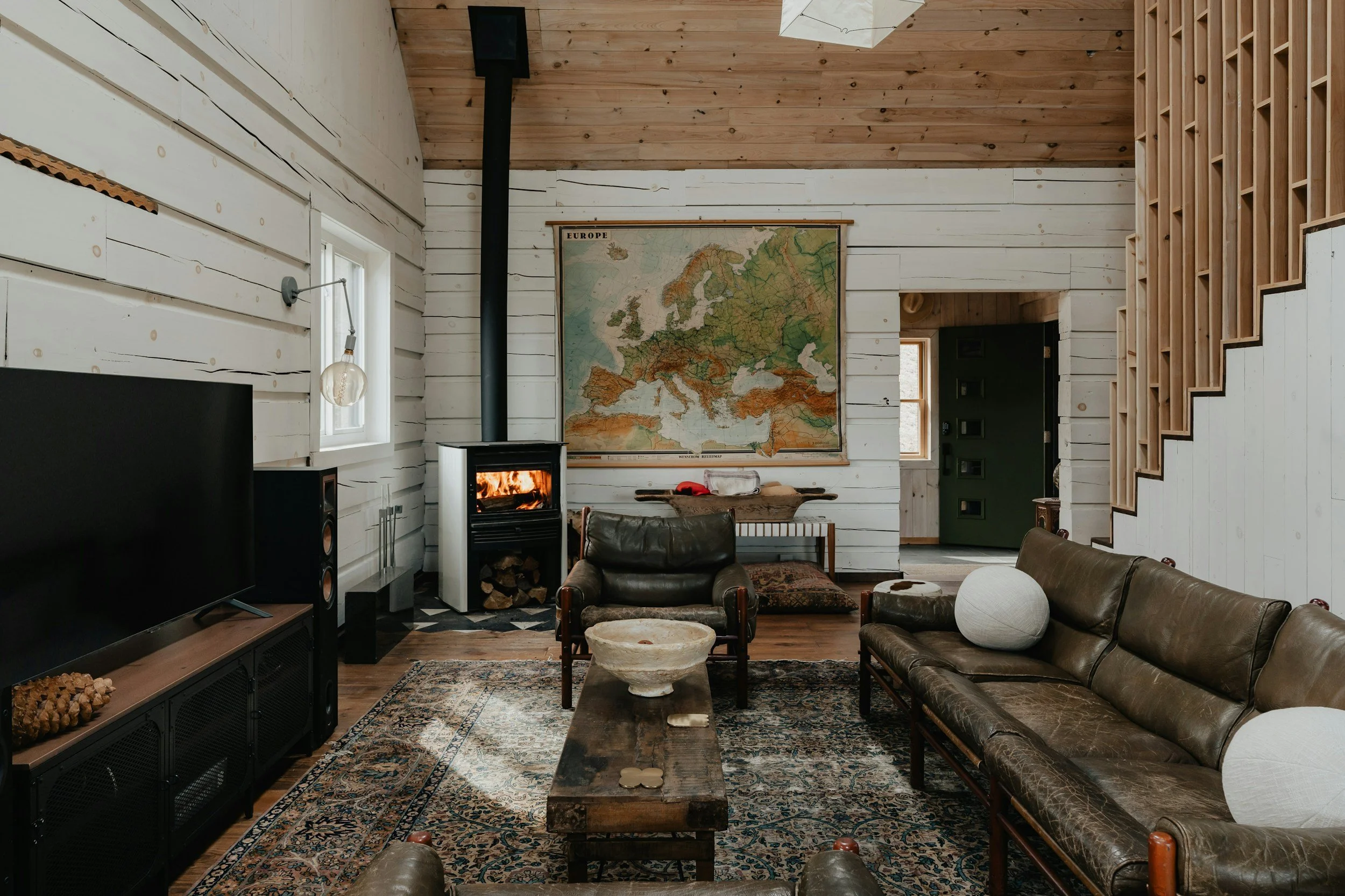
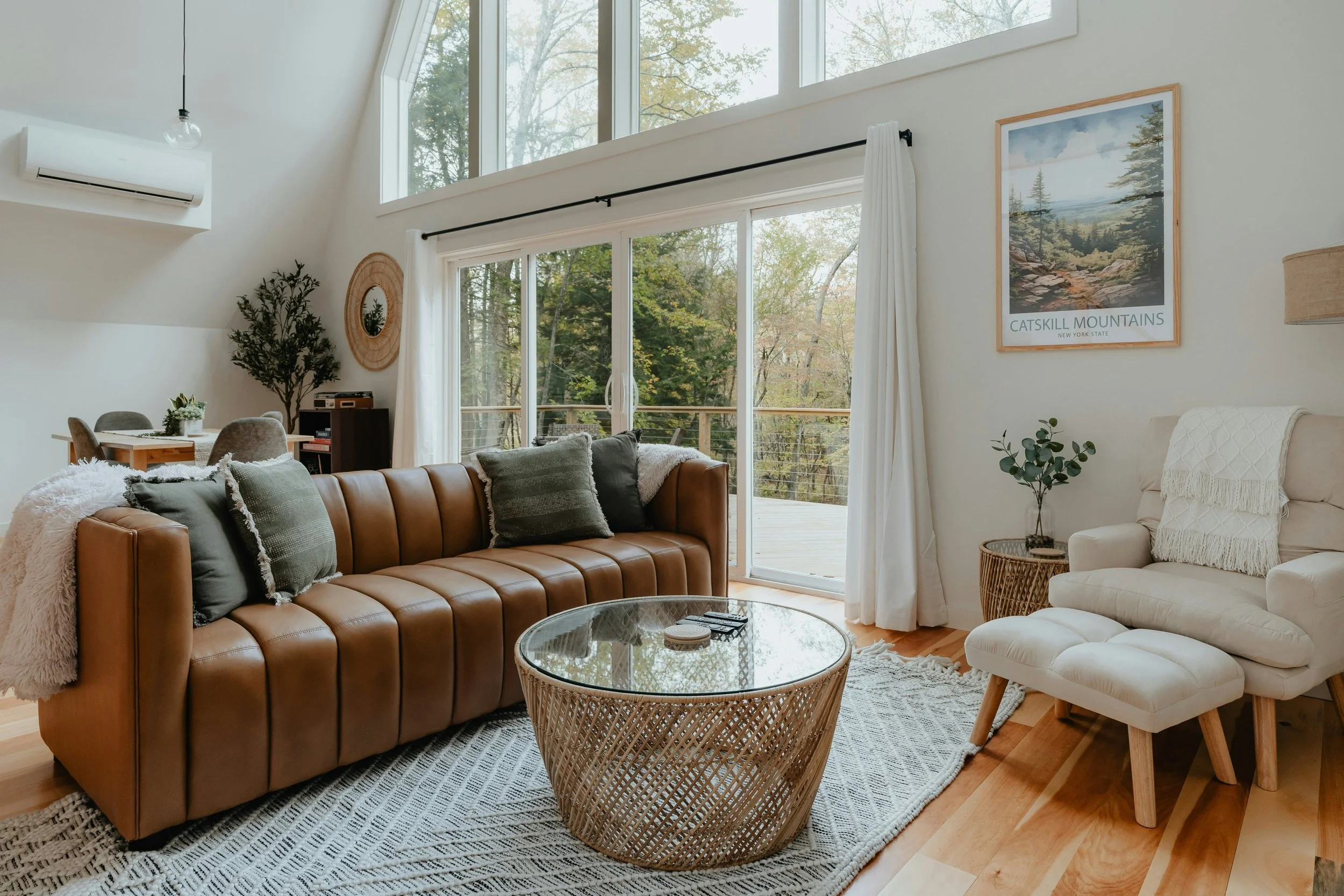
The sofa. In a tiny home or small STR, the sofa is often the centerpiece of the living space — it anchors the room, determines the seating capacity, and takes more abuse than any other piece of furniture in the property. A cheap sofa that looks great in the showroom will have visible wear within six months of STR use. Budget $800 to $1,500 for a sofa with a hardwood or kiln-dried hardwood frame, high-density foam cushions, and performance fabric that's rated for heavy use and is easy to clean.
Performance fabrics — Crypton, Revolution, and similar engineered textiles — are worth the premium for STR use. They resist staining, clean up easily, and maintain their appearance through hundreds of turnovers. A performance fabric sofa that costs $1,200 will look better after two years than a standard fabric sofa that cost $600.
Bedding and towels. These are the items guests touch directly, every night, and they communicate quality more immediately than almost anything else in the property. Budget $150 to $250 per bed for a full bedding set — duvet cover, duvet insert, sheets, pillowcases, shams, and a throw. Buy multiples so you always have a clean set ready for turnover. Same principle for towels — buy quality, buy quantity, replace when they start to look worn.
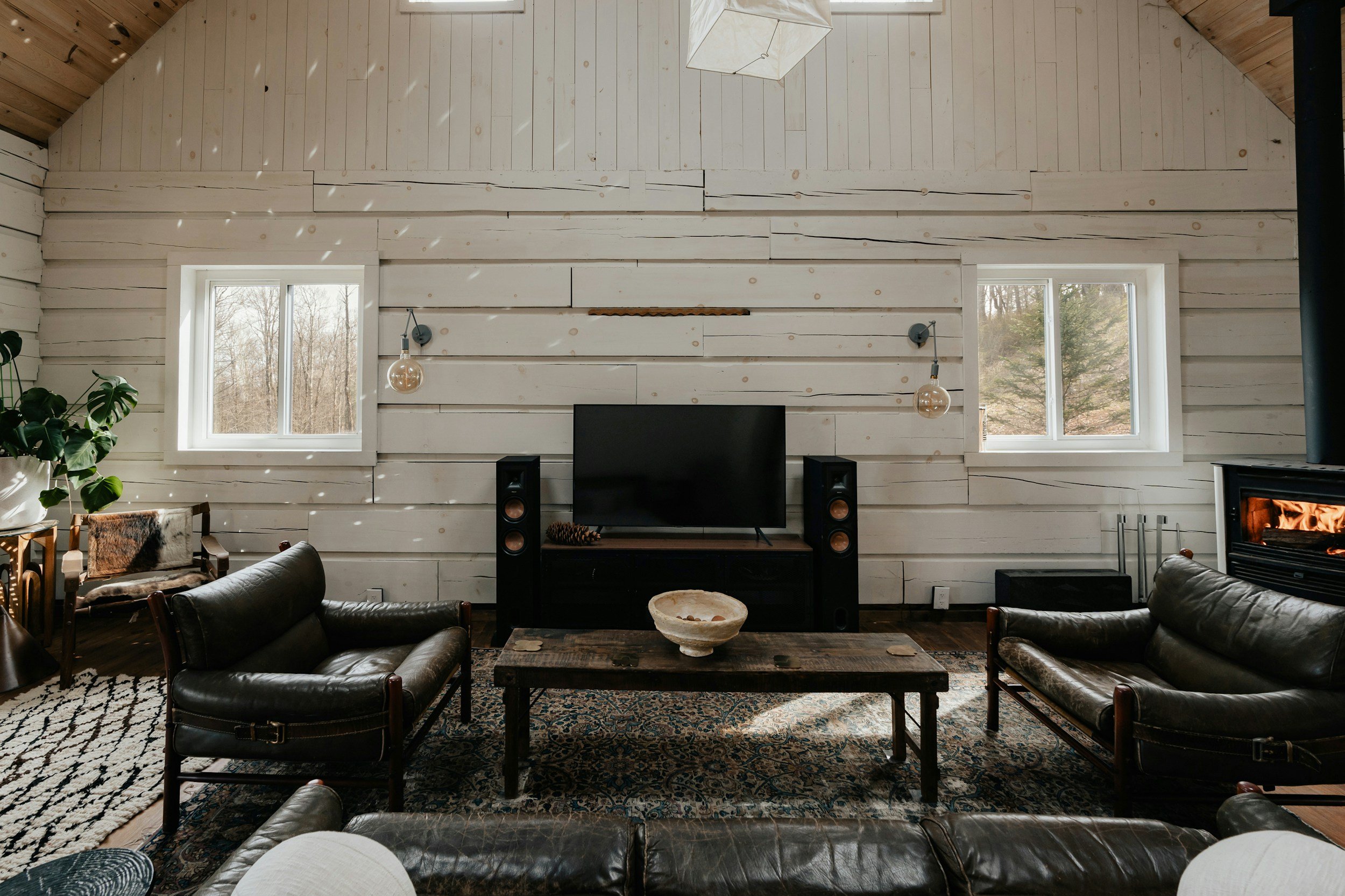
Lighting fixtures. Not the bulbs — the fixtures. A well-chosen pendant light, a pair of sconces, a statement floor lamp — these are the details that photograph beautifully and signal quality to guests browsing listings. Budget $50 to $200 per fixture for the hero pieces and save on the utilitarian ones. Layered lighting is what separates a property that feels designed from one that just has lights installed.
Where should you save when furnishing an Airbnb?
Decorative accessories and artwork. Guests notice these, but they don't judge quality the way they do a mattress or a sofa. A well-chosen $30 print in a $15 frame from a local artist can be more impactful than an expensive original — and in an STR context, you want things that can be replaced without heartbreak if something gets damaged. Shop estate sales, thrift stores, local markets, and affordable print shops for art and objects. The budget here should be $200 to $400 for the whole property, not per room.
Side tables and accent furniture. These are supporting players. Guests don't sit on the side table. They don't sleep on the accent chair in the corner. These pieces exist to make the primary pieces look better and to provide function — a surface for a lamp, a place to set a drink. IKEA, Target, and Wayfair all have perfectly serviceable options at price points that make sense for pieces guests will treat casually. Budget $50 to $150 per piece and put the savings toward the mattress.
Window treatments. Curtains are important — they add warmth, texture, and light control — but they don't need to be expensive to look good. IKEA's linen curtain panels in natural or white are a perennial designer favorite for exactly this reason: they look expensive, they photograph well, and they cost almost nothing. Budget $30 to $60 per window and move on.
Kitchen supplies. Guests don't care whether your pots are Le Creuset or a solid mid-range brand they've never heard of. They care whether the pans are non-stick, the knives are sharp, the coffee maker works, and there are enough dishes for the number of guests your listing sleeps. A complete kitchen kit from a restaurant supply store or a Costco run will serve you better than a curated collection of individually purchased designer pieces. Budget $300 to $500 for a fully equipped STR kitchen and spend the rest where it matters.
What are the most common STR furnishing mistakes?
Buying furniture that isn't rated for the use it will see is the single most expensive furnishing mistake. An STR sees significantly more use than a residential property — multiple turnovers per month, guests with varying levels of care, cleaning cycles that would destroy cheap furniture within a year. The sofa that looked fine in your living room for five years will show visible wear in an STR within six months if it isn't built for the load.
Buying based on aesthetics alone without considering scale is the second most common mistake. A sectional that looks proportional in a large suburban living room will physically block the traffic flow in a 400-square-foot tiny home. A king bed that fits technically in a small bedroom but leaves no walking space on either side makes the room feel smaller and the guest experience worse. Always work from a floor plan — even a rough one — before purchasing any large furniture piece. This post on how professional designers approach space planning shows why layout comes before shopping every time.
Underbuying on quantity is less obvious but equally costly. One set of sheets per bed means a delayed turnover every time laundry isn't done in time. One set of towels per guest means running a laundry operation between every checkout and check-in. Buy two full sets of everything — bedding, towels, kitchen linens — so turnover is never dependent on a single laundry cycle finishing on time.
Should I buy new or secondhand furniture for my Airbnb?
The answer is both — strategically. Secondhand furniture can be an excellent source for solid-wood pieces (dressers, dining tables, accent furniture) that are well-built and already broken in. What you should never buy secondhand for an STR: mattresses, upholstered sofas and chairs (too difficult to verify cleanliness), and anything with visible structural wear.
Estate sales, Facebook Marketplace, and local thrift stores regularly yield genuinely good solid-wood furniture at a fraction of retail cost. A dovetail-jointed hardwood dresser from an estate sale for $80 will outlast a flat-pack particleboard dresser from a big box store at any price. Know what you're looking for and be patient — the good pieces come up regularly if you're watching.
The STR furnishing approach that works best for most hosts is a hybrid: buy the highest-impact pieces new (mattress, sofa, bedding), source accent and supporting pieces secondhand where quality allows, and use affordable retail (IKEA, Target, Wayfair) for everything in between. This approach consistently delivers a well-furnished STR at $4,000 to $7,000 for a small property — well below the cost of buying everything new at mid-range retail. For a complete picture of where design dollars produce the highest return, the design ROI playbook breaks it down upgrade by upgrade.
What furniture lasts longest in a short-term rental?
Durability in an STR context comes down to three things: frame construction, fabric selection, and hardware quality.
For seating, a kiln-dried hardwood frame (oak, maple, beech) with eight-way hand-tied springs or sinuous spring construction and high-density foam cushions will outlast any other construction method. Avoid particleboard frames, stapled joints, and low-density foam that compresses within a year.
For tables and case goods, solid wood or metal construction outlasts veneer or particleboard in high-use environments. Veneer chips, particleboard swells with moisture, and both show wear quickly under STR conditions. Solid wood can be refinished. Solid metal can be repainted. Neither shows its age the way composite materials do.
For outdoor furniture, powder-coated steel or aluminum, teak, and high-quality all-weather wicker are the only materials worth buying. Anything else will show weather damage within a season or two and require replacement at full cost.
Building a property that performs over multiple years requires designing for durability without sacrificing style — it's one of the clearest long-term cost differences between a strategically designed STR and one that was just furnished quickly.
Frequently Asked Questions
How much should I budget to furnish a tiny home STR?
A well-furnished tiny home STR can be accomplished for $3,000 to $6,000 with strategic allocation — spending on the mattress, bedding, sofa, and lighting, and saving on accessories, accent furniture, and kitchen supplies. Going significantly below $3,000 typically means compromising on the items guests feel directly, which shows up in reviews.
Is it worth buying expensive furniture for an Airbnb?
It's worth buying durable furniture for an Airbnb — which isn't always the same as expensive. A $1,000 sofa in a performance fabric will outperform a $2,000 sofa in a standard fabric in an STR context. Focus on construction quality, material durability, and ease of cleaning rather than brand name or retail price.
What is performance fabric and do I need it for an STR sofa?
Performance fabric is an engineered textile designed to resist staining, moisture, and wear — Crypton, Revolution, and similar brands are the most widely available. It is highly recommended for STR sofas and upholstered chairs because it dramatically extends the life of the piece and simplifies cleaning. The cost premium over standard fabric is typically $200 to $400 for a sofa — easily justified by the extended lifespan.
Should I furnish my Airbnb all at once or over time?
All at once is strongly preferable for an STR launch, because a cohesive, complete space photographs better and delivers a stronger guest experience than a space that's clearly been assembled piecemeal. If budget requires phasing, prioritize bedroom and bathroom first — guests spend the most time there — and fill in the living and dining areas as budget allows.
Where is the best place to buy furniture for a short-term rental?
A combination of sources works best: Wayfair and Joss & Main for mid-range pieces with good delivery and return policies; IKEA for basics, curtains, and kitchen items; Facebook Marketplace and estate sales for solid-wood accent pieces; and specialty retailers for the mattress. Avoid buying furniture internationally with long lead times — delays cost you bookings.
How often do I need to replace furniture in an STR?
Quality STR furniture — solid frames, performance fabrics, good construction — should last five to seven years before replacement. Low-quality pieces often need replacement within one to two years, which makes their lower upfront cost illusory. Budget for furniture replacement as a recurring operating cost from the beginning.
Furnishing a tiny home or short-term rental and not sure where to start? At Sukkha Interior Design, we help STR hosts build spaces that look great, hold up to rental use, and earn premium rates. Book a consult and let's build your furnishing plan.

If you are looking to transform your space, interested in Asheville real estate, or just want to say hi, I'd love to connect!
Not quite ready for a full on design project? Take a step towards transformation with the 30 Minute Home Refresh Guide.
READ MORE
Let’s Connect