The short answer: The best multi-function furniture for tiny homes and STRs earns its footprint by doing at least two jobs well — ideally three. The highest performers are Murphy beds with integrated shelving, storage ottomans, convertible dining tables, storage benches, and sofa beds with quality mattresses. Every piece of furniture in a tiny home should be evaluated on this question: does it justify the floor space it occupies? If the answer is no, it doesn't belong there.
Why does multi-function furniture matter so much in a tiny home?
Here's the uncomfortable truth about furnishing a tiny home: floor space is finite and ruthlessly unforgiving. Every piece of furniture you add takes up square footage that can't be used for anything else. In a 300-square-foot space, a standard coffee table that does nothing but hold a remote control and a coffee cup is not pulling its weight. That 24 square inches of floor space could be doing something — and in a well-designed tiny home, it is.
Multi-function furniture isn't a compromise or a gimmick. Done well, it's the design decision that separates a tiny home that lives beautifully from one that feels cramped and chaotic. It's the reason a 400-square-foot STR can sleep four people comfortably, seat six for dinner, accommodate two remote workers simultaneously, and still have enough floor space to move around without doing sideways shuffles through the kitchen.
The key phrase there is "done well." Multi-function furniture has a bad reputation in some design circles because bad multi-function furniture is genuinely bad — the kind of thing that folds up awkwardly, stores uncomfortably, and feels like you're living inside a transformer toy. But the pieces that work are designed by people who take small-space living seriously, and they're getting better every year. The small-space design principles that govern all of this are worth understanding before you start shopping — micro-living design lessons covers the full framework.
What is the best multi-function furniture for a tiny home bedroom?
The Murphy bed with integrated shelving is the king of multi-function furniture for tiny home bedrooms — and arguably for tiny homes in general. A well-designed Murphy bed system converts a dedicated bedroom into a living space during the day, then back into a bedroom at night. The integrated shelving and cabinet system that surrounds the Murphy bed does the work a dresser, a bookcase, and a TV console would otherwise do — all in the same footprint.
The critical word is "well-designed." A Murphy bed that looks institutional when closed, deploys awkwardly, or requires a workout to operate is not the answer. The best Murphy bed systems look like custom built-ins when closed — the bed is invisible, the shelving looks intentional, and the room is fully functional as a living or workspace. When the bed opens, it deploys smoothly, is genuinely comfortable to sleep on, and doesn't require rearranging half the furniture to access.
For STRs specifically, a Murphy bed with a quality mattress and a well-designed surround system can be the most-mentioned feature in guest reviews. Guests who have never stayed in a space with a proper Murphy bed are consistently delighted by how well it works — and they talk about it.
The platform bed with built-in storage is the alternative for spaces where a Murphy bed isn't practical. A platform bed frame built with full drawers underneath — not the shallow roll-out bins, but real drawer boxes with furniture-grade hardware — converts the most underused real estate in any bedroom (the floor under the bed) into meaningful storage. For an STR, this means guests have somewhere to actually store their suitcase contents rather than living out of open bags on the floor.
What multi-function furniture works best in a tiny home living area?
The storage ottoman as coffee table is the highest-ROI piece in any tiny home living area. It provides seating when extra guests arrive, a footrest for everyday use, a coffee table surface with a tray on top, and storage for anything that needs a home but doesn't need to be on display. A well-chosen storage ottoman in a durable fabric at the right scale costs $200 to $500 and does the work of three separate pieces.
Sizing matters: too small and it reads as decorative rather than functional. The sweet spot for a living-area storage ottoman is 24 by 36 inches minimum — large enough to use as a genuine table, with at least 10 to 12 inches of interior depth for meaningful storage.
The convertible dining table solves the eternal tiny home problem of needing dining space for four or six people occasionally while not wanting a full dining table eating floor space daily. Drop-leaf tables, extendable tables on hairpin legs, and wall-mounted fold-down tables all accomplish this — they live small when not in use and expand to seat a crowd when needed.
For STRs, a wall-mounted fold-down dining table paired with stackable or folding chairs is an elegant solution. The table folds flat against the wall when not in use (taking up zero floor space), deploys in seconds for meals, and photographs as a deliberate design feature rather than a compromise.
The sofa bed has a complicated reputation — mostly because cheap sofa beds have a genuinely terrible mattress situation. But a quality sofa bed from a manufacturer that takes the sleeping surface seriously (IKEA's FRIHETEN, the Burrow Nomad, or a sectional with a built-in queen pullout) solves the STR problem of sleeping capacity without dedicating permanent floor space to a second bed. For a studio tiny home that needs to sleep two couples or a family of four, a quality sofa bed is often the answer. Furniture that fits the mission of your STR — earning its footprint by doing multiple jobs — is the consistent theme in high-performing tiny home designs.
What multi-function furniture works best in a tiny home kitchen or dining area?
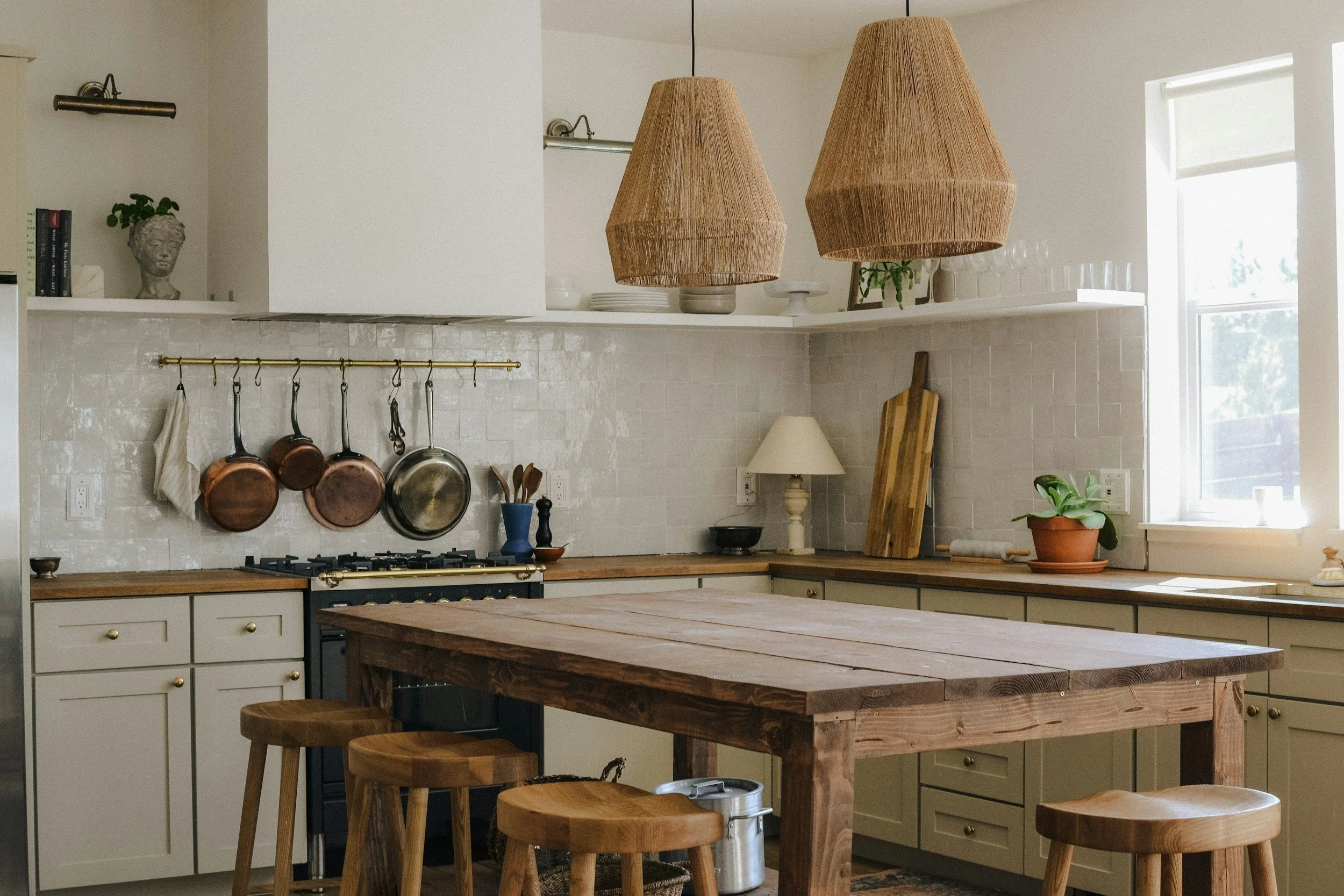
The kitchen island with storage and seating is the most versatile piece in a tiny home kitchen. An island that provides prep surface, storage below, and seating on one side eliminates the need for a separate dining table in many small floorplans. It consolidates three functions — prep space, storage, and dining — into one footprint. For STRs specifically, island seating is often where guests end up spending most of their time, and a well-designed island makes the kitchen feel sociable rather than isolated.
The best tiny home kitchen islands are either custom-built to fit the specific space, or selected from rolling kitchen carts that can be repositioned as needed. A rolling island gives you flexibility — push it against the wall when you need floor space, roll it center when you're cooking or entertaining.
The storage bench at the entry is another piece that punches well above its weight. An entry bench provides seating for putting on shoes, a visual anchor for the entry zone, storage below for shoes and outdoor gear, and — if it includes hooks or a shelf above — a complete entry organizational system in one narrow piece. In a tiny home where every zone has to be clearly defined, the entry bench tells guests immediately: this is where you land when you come in, and this is where your stuff goes.
How do you style multi-function furniture so it doesn't look like a puzzle?
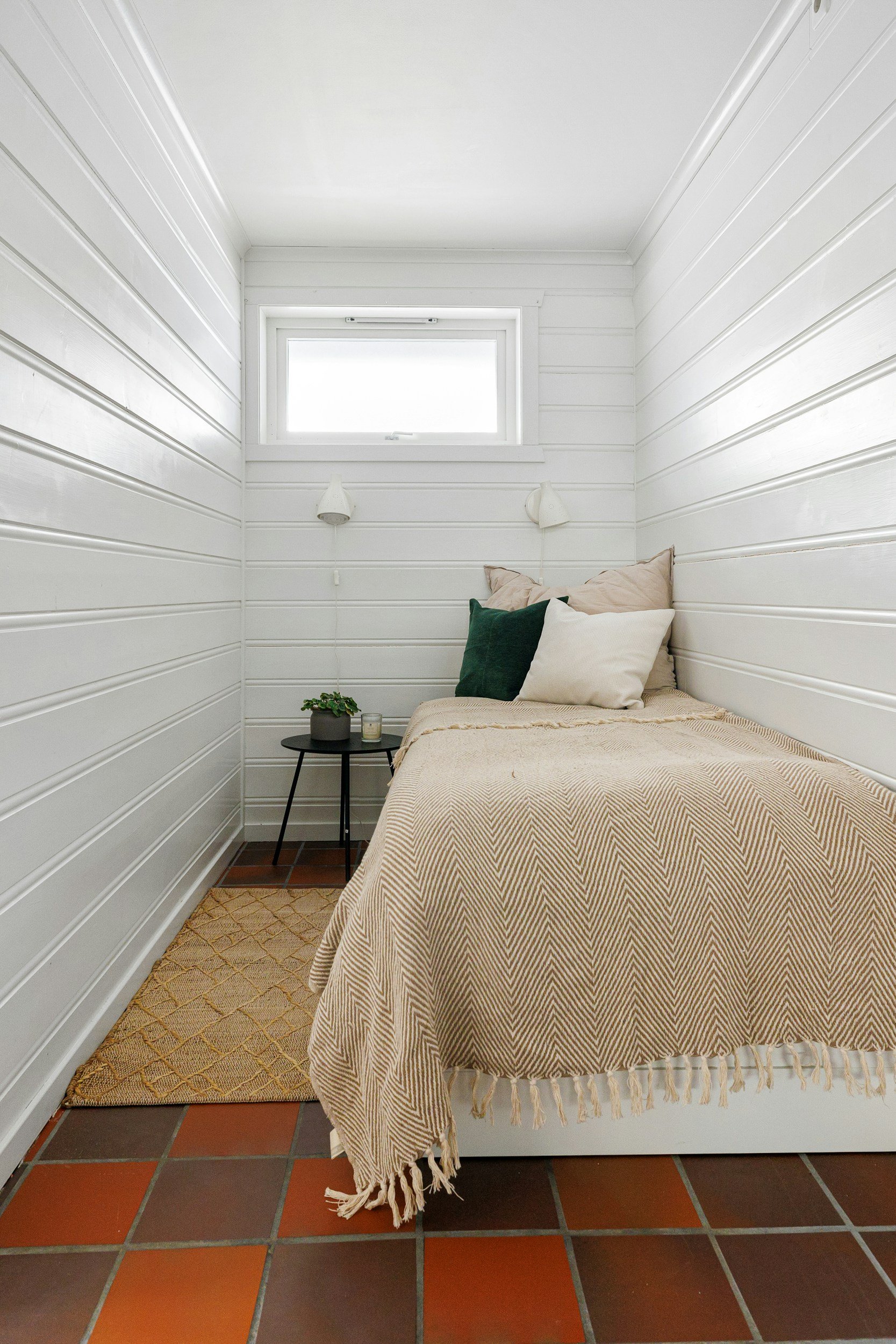
The most common design mistake with multi-function furniture is making it look like multi-function furniture. When a sofa looks like a sofa-bed-storage-unit-command-center, the room reads as compressed and anxious. When a Murphy bed looks like a beautiful built-in shelving wall, the room reads as designed and spacious. The difference is in the finish and the integration.
Multi-function pieces work best when they're designed to look like one intentional thing. A Murphy bed that's built into a surround of matching cabinets and shelving reads as a wall feature, not a piece of furniture. A storage ottoman in a fabric that matches the other soft goods in the room reads as a coffee table. A fold-down dining table in a wood that matches the floors reads as an architectural element.
The styling principle for multi-function furniture is the same as for any element in a well-designed tiny home: it should look like it belongs there, not like it's solving a problem. If the multi-function furniture in a tiny home is visible as the compromise it technically is, the design hasn't gone far enough. How tiny homes can have big personality is the other half of this conversation — it's not just about function, it's about making the function feel invisible.
Frequently Asked Questions
What is the best multi-function furniture for a tiny home?
The highest-impact multi-function pieces for tiny homes are Murphy beds with integrated shelving, storage ottomans, convertible dining tables, platform beds with built-in drawers, and quality sofa beds. The best choice depends on your specific floor plan and how the space needs to function — an STR that needs to sleep four people has different priorities than a primary residence for one.
Are Murphy beds comfortable for guests in an Airbnb?
A quality Murphy bed with a proper mattress is genuinely comfortable — comparable to a fixed platform bed. The mattress is the critical variable: a Murphy bed system with a cheap, thin mattress will generate complaints. A Murphy bed with a quality foam or hybrid mattress at 10 to 12 inches thick sleeps well and generates positive reviews. Never cut corners on the Murphy bed mattress.
What size storage ottoman is best for a tiny home?
For use as a coffee table, 24 by 36 inches is the practical minimum. Smaller works as an accent piece but doesn't function as a real table. Look for at least 10 to 12 inches of interior depth for meaningful storage — shallow storage ottomans technically qualify as storage but hold very little. A hinged lid with a flat top rather than a tufted surface works better as a table.
How do I make a fold-down dining table look intentional?
Mount it at the right height (dining table height is 28 to 30 inches), use a finish that relates to other elements in the room, and pair it with chairs or stools that work with the table's scale. Add a simple pendant light above it so the dining zone reads as designed even when the table is folded. The light signals "this is where you eat" even when the table is against the wall.
Is a sofa bed worth it for an Airbnb?
Yes — if you choose one with a quality sleeping surface. A sofa bed in an STR should have a mattress of at least 4 to 6 inches in thickness with foam or pocket spring support. Thin fold-out mattresses generate complaints. Quality options from IKEA, Burrow, and similar brands have improved significantly and provide a genuinely usable sleeping surface for guests.
How do I choose multi-function furniture for an STR without making it look like a rental?
Focus on integration and finish. Multi-function furniture that looks built-in or custom reads as designed. Multi-function furniture that looks modular or temporary reads as rental. Custom or semi-custom Murphy bed systems, built-in banquettes with storage, and islands with cabinetry finishes that match the kitchen all achieve the designed-in look that keeps an STR from feeling generic.
Designing a tiny home or STR and trying to fit everything in without making it feel like an IKEA showroom? At Sukkha Interior Design, we specialize in small spaces that do a lot without looking like they're trying to. Book a design consult and let's figure out your floor plan.

If you are looking to transform your space, interested in Asheville real estate, or just want to say hi, I'd love to connect!
Not quite ready for a full on design project? Take a step towards transformation with the 30 Minute Home Refresh Guide.
READ MORE
Let’s Connect